
Amboseli in April: Green Season Photography and the Cleanest Kilimanjaro Views of the Year
April is the month most safari travellers skip. The long rains have arrived, the lodges are quieter, and every travel forum warns about muddy tracks. Here is what those forums miss. 📸
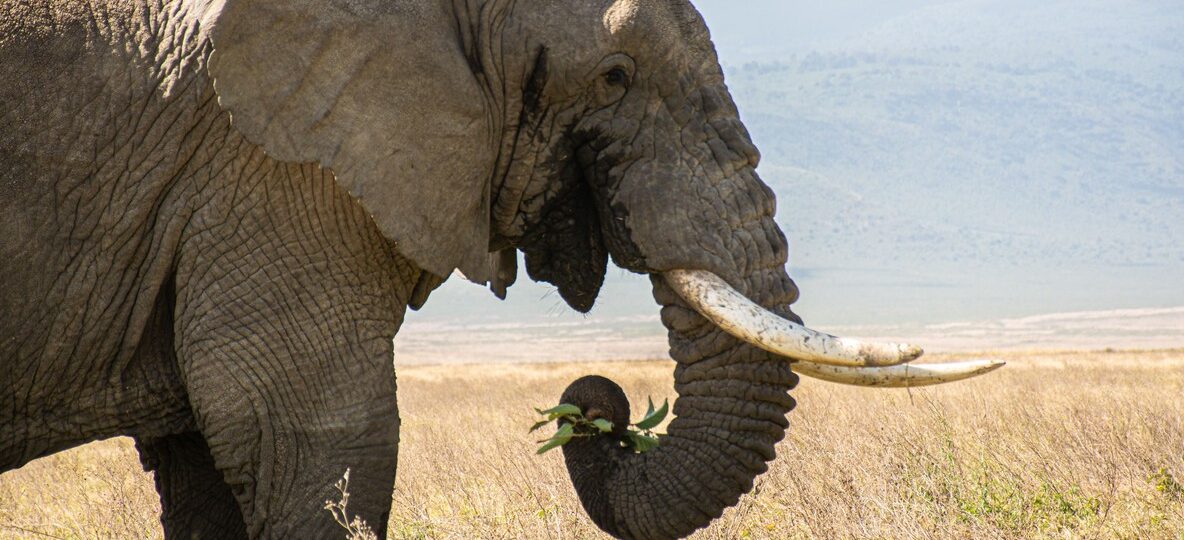
Visiting Amboseli in April means arriving when the park is at its most photogenic. The dust that smothers the dry-season landscape is gone. Kilimanjaro appears at dawn with a sharpness you simply cannot find in July or August. Elephant calves are everywhere. The grasslands glow a colour that looks post-processed when it is just the real light on real wet grass.
At Trunktrails Safaris, we run tours and safaris into Amboseli every month of the year. April is one we actively recommend to photographers and wildlife enthusiasts who want genuine encounters over crowd management. This guide tells you exactly what to expect.
What Makes Amboseli in April Unique for Photography?
The dry season has its appeal, but April photography in Amboseli has something the dry season cannot give you: contrast and clarity together. 🌅
Dark elephant families move against bright green grass at the edge of the Enkongo Narok swamp. The morning light is soft and golden, not harsh and bleached. Mist rises off the swamp surface at first light, creating natural diffusion that professional photographers pay thousands for in a studio setup. And none of it costs anything extra in April, because the peak-season crowds have gone home.
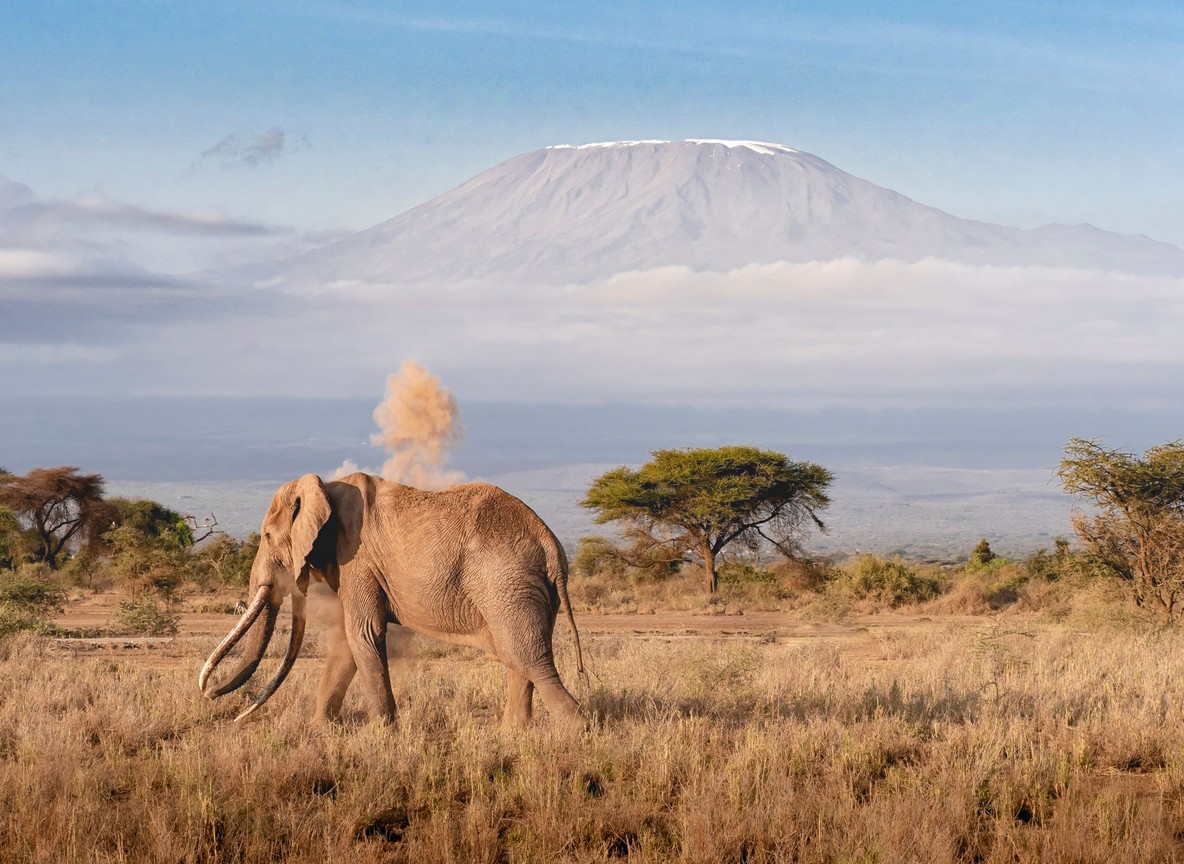
At Trunktrails Safaris, our guides know exactly which viewpoints hold the cleanest Kilimanjaro alignment. They know where to position the vehicle so the mountain appears framed between acacia trees with elephant foreground. That positioning knowledge comes from years in the park, not from a guidebook.
Why Does April Produce the Clearest Kilimanjaro Views of the Year?
Here is the counterintuitive truth about Amboseli in April: the rainy season is the best time to see Kilimanjaro.
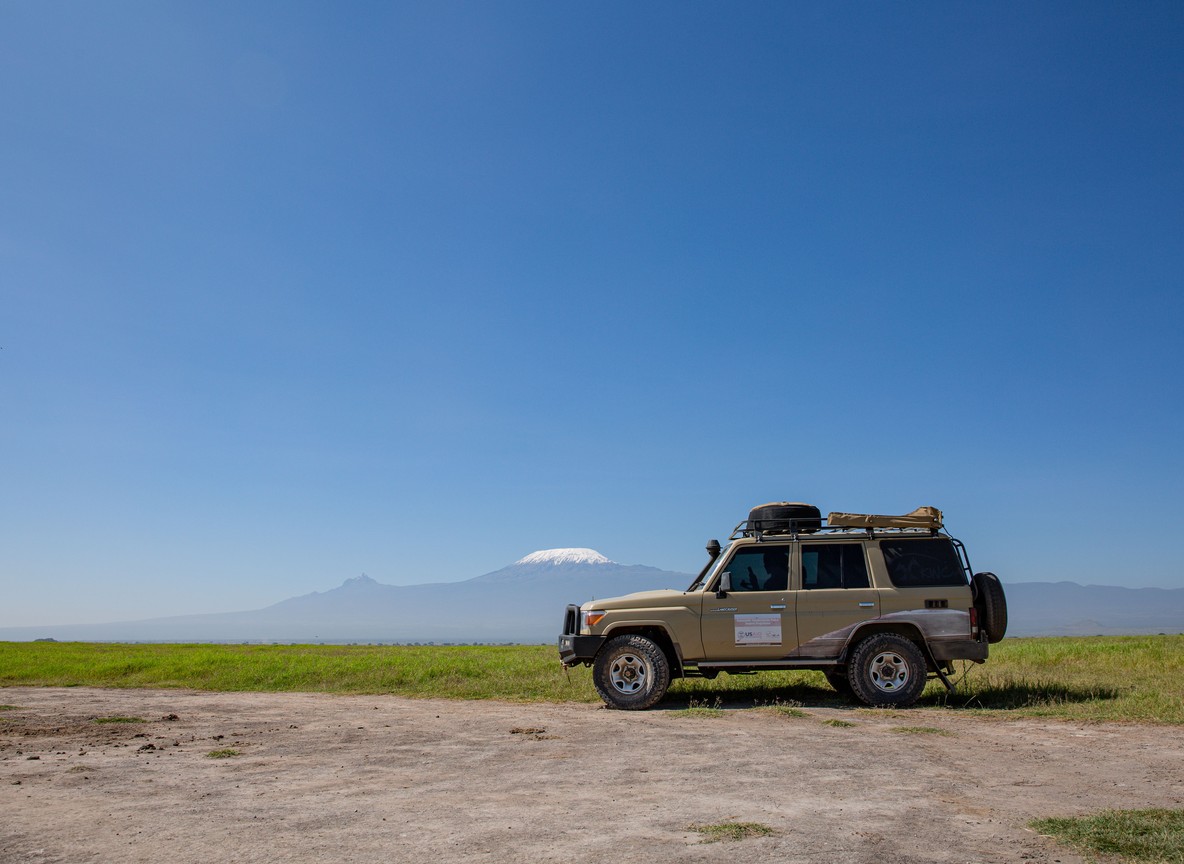
During July and August, dry-season haze sits over the plains. Dust, smoke from fires across southern Kenya, and atmospheric heat shimmer combine to blur the mountain into a pale outline. In April, the rains scrub the air clean. Kilimanjaro at 5,895 metres (Uhuru Peak, the highest point in Africa) sits above the cloud band, and on a clear morning you can make out individual glacier formations on the summit.
The window is narrow. Clouds typically build from the east by 9:00 AM as moisture rises off the Indian Ocean. At Trunktrails Safaris, our dawn game drives have you at Observation Hill or the swamp edge by 5:45 AM. That gives you 90 to 100 minutes of sharp mountain, soft light, and no other vehicles. The peak months for this are March and April: the rains clean the atmosphere, but the main cloud cover arrives in the afternoon rather than the morning.
What Wildlife Can You See in Amboseli in April?
April is calving season across the Amboseli ecosystem. The long rains trigger fresh grass growth, and fresh grass triggers births. 🐘
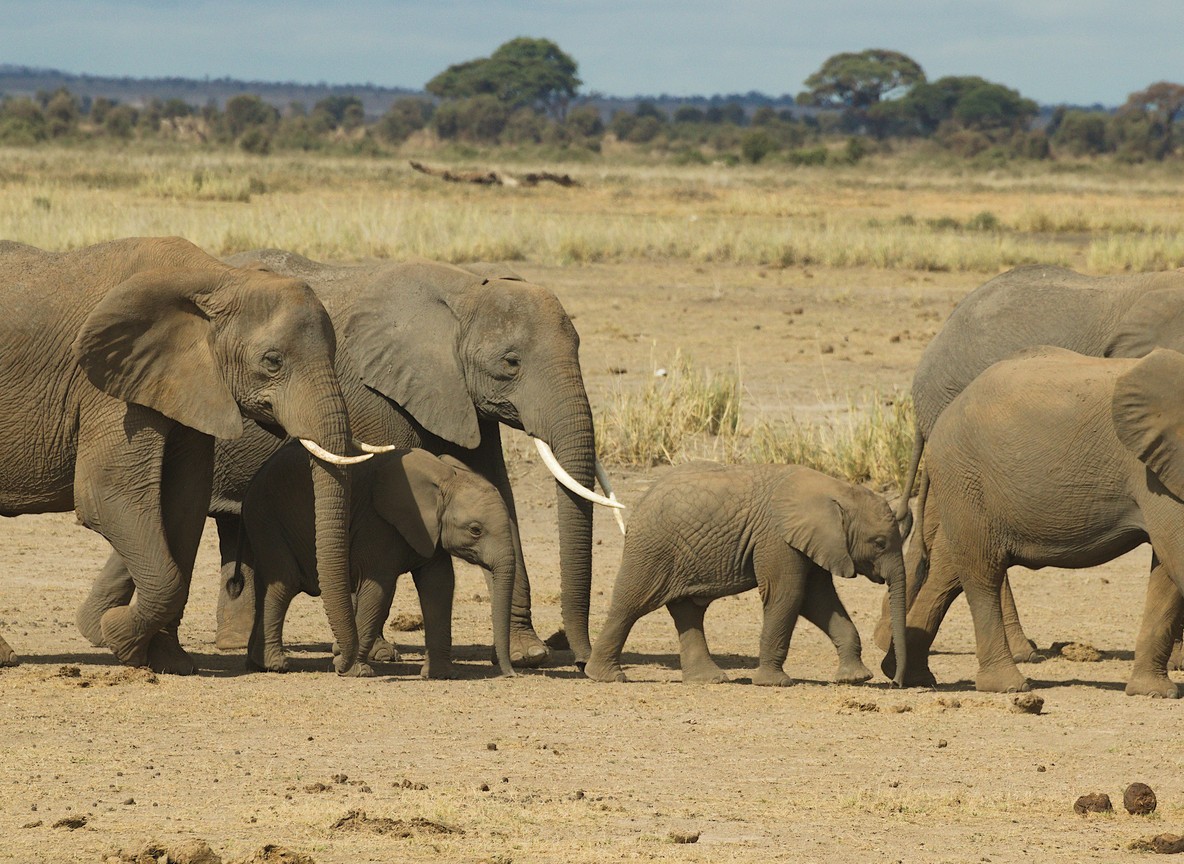
Amboseli’s elephant herds, studied continuously by the Amboseli Elephant Research Project since 1972, are most active in the wet season. Newborn calves appear within family groups almost every week during April. The Enkongo Narok and Ol Okenya swamps hold permanent water, so even during heavy April rainfall, elephant concentrations at the swamp edge remain high and reliably visible.
Other species active in April include:
- Cheetah: Cubs from dry-season births are mobile by April, following mothers on hunts across the open plains
- Buffalo: Large herds feeding heavily on the new grass growth south of Observation Hill
- Giraffe: Spread across acacia woodlands with more browsing options than the dry season offers
- Lion: Dawn activity around the Longinye swamp before temperatures rise; prides with small cubs often rest in open areas
- Hyena clans: Den activity increases sharply during calving season as food availability rises
For a complete breakdown of which species peak month-by-month, our Amboseli animals month-by-month guide covers every month with wildlife forecasts, including the calving events that make April so rewarding for family elephant photography.
Is April a Good Time to Visit Amboseli for Birding?
April transforms Amboseli’s birding. The long rains bring both Eurasian and intra-African migrants into the basin, and the swamp expands to attract wading species that are absent in the dry months.
Species to target in April:
- African fish eagle: Calling and hunting over the open swamp at first light
- Saddle-billed stork: Stalking the shallow swamp margins in pairs
- Kori bustard: Kenya’s heaviest flying bird, feeding in open grassland throughout April
- Yellow-throated longclaw: Common on wet grassland, displaying from termite mounds
- White stork: Palearctic migrants passing through in large wheeling flocks during April
Birding works best on foot or from a stationary vehicle at the swamp edge. The vegetation is denser in April, which means smaller birds that hide in scrub during the dry season become visible on exposed perches above the waterline.
For a side-by-side comparison of birding conditions through the year, our Amboseli birds in wet season vs dry season guide covers what changes and what stays the same.
What Is the Weather Like in Amboseli in April?
April falls in the middle of Kenya’s long rains, which run from March to May. In Amboseli, rain patterns are more predictable than the blanket warning “avoid the rains” suggests.
Amboseli April Weather Summary
| Factor | Typical Range in April |
|---|---|
| Average daytime temperature | 25 to 30°C |
| Average night temperature | 14 to 18°C |
| Monthly rainfall | 150 to 250 mm |
| Rain timing | Late afternoon and evening showers |
| Kilimanjaro visibility at dawn | High (best of the year) |
| Tourist crowd level | Low (25 to 40% of peak season) |
| Road conditions inside park | Muddy after heavy rain; 4×4 essential |
Mornings are almost always clear. Heavy rain arrives in the afternoon or evening, which aligns naturally with the safari schedule. Dawn and midday game drives are rarely interrupted. Trunktrails Safaris uses Land Cruisers with high ground clearance, so track conditions that stop lighter vehicles are not a barrier for our tours and safaris.
What Are the Best Camps and Lodges for a Photography Safari in April?
April rates are significantly lower than peak season at most properties. You get the same views, the same elephants, and the same Kilimanjaro backdrop at 20 to 40% less than July prices.
Amboseli April Camp and Lodge Comparison
| Camp or Lodge | Location | Photography Advantage | Indicative Rate (per person/night) |
|---|---|---|---|
| Ol Tukai Lodge | Central, inside park | Direct swamp-facing rooms, close to elephant trails | From USD 250 (indicative) |
| Tortilis Camp | Kimana Sanctuary, park boundary | Private concession, walking permitted | From USD 450 (indicative) |
| Amboseli Serena Safari Lodge | Inside park | Kilimanjaro-facing pool and terrace | From USD 220 (indicative) |
| Kibo Safari Camp | Inside park boundary | Budget option, reliable Kilimanjaro views | From USD 120 (indicative) |
| Amboseli Sopa Lodge | Inside park | Good access to Longinye swamp predators | From USD 190 (indicative) |
All rates are indicative only. Confirm current pricing directly with Trunktrails Safaris. We contract with all listed properties and can advise on April promotions and availability.
For a detailed side-by-side comparison across budget levels, our Amboseli hotels, camps and lodges comparison covers the full range with honest notes on each property.
How Do You Get to Amboseli in April?
By road from Nairobi:
Two sealed tarmac routes connect Nairobi to Amboseli. The Namanga route (A104 south, then east on C103 to Meshanani Gate) covers approximately 240 km and takes around 4 hours in good traffic. The Emali route (A109 south, then south from Emali junction) covers approximately 250 km and takes 4 to 4.5 hours. Both routes remain passable in April. A 4×4 vehicle is required inside the park.
By air from Nairobi:
Wilson Airport to Amboseli airstrip is approximately a 45-minute flight. The airstrip sits 2 km from Meshanani Gate. Scheduled daily services operate year-round from multiple carriers and are not disrupted by April rains. Fly-in tours and safaris are a strong choice in April because you skip the road entirely and arrive for your first dawn drive the same day you leave Nairobi.
For a cost and time comparison of both options, our Amboseli fly vs drive guide breaks down both routes in detail.
Park entry fees for Amboseli National Park are set and collected by Kenya Wildlife Service (KWS) via the KWS eCitizen portal. Confirm current non-resident rates on the KWS website before travel, as fees are updated periodically.
What Camera Gear Works Best for April Green Season Photography?
The green season in Amboseli creates specific shooting conditions. Here is what our guides consistently recommend:
- Telephoto lens (300 to 500mm): Wildlife spreads out more across the green plains; you need the reach
- Wide-angle lens (16 to 35mm): The Kilimanjaro-elephant composition demands wide framing at dawn
- Circular polarising filter: Cuts glare from wet grass, lifts sky contrast, and makes clouds three-dimensional
- Weather-sealed body: Afternoon rain in Amboseli arrives fast and with force; seal your kit
- Two or three batteries: Cold mornings and long pre-dawn sessions drain batteries faster than expected
Shoot in RAW. The soft dawn light of Amboseli in April has a tonal subtlety that JPEG compression flattens. The golden-green colour cast of morning light on wet grass is irreproducible in a JPEG file.
For the specific elephant behaviour that defines April photography in Amboseli, our Amboseli elephants guide explains how family structure, seasonal movement, and research project knowledge inform every encounter.
What Is the Trunktrails Advantage for an April Safari?
Trunktrails Safaris is a native Kenyan-owned operator. We know Amboseli the way outsiders simply cannot. Our guides have spent years in the park, recognise the Amboseli Elephant Research Project family groups by sight, and know which positions hold the best Kilimanjaro alignment through every season.
What you get when you book with Trunktrails Safaris:
- Tailor-made itineraries: We build your April safari around your photography goals and preferred pace, not a fixed group schedule
- Local expert guides: Kenyan guides with long-term Amboseli familiarity and genuine relationships with the park’s elephant families
- 24/7 direct access: No middlemen, no agencies. You speak directly to our Nairobi team at any hour
- All-budget tours and safaris: From comfortable mid-range camps to exclusive private-tented experiences, we work across the full range
- Conservation commitment: 5% of every booking goes directly to wildlife conservation in the parks we operate in
- Honest local advice: We tell you when April conditions are difficult and what to realistically expect, including which camps have flooding history and which positions give the best April compositions
The result is tours and safaris that deliver the clean Kilimanjaro frame most photographers spend a week trying to get, because we know exactly when and where to be. That is what a native Kenyan operator gives you.
Ready to Book Your Amboseli April Safari with Trunktrails Safaris?
April fills faster than most travellers expect. Photographers who have done their research book months in advance to hold low-season rates at the best-positioned camps. If the cleanest Kilimanjaro views of the year, calving elephant herds, and empty parks are on your list, April is the month. Contact Trunktrails Safaris with your dates and we will build your safari from the ground up.
Further reading
More safari planning resources
- Map of Amboseli from Valley Safaris
- Amboseli National Park guide on Touring Insights
- Amboseli destination guide on FindMySafari
- Best time to visit Kenya month-by-month map from Valley Safaris
📞 WhatsApp: +254 113 208888 📧 Email: info@trunktrailssafaris.com 🌐 Website: https://trunktrailssafaris.com

