
Wildebeest Migration in the Masai Mara: A Season by Season Guide
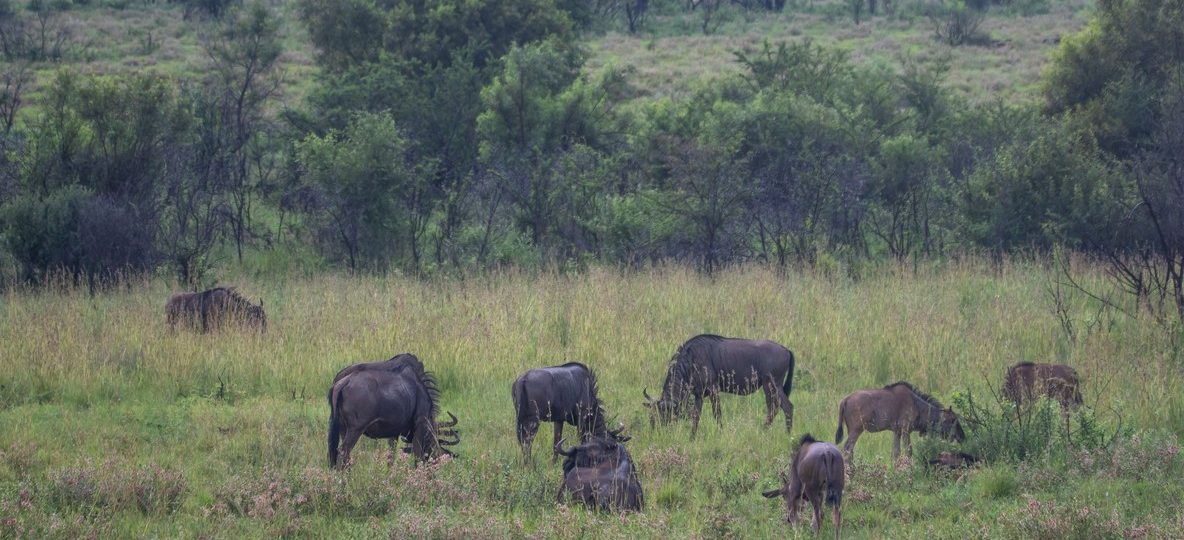
The wildebeest migration in Masai Mara is not one event on a single date. It is a year-round circuit that moves over 1.5 million wildebeest, roughly 200,000 zebra, and around 400,000 gazelle through a loop that covers close to 40,000 square kilometers of the combined Serengeti-Mara ecosystem. Understanding which season you are booking into changes everything about what you will actually see, so Trunktrails Safaris built this guide to walk through each stage of the migration, what happens in the Masai Mara during that window, and what it costs to be there. Whether you want river crossings or quiet game drives with resident wildlife, timing your tours and safaris around the right season makes the difference.
How the Great Migration Circuit Works
The herds move in a roughly clockwise loop driven by rainfall and fresh grass, not by a fixed calendar. They spend the first months of the year calving on the short-grass plains of the southern Serengeti in Tanzania, then push north and west through the Serengeti’s western corridor, before crossing into Kenya’s Masai Mara National Reserve for the dry months. From there, the short rains push them back south toward the Serengeti again, closing the loop. Because rainfall shifts by two to three weeks most years, the same calendar month can look different from one year to the next. Trunktrails Safaris tracks ranger and conservancy reports throughout the year to confirm current herd position before locking in an itinerary.
Season One: Calving Season (January to March)
From January through March, the migration is not in the Masai Mara at all. The herds concentrate on the short-grass plains around Ndutu and the southern Serengeti, where more than 400,000 calves are born within a few weeks of each other. This concentration of newborn wildebeest draws heavy predator activity, making it one of the richest wildlife viewing periods in the entire ecosystem, though it falls outside the Masai Mara itself. For travelers focused specifically on the Masai Mara wildebeest migration, this season is a planning marker rather than a booking window, since the reserve itself sees resident wildlife only during these months.
Season Two: Western Corridor Season (April to June)
By April, the herds begin moving north through the Serengeti’s western corridor, crossing the Grumeti River in scattered groups as they follow the rains toward Kenya. This period brings Masai Mara’s long rains, and the reserve is at its greenest and quietest, with camp rates typically at their lowest point of the year. Early arrivals sometimes reach the southern Mara border near the Sand River by late June, but large-scale crossings into the reserve are still weeks away. Trunktrails Safaris books this season for travelers who want dramatic scenery, lower prices, and fewer vehicles at sightings, without expecting a migration crossing.
Season Three: Mara River Crossing Season (July to October)
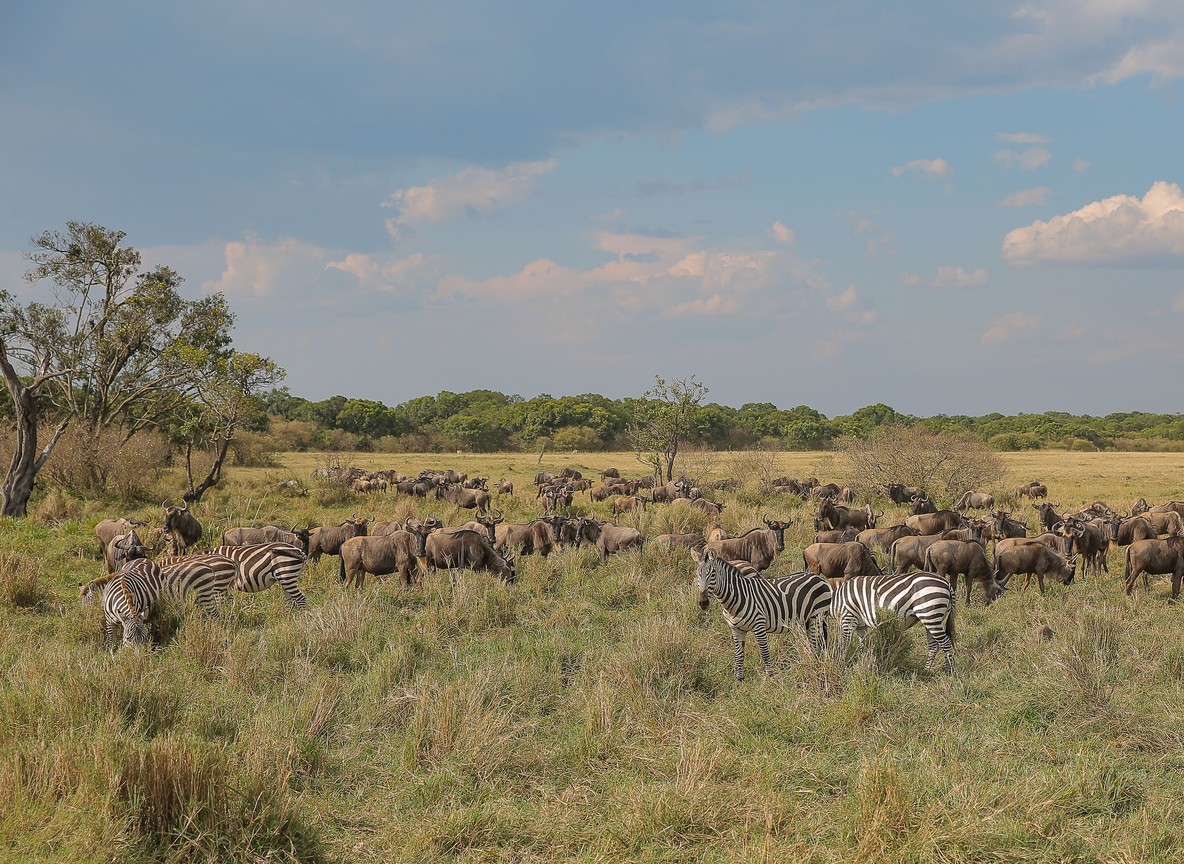
This is the season most people mean when they ask about the wildebeest migration in Masai Mara. The mega-herds typically enter the reserve through the Sand River and Lookout Hill area in the third week of July, then spread across the Mara Triangle, Talek, and Serena regions through August and September, crossing and re-crossing the Mara River as they search for fresh grazing. October brings the start of the southward drift, with crossings continuing but thinning out as herds begin drifting back toward the Serengeti.
| Month | Herd Position | Crossing Likelihood | Crowd Level |
|---|---|---|---|
| July | Entering via Sand River and Lookout Hill | Moderate, first crossings begin | Moderate |
| August | Mara Triangle, Talek, Serena areas | High, often several per week | Very high |
| September | Throughout the reserve | High, most reliable month | Very high |
| October | Herds drifting south, secondary crossings | Moderate | Moderate |
Crossing likelihood is based on historical patterns reported by Mara Conservancy and Narok County rangers, not a guarantee for any specific date. Trunktrails Safaris checks current herd position before confirming migration-season bookings.
Season Four: Dispersal and Short Rains (November to December)
The short rains arrive in November, and fresh grass south of the reserve pulls the herds back toward the Serengeti. By late November, most of the migration has left the Masai Mara, though scattered groups can linger into early December in wetter years. This season brings green landscapes, dramatic skies, and noticeably lower camp rates, and it suits travelers more interested in resident wildlife, birdlife, and photography light than in migration crossings specifically.
Real Numbers: Distances, Fees, and Access
Planning around the right season only works if the logistics line up too. Here are the figures Trunktrails Safaris uses when building a migration-season itinerary.
| Metric | Figure |
|---|---|
| Masai Mara National Reserve size | Approximately 1,510 km² |
| Combined Serengeti-Mara ecosystem size | Approximately 40,000 km² |
| Distance Nairobi to Masai Mara (road) | Approximately 270 km, 5 to 6 hours via Narok |
| Flight time, Wilson Airport to Mara airstrips | Approximately 45 minutes |
| Mara airstrips in regular use | Keekorok, Musiara, Ol Kiombo, Mara Serena |
| Reserve entry fee, peak season (per person, 24 hrs) | Indicative USD 80 to 100 |
| Migrating wildebeest population | Approximately 1.5 million |
| Accompanying zebra population | Approximately 200,000 |
Figures are indicative and drawn from Narok County and conservancy sources. Trunktrails Safaris confirms exact current fees and flight schedules at the time of booking.
Where to Stay by Season
Camp choice should follow the season, not the other way around. During the July to October crossing season, Governors’ Camp sits directly on the Mara River in the Musiara area, close to some of the most active crossing zones, while Mara Serena Safari Lodge overlooks the Mara Triangle from a hilltop position that helps guides spot herd movement early. Angama Mara sits above the Triangle on the Oloololo Escarpment, combining sweeping views with quick access down to the plains.
Outside peak crossing months, Mara Plains Camp and Kicheche Bush Camp in the surrounding conservancies offer year-round wildlife viewing with far fewer vehicles per sighting, and Cottars 1920s Safari Camp in the Olderkesi Conservancy gives early access to herds approaching from the south before the reserve crowds build. Trunktrails Safaris matches camp choice to the season you are traveling in, not just to the migration headline.
Season by Season at a Glance
| Season | Months | Location | Best For | Camp Rates |
|---|---|---|---|---|
| Calving | Jan to Mar | Southern Serengeti (outside the Mara) | Predator action, newborn calves | Mid-range |
| Western corridor | Apr to Jun | Serengeti western corridor | Green scenery, low crowds | Lowest of the year |
| River crossings | Jul to Oct | Masai Mara, Mara Triangle, Talek | Mara River crossings | Highest of the year |
| Dispersal | Nov to Dec | Herds departing south | Photography light, resident wildlife | Low to mid-range |
Planning Your Trip Around the Right Season
Most travelers ask when the wildebeest migration reaches the Masai Mara because they want to see a river crossing, and the honest answer is that the odds are highest from late July through September, with September widely rated the most consistent month. But no camp or guide can guarantee a crossing on any single day, since herds can gather at a riverbank for hours before moving, or turn back entirely. Trunktrails Safaris builds at least two to three full days near the river into every peak-season itinerary specifically to raise those odds, with early departures before 6 AM and full-day drives with a packed lunch so guides do not risk missing a crossing while heading back to camp.
For travelers with flexible dates, the western corridor and dispersal seasons offer a genuinely different kind of trip: same ecosystem, same resident wildlife, a fraction of the vehicles, and camp rates well below peak. Trunktrails Safaris is upfront about which season fits which goal, rather than selling every one of our tours and safaris as migration season regardless of the calendar.
The Trunktrails Advantage
Trunktrails Safaris is a Kenyan-owned operator, and our guides track herd movement daily through the season rather than relying on published forecasts alone. That ground-level knowledge is what separates a trip that catches a crossing from one that spends days waiting at the wrong bend of the river. We maintain direct relationships with camps across the reserve and its surrounding conservancies, which often lets us secure migration-season beds even when a camp shows as fully booked elsewhere.
We also build honest itineraries. If you are traveling in August or September, we will tell you exactly what the crowds look like at popular crossing points and offer conservancy alternatives if that matters to you. If your dates only allow for the western corridor or dispersal season, we will not oversell migration odds we cannot deliver, but we will show you what the Masai Mara still offers during those months. Every quote from Trunktrails Safaris includes current camp availability and reserve fees, confirmed before you commit to your tours and safaris. 🦓
Plan Your Season-by-Season Migration Safari
The wildebeest migration in Masai Mara rewards travelers who plan around the right season, whether that means chasing river crossings in August or enjoying a quieter, greener trip in April or November. Getting the season right is the single biggest factor in whether your safari delivers what you came for.
Further reading
More safari planning resources
- Best time to visit Kenya map from SafariPure
- Best time to visit Kenya month-by-month map from Valley Safaris
- Best time to visit Kenya on Touring Insights
- Great Migration safari collection on FindMySafari
Send Trunktrails Safaris your travel window and what you want most from the trip, and our team will build an itinerary around current herd position, camp availability, and your budget. Message us on WhatsApp at +254 113 208888, email info@trunktrailssafaris.com, or visit trunktrailssafaris.com to start planning your Masai Mara migration safari today. 🌍✨