Tsavo National Park Animals: The Complete Wildlife Checklist 🦁
Tsavo National Park animals range from red-dusted elephants and maneless lions to one of the rarest antelope on Earth, all spread across roughly 22,812 km² of Kenya’s largest protected area. Because Tsavo is split into Tsavo East and Tsavo West by the Nairobi-Mombasa highway, the animals you see and where you see them depends heavily on which side you visit. At Trunktrails Safaris, we build tours and safaris across both sectors every month, and travelers almost always ask the same question first: what will I actually see, and where do I need to go to see it. This checklist answers that question species by species.
Tsavo Wildlife Quick Facts
| Fact | Detail |
|---|---|
| Combined park size | Tsavo East (~13,747 km²) + Tsavo West (~9,065 km²) ≈ 22,812 km² |
| Elephant population, Tsavo Conservation Area | Approximately 14,000 (2021 aerial census, KWS) |
| Black rhino | Housed in the fenced Ngulia Rhino Sanctuary, Tsavo West, roughly 90 km² |
| Hirola antelope | Fewer than 500 left in the wild worldwide; a protected sanctuary population lives in Tsavo East |
| Bird species recorded | Over 500 across the combined Tsavo ecosystem |
| Best wildlife-viewing water point | Aruba Dam, Tsavo East (dry season elephant gathering) |
| Underwater wildlife viewing | Mzima Springs, Tsavo West (hippo and crocodile viewing chamber) |
| Non-resident park entry | Indicative $52 per adult, per 24 hours (KWS sets rates via eCitizen; confirm current fees before booking) |
| Nearest major gates | Voi Gate (Tsavo East, ~330 km / 4.5-5 hrs from Nairobi); Mtito Andei Gate (Tsavo West, ~240 km / 3.5-4 hrs from Nairobi) |
The Big Five in Tsavo National Park
Tsavo is one of the few places in Kenya where you can realistically tick off all Big Five animals, though the odds and locations differ between the two sectors. Guides at Trunktrails Safaris track seasonal movement patterns closely, since a Big Five sighting in Tsavo depends far more on timing and location than luck alone.
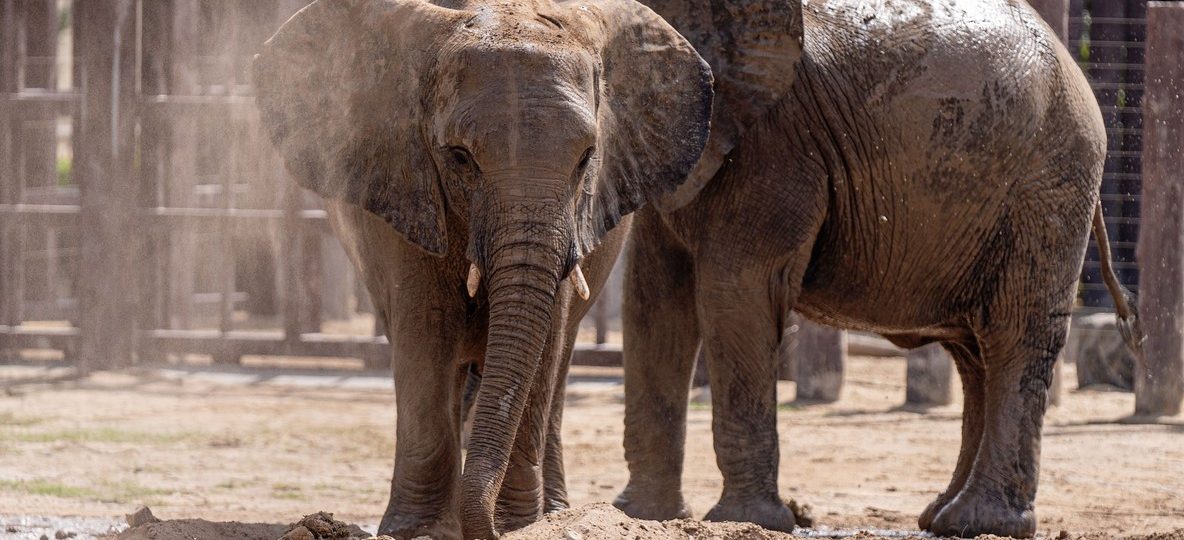
Elephant. Tsavo’s signature sighting. The Tsavo Conservation Area holds an estimated 14,000 elephants, the largest single elephant population in Kenya. Tsavo’s iron-rich red soil coats their skin after dust baths, giving rise to the famous “red elephants of Tsavo” 🐘. Aruba Dam in Tsavo East and the Chyulu Hills border of Tsavo West are two of the most reliable gathering points, especially in the dry months.
Lion. Tsavo lions carry a dark historical footnote: the “Man-Eaters of Tsavo,” two lions that killed railway workers during construction of the Uganda Railway in 1898, an event that later inspired multiple films. Modern Tsavo lions are still notable for a genetic quirk, many males grow little to no mane, likely linked to the heat and thorny scrub of the region.
Leopard. Present across both sectors but genuinely elusive. Tsavo West’s rockier terrain and denser riverine cover around Mzima Springs give leopards more places to hide during the day, so sightings usually come at dawn, dusk, or on night drives from lodges that offer them.
Buffalo. Common in herds of a few dozen to several hundred, particularly near permanent water like Mzima Springs and the Galana River in Tsavo East. Old, solitary bull buffalo are considered among the most dangerous animals in Tsavo by guides, more unpredictable at close range than lion.
Rhino. Black rhino were nearly wiped out of Tsavo by poaching in the 1970s and 80s. Today the surviving and reintroduced population lives inside the fenced Ngulia Rhino Sanctuary in Tsavo West, a roughly 90 km² protected zone with round-the-clock security. This is the one Big Five animal in Tsavo you should not expect to see outside a dedicated sanctuary game drive.
Rare and Endangered Species: Tsavo’s Specialist Animals
Beyond the Big Five, Tsavo National Park animals include some of the rarest and most specialized wildlife in East Africa.
Hirola. Often called the world’s most endangered antelope, with fewer than 500 individuals left in the wild, mostly along the Kenya-Somalia border. A protected sanctuary population was translocated into Tsavo East in the 1990s specifically to create an insurance population away from the conflict-affected areas of their native range. Seeing one here is a genuinely rare wildlife moment.
Gerenuk. This long-necked antelope stands upright on its hind legs to browse acacia leaves, a behavior found almost nowhere else. Tsavo’s dry, thorny bush country is prime gerenuk habitat, especially in Tsavo East.
Fringe-eared oryx and lesser kudu. Both are dry-country specialists adapted to Tsavo’s semi-arid terrain. The fringe-eared oryx, with its straight rapier horns, and the striped, spiral-horned lesser kudu are far more common here than in wetter parks like the Maasai Mara.
Cheetah and African wild dog. Both occur in Tsavo but at low densities across a very large landscape, so sightings are a matter of persistence and good guiding rather than guaranteed encounters.
Mzima Springs: Hippo and Crocodile Country
Mzima Springs in Tsavo West deserves its own mention. Fed by underground water filtered through the Chyulu Hills, the spring produces around 50 million gallons of crystal-clear water daily, drawing resident hippo pods and Nile crocodile year-round. A partially submerged glass viewing chamber lets you watch hippos underwater, one of the only places in Kenya where this is possible without a dive.
Tsavo’s Birdlife
With over 500 recorded species, Tsavo is a serious birding destination alongside its mammal checklist. Look for lilac-breasted rollers, several hornbill species, secretary birds stalking the grassland, martial eagles overhead, and large flocks of ostrich in the open plains of Tsavo East. Wetland areas around Mzima Springs and Lake Jipe in Tsavo West add herons, kingfishers, and African fish eagles to the list.
Tsavo East vs. Tsavo West: Where to See What
The two sectors have genuinely different wildlife-viewing personalities. This comparison helps you decide where to focus your time.
| Feature | Tsavo East | Tsavo West |
|---|---|---|
| Terrain | Flat, open, semi-arid savannah | Volcanic hills, lava flows, denser vegetation |
| Signature animal sighting | Red elephants at Aruba Dam | Black rhino at Ngulia Sanctuary |
| Big cats | Maneless lions, easier open-plain visibility | Leopards more common in rocky, wooded terrain |
| Standout water feature | Lugard Falls on the Galana River | Mzima Springs underwater viewing chamber |
| Rare antelope | Hirola sanctuary population, gerenuk | Fringe-eared oryx, lesser kudu |
| Best for | Wide-open game drives, large elephant herds | Varied scenery, rhino tracking, walking safaris |
| Main gate from Nairobi | Voi Gate, ~330 km, 4.5-5 hrs by road | Mtito Andei Gate, ~240 km, 3.5-4 hrs by road |
Best Time to See Tsavo’s Animals
Wildlife viewing in Tsavo shifts with the seasons. The dry months, roughly June through October and January through February, push animals toward permanent water sources like Aruba Dam and Mzima Springs, concentrating sightings and making game drives more predictable. The wet season, March through May and November, greens up the landscape and disperses wildlife across the park’s full 22,812 km², which means longer drives between sightings but dramatically better photography light and fewer vehicles at each stop.
The Trunktrails Advantage
Trunktrails Safaris is a native Kenyan-owned operator, licensed by the Tourism Regulatory Authority (Licence No. TRA1/22/C01/92750, Class C). We do not outsource your safari to a third-party operator once you book. The same team that plans your route also drives it.
- Species-first route planning: We match your itinerary to what you actually want to see, whether that is red elephants in Tsavo East or rhino tracking in Ngulia Sanctuary.
- Guide expertise: Our drivers know the difference between a fresh leopard track and an old one, and where Tsavo’s rarer species like hirola and gerenuk are most likely to appear.
- Realistic expectations: We never oversell guaranteed sightings of elusive animals; we tell you the honest odds before you book.
- Conservation commitment: 5 percent of every booking supports wildlife conservation work across Kenya, including habitat protection in the Tsavo Conservation Area.
- Every budget covered: From budget-friendly tented camps near Voi Gate to premium lodges like Finch Hattons in Tsavo West.
Build Your Tsavo Wildlife Checklist
Tsavo National Park animals reward travelers who plan around the landscape instead of hoping for the best. Red elephants, maneless lions, rhino in a protected sanctuary, and antelope you will not find almost anywhere else on Earth are all here, spread across two very different halves of Kenya’s biggest park.
Tell Trunktrails Safaris which animals matter most to you, and we will build tours and safaris around the gates, seasons, and camps that give you the best real chance of seeing them. Whether it is your first Big Five checklist or a specialist trip built around Tsavo’s rarest residents, our tours and safaris are planned around Tsavo’s actual wildlife patterns, not a generic template.
Further reading
More safari planning resources
- Tsavo East and West map from SafariPure
- Map of Tsavo from Valley Safaris
- Tsavo complete guide on Touring Insights
- Tsavo destination guide on FindMySafari
📞 WhatsApp: +254 113 208888 📧 Email: info@trunktrailssafaris.com 🌐 Website: https://trunktrailssafaris.com