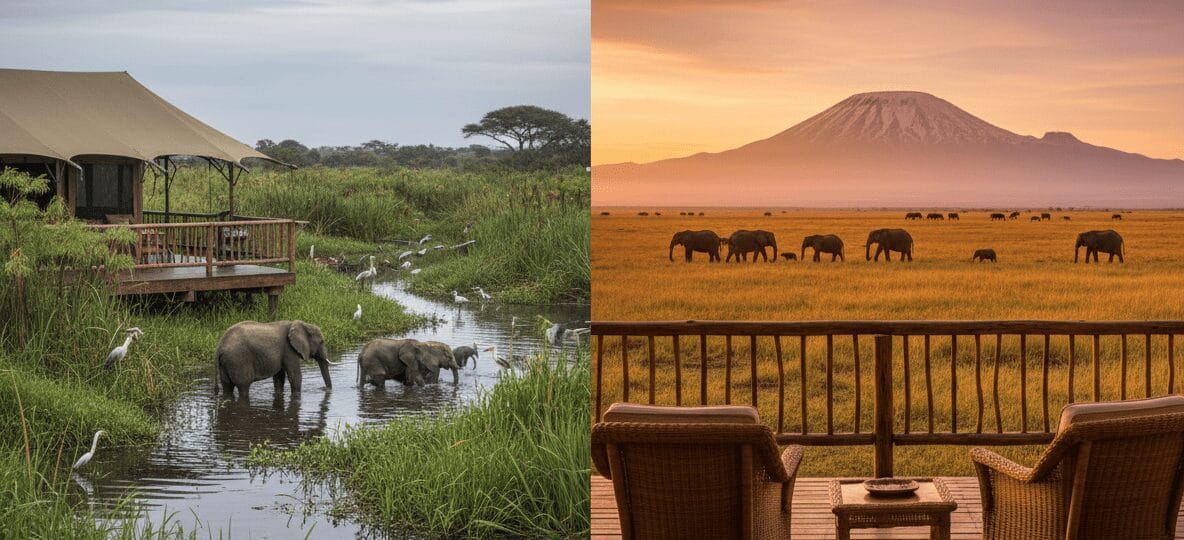
Swamp-view camp vs Kilimanjaro-view cam
p is one of the most useful accommodation decisions in Amboseli because the park’s appeal comes from two different kinds of drama. One is wetland life, elephant movement, and habitat texture around the swamps. The other is the iconic open-frame mountain backdrop that makes Amboseli famous across Africa.At Trunktrails Safaris, we do not treat these view styles as the same experience. One is wildlife-first. The other is scenery-first. Both can be excellent.
The Short Answer
Choose a
swamp-view camp if you want:
- habitat atmosphere
- wetland birdlife and wildlife feel
- a more immersive ecosystem mood
- stronger day-to-day proximity to the park’s living texture
Choose a
Kilimanjaro-view camp if you want:
- iconic panorama
- classic Amboseli photography
- sunrise drama when the mountain is clear
- a more instantly recognisable safari setting
There is no universal winner. The right answer depends on what you want to feel every morning and evening.
A Closer Look at Amboseli’s WildlifeIn Amboseli, you can commonly see:- Elephants (the park’s iconic residents)
- Buffalo
- Zebra
- Wildebeest
- Giraffe
- Gazelles and other antelope
- Lions
- Hyenas
- Many birds, especially around swamps and wetlands
With a bit more luck or the help of a sharp-eyed guide, you might also spot:- Cheetah
- Leopard
- Hippo
- Jackal
- Warthog
- Smaller dry-country specialists
This diversity makes Amboseli a much stronger wildlife destination than many travellers initially assume. Whether you’re scanning the marshes for herds of buffalo, watching giraffes stride across open savannah, or catching the glint of a lion’s mane in the morning sun, Amboseli delivers a surprisingly rich safari experience—anchored, but certainly not limited to, its famous elephants.”
What a Swamp-View Camp Gives You

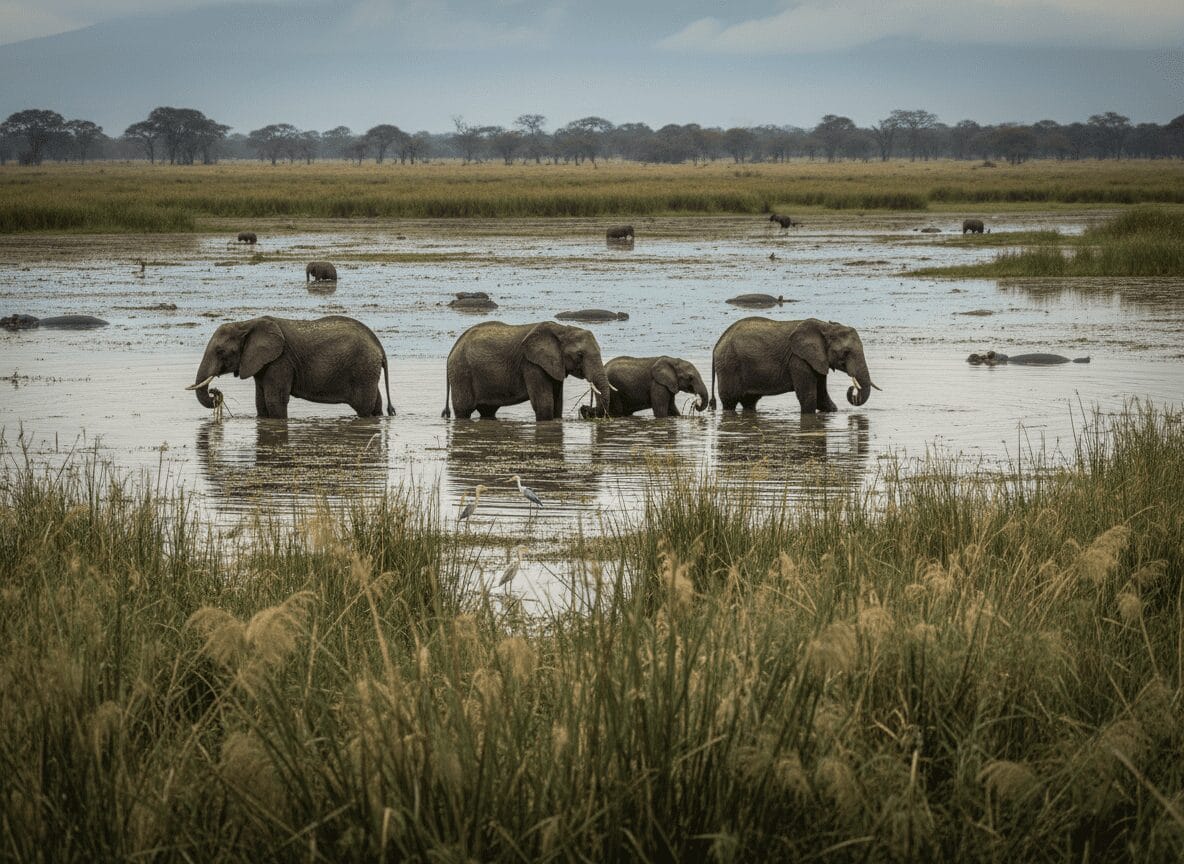
A swamp-view camp often feels more ecological.Why:
- the view is tied to water, reeds, and life concentration
- the atmosphere can feel active even when the mountain is hidden
- birding and wildlife mood are often stronger parts of the stay
This kind of camp suits travellers who care about:
- habitat texture
- wildlife movement
- green-season atmosphere
- a more grounded sense of the Amboseli ecosystem
For repeat safari travellers, swamp-facing stays can feel especially rewarding because they go beyond the standard postcard expectation.
What a Kilimanjaro-View Camp Gives You
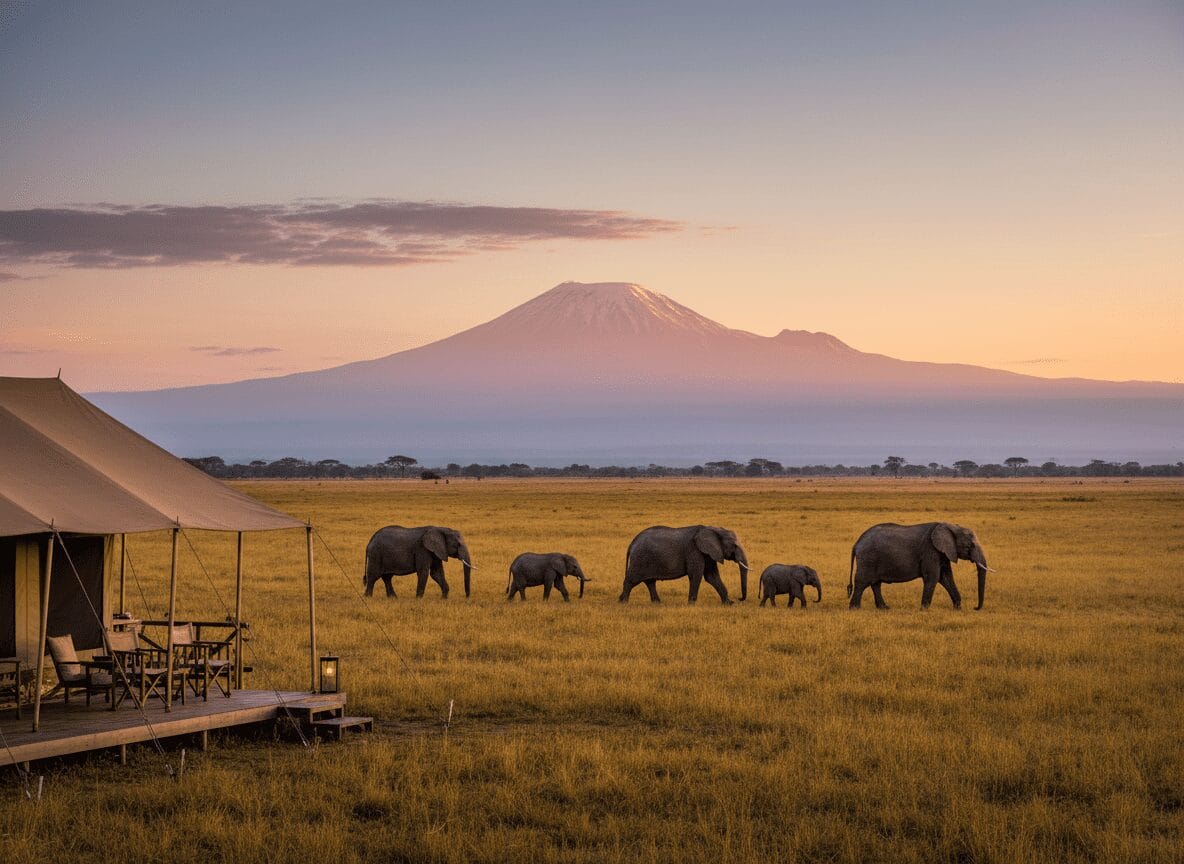
A Kilimanjaro-view camp is usually more iconic.Why:
- it prioritizes the image that many travellers associate with Amboseli
- clear dawns can produce unforgettable mountain moments
- the camp experience feels more instantly dramatic
This is why first-time travellers and photographers often lean this way. When the mountain appears behind elephant country, the emotional payoff is immediate.
Comparing Camp Sizes and Guest Capacity in Amboseli
Amboseli’s camp and lodge choices come in all shapes and sizes, and the number of guests they accommodate can shape the entire experience.Smaller, Intimate Camps
At the top end, most premier camps keep things intentionally private—think fewer than 20 rooms or tents. These intimate setups mean only a handful of guests at a time, so staff often know your preferences by day two. With personalized guiding and a quieter camp environment, it’s common to recognize friendly faces among fellow guests and to enjoy tailored service from guides who can share stories about individual elephant herds or the ecology just beyond your veranda.Mid-Range Lodges and Tented Camps
A step down in exclusivity but still comfortable, mid-range lodges and camps usually offer anywhere from 15 to 30 rooms, chalets, or tents. This size strikes a happy medium: small enough for a welcoming, social safari atmosphere but large enough that you won’t know everyone at breakfast. Some are even community- or conservancy-owned, offering a share of local culture and access to both classic and quieter corners of Amboseli.Large Lodges and Budget-Friendly Options
The value-focused side of Amboseli leans into larger lodges, sometimes with upwards of 80 rooms. Here, you’ll find a busier lobby, set dining hours, and more activity on game drives and at meal times. These lodges are designed to handle the ebb and flow of larger groups and families, so service tends to be friendly but less personalized. For adventurous travelers, budget camps—sometimes with just a handful of tents—offer backpacker simplicity and a homelier atmosphere, often with shared facilities and a communal campfire vibe.In short, Amboseli’s accommodation spectrum stretches from boutique calm to communal buzz, and the camp or lodge size sets the pace of your stay. Whether you’re after quiet seclusion or a livelier social safari, there’s an option for every style.Wildlife Feel vs Scenic Drama
This is the core difference.
Swamp-View Camp
Best for:
- wildlife atmosphere
- birdlife
- wetland mood
- travelers who appreciate ecological detail
Kilimanjaro-View Camp
Best for:
- panoramic drama
- iconic photography
- honeymoon appeal
- first-time safari impact
Trunktrails Safaris often asks a simple question here: would you rather wake up looking into habitat or into a classic skyline?
Which Is Better for Photography?
That depends on the kind of photography.
Swamp-View Camp for Photography
Better for:
- texture
- birding scenes
- moody weather
- ecosystem storytelling
Kilimanjaro-View Camp for Photography
Better for:
- classic Amboseli compositions
- wide scenic frames
- postcard-style sunrise imagery
- elephant-plus-mountain ambition
If you want the most recognizable Amboseli image, Kilimanjaro view usually wins. If you want a richer habitat story, swamp view can be stronger.
Which Is Better in Variable Weather?
Swamp-view camps often hold up better emotionally when the mountain is hidden.Why:
- the experience does not depend on a clear skyline
- wetland energy still gives the camp identity
- wildlife mood remains part of the stay even on cloudy days
Kilimanjaro-view camps are magical when conditions work, but they are also more dependent on visibility.That makes swamp-view camps surprisingly resilient for travellers in variable seasons.
Best for First-Time Travellers
For first-time travellers,
Kilimanjaro-view camp usually wins.Why:
- the image is iconic
- the emotional payoff is immediate
- it gives the classic Amboseli expectation
For many guests, a first Amboseli safari without a mountain-oriented stay can feel like missing part of the dream.
Best for Repeat Travellers
Repeat travellers often appreciate
swamp-view camp more than first-timers do.Why:
- they may already have seen the classic mountain image
- they may now care more about habitat and wildlife texture
- they may enjoy a subtler, more ecological stay style
This is one reason Trunktrails Safaris often varies camp recommendations by guest history.
Best for Honeymooners and Couples
Couples and honeymooners often prefer Kilimanjaro-view camps because:
- the setting feels romantic
- sunrise and sunset atmosphere is stronger
- the iconic scenery carries more emotional weight
But couples who are dedicated birders or who prefer quieter ecological mood can still love a swamp-view stay.
Best for Birders and Wildlife-Focused Travellers
Swamp-view camps often edge ahead for:
- birders
- wetland lovers
- wildlife-first travellers
- guests who care about atmosphere even when conditions are cloudy
This is not because Kilimanjaro-view camps lack wildlife. It is because the setting itself supports a different kind of sensory experience.
Cost and Value
This is property-specific, but the bigger point is value alignment.A Kilimanjaro-view camp is best value when:
- you truly want the iconic Amboseli picture
- you will be disappointed without mountain emphasis
A swamp-view camp is best value when:
- wildlife mood matters more than skyline drama
- you want a camp identity that works in more conditions
The best-value stay is the one that matches your expectation correctly.
Wildlife Experiences by Accommodation Tier
Not all safari accommodations offer the same wildlife feel—or the same style of adventure. The difference is more than just tent fabric, pillow type, or room count; it’s also about atmosphere, guest numbers, and how close you get to elephants without having to squint through binoculars.Tier 1: The Intimate, Expert-Led SafariAt the top end, you’re stepping into the true heart of Amboseli. Expect:- fewer guests, so wildlife moments feel exclusive
- expert guides who know individual elephant matriarchs by look (and sometimes by attitude)
- the best chance to savor close-up encounters, subtle wildlife behaviors, and story-level ecology
- highly personalized service that anticipates your needs—sometimes before you’re aware of them
These premier camps often sit in prime habitat and come with access to private conservancies. That means more flexibility in game drives, the possibility of venturing off the beaten track, and a naturalist’s attention to detail. You’ll get deeper insights into the ongoing work to support Amboseli’s wildlife, as well as a glimpse into the daily rhythm of Maasai communities, thanks to strong local ties.Tier 2: The Classic Immersive SafariMid-range stays offer a blend of comfort, authentic atmosphere, and reliable wildlife action. With these, expect:- well-guided wildlife drives, sometimes in small groups, balancing access and connection
- close proximity to either the national park or private conservancies, so you’re never far from the action
- birding and big mammal encounters remain strong, especially in the right season
- enough comfort to sleep soundly, but still a sense of adventure
Service is still warm (even if you may share the breakfast table with more fellow travelers) and guiding quality is typically excellent, just with a bit less exclusivity than the high-tier camps.Tier 3: The Value AdventureBudget camps and lodges focus on a different kind of safari appeal. Here, you’ll have:- front-row access to Amboseli’s most iconic safari routes, though often with larger groups
- reliable game activities—sometimes run on fixed daily schedules—so you see the essentials without missing the main show
- guides who know the park well, if not necessarily by every individual bird call
Expect a more informal, sometimes rustic style, with the energy of more guests on property—perfect for those who prioritize getting out on safari over in-room luxuries. It’s a passport to the elephant wetlands without breaking the bank.Across All TiersNo matter your base, everyone gets to experience Amboseli’s legendary elephants, grassland drama, and shifting light. The difference is in the intimacy of the moment, the guide’s depth of knowledge, and whether your safari feels like a private documentary or a shared adventure. Choose based on what matters most—seamless wildlife immersion or the joy of simply being there.Guiding Standards and Wildlife Viewing by Accommodation Tier
Not all safaris are created equal—especially when it comes to your guide’s expertise and the quality of your wildlife experience. Where you stay in Amboseli can shape both, sometimes more than the landscape itself.Tier 1: Elite Guiding and Deep-Dive Wildlife Moments
At the top end, expect personal guiding that’s as sharp as a marabou stork’s beak. Tier 1 camps specialize in small group or even private safaris, often led by seasoned guides who know Amboseli almost as well as the elephant families they introduce you to. These camps tend to have a low guest-to-guide ratio and attract staff passionate about the region’s ecology, animal behavior, tracking, and even local lore.What does this mean for your wildlife experience?- more time following animal tracks and untold stories than just ticking off a checklist
- guides able to anticipate and interpret animal interactions—think elephants at the swamp, not just lions lounging
- inside knowledge of shifting wildlife patterns, photo angles, and sometimes even the best time for a coffee break with a view
If you want a safari that feels carefully curated, with guides who might recall a tusker’s family saga, Tier 1 is for you.Tier 2: Solid Guidance and Rich Encounters
Move to Tier 2, and you find a sweet spot for many travellers. Guides are still well-trained and often local, with an impressive ability to spot that well-camouflaged genet before your eyes can adjust. This tier tends to mix small-group experiences with a bit more logistical predictability—and often, a few more fellow travellers on your game drives.Wildlife viewing here is still rewarding:- guides know the classic scenes and where to find them
- strong chance for memorable moments, whether that’s elephant herds crossing the marsh or a lone cheetah on the savanna
- some camps partner with community conservancies, so you also get a cultural edge (think Maasai stories alongside migration updates)
While the pace may sometimes feel less intimate than Tier 1, the expertise and access to good wildlife remain high.Tier 3: Competent Guidance, Classic Viewing
Budget and larger lodges (Tier 3) mean sharing the experience with more guests and guides who are steady but often stretched. Expect knowledgeable staff, but guidance may be more standardized, sticking to familiar routes and schedules to accommodate larger groups. How does this change your time in the bush?- guides will find the highlights—iconic Amboseli elephants, big vistas, groups of plains game—but may have less time to linger or dive deeper into animal behavior
- larger vehicle groups can mean less spontaneous stops and more set routes
- service is friendlier than clinical, but individual attention is limited compared to smaller camps
In short, you’ll still see plenty, but the experience is about the classic checklist rather than the nuanced wildlife tapestry.No matter your budget, Amboseli’s wildlife shows up. But the right tier doesn’t just raise your chances of rare sightings—it shapes how deeply you connect to the bush, and how the story of each elephant, egret, or acacia unfolds around you.Room Rates and Safari Prices: How the Tiers Stack Up
When it comes to budgeting your stay in Amboseli, the range in accommodation prices follows the classic safari “tier” logic. Where you land—luxury, mid-range, or budget—directly impacts nightly rates, as well as the level of personal service, guiding standards, and overall atmosphere you can expect.Top-Tier Lodges and Camps
At the premium end, think of camps that keep guest numbers intentionally low—like Tortilis Camp or Tawi Lodge. Here, you’re paying for exclusivity, attentive staff, and guides with the kind of deep Amboseli knowledge you’ll be quoting for years. Per-night costs at these camps can easily be double or triple those of mid-range options, but include elevated touches: private game drives, sundowners with Kilimanjaro as your backdrop, and remarkable attention to personal detail.- What you get:
- Smaller guest counts
- Highest standards of guiding and service
- Tranquil, often private settings
- Enhanced wildlife viewing, sometimes right from your veranda
Mid-Range Comforts
Drop to the mid-tier and you’ll find comfortable camps and lodges like Elerai Camp or Amboseli Serena Lodge. Here, rates are lower, but not “basic”—think cozy cottages, strong guiding, and access to both the national park and bordering conservancies. Expect more guests on property, but also a good blend of value, service, and location. Some mid-range options work closely with local communities, adding authentic cultural layers to your stay.- What you get:
- Balanced value and comfort
- Good guiding standards
- Still-great wildlife access, and often that classic Kilimanjaro view
- Slightly less personal service as guest numbers climb
Budget-Friendly Choices
If your priority is simple comfort and maximum park time (without fancy extras), Amboseli’s budget lodges and camps deliver just that. Places like Ol Tukai Lodge or Sopa Lodge, and adventure camps with dome tents, will bring you clean, basic rooms and fixed game drive schedules—no gourmet meals or private bush dinners, but you’re close to the action for the best price.- What you get:
- Modest but comfortable accommodations
- Larger group activities and more guests per guide
- Inconsistent but generally friendly service
- Lower price point, with some amenities (or special activities) requiring extra fees
Key Takeaways
- Price gap: Top-tier camps charge the most by a significant margin, with perks to match. Mid-range is the sweet spot for balancing budget and experience, while budget stays prioritize function over flair.
- Guiding: The higher the tier, the more seasoned and specialized your guides likely are.
- Value: The best value comes from matching your own expectations—whether that’s all-out luxury, a cultural connection, or simply maximizing your wildlife hours for less.
Choosing your Amboseli accommodation tier isn’t just about price—it’s about the kind of safari mood you want to carry home.Luxury vs Mid-Range vs Budget: Distinguishing Ambolseli Accommodation Tiers
Amboseli’s camps and lodges come in three broad flavors: luxury, mid-range, and budget. Each tier has its own feel and priorities, shaping the guest experience in ways that go far beyond the view from your porch.Luxury (Tier 1) Accommodation
Opt for a luxury camp or lodge if you want the full pampering package. Here’s what sets these properties apart:- Fewer rooms, which means a quieter, more intimate stay
- Exceptionally high service standards, with staff who remember your name (and maybe your favorite sundowner)
- Expert guides with deep knowledge of Amboseli’s wildlife, ecosystems, and even the personalities of local elephant herds
- What you pay for here isn’t just a room—it’s exclusive access, personalized attention, and top-tier guiding (often in partnership with local conservancies or wildlife organizations)
Luxury choices are best for travelers craving a truly immersive and seamless safari, where every detail is handled and every question answered before you think to ask.Mid-Range (Tier 2) Accommodation
Mid-range options bridge the gap, offering a blend of comfort and authentic safari experience without the exclusive price tag. Expect:- Comfortable rooms or tented suites, often in beautiful locations (sometimes on the park’s edge or in private conservancies)
- Service that is friendly and attentive, if a bit more communal compared to luxury options
- Guided activities led by knowledgeable, enthusiastic rangers—sometimes in smaller groups to keep things personal
- A sense of local culture, as many mid-range camps are run in partnership with nearby communities, infusing your stay with genuine connections
This tier is a sweet spot for travelers seeking balanced value: strong wildlife viewing, good meals, and a touch of Amboseli character with a comfortable level of indulgence.Budget Accommodation
Budget lodges and camps offer a more straightforward base for exploring Amboseli. Here’s what to expect:- Larger properties with more rooms, meaning a busier, lively atmosphere
- Rooms are clean and functional—simplicity takes center stage over style
- Scheduled meals and game drives to keep costs accessible
- Service can feel less personal given the higher guest count, but remains helpful and reliable
- Guides are experienced and professional, though the guiding may be less tailored than at higher-end camps
Budget options are ideal for travelers who prioritize access to wildlife and scenery over luxury trimmings, and for those who prefer to invest more of their budget in experiences beyond the room.Each tier has its own personality and strengths. Picking the right one is about matching the camp’s values and style to your personal Amboseli story.Most Affordable Amboseli Lodging Options
If you’re watching your budget but still want an authentic Amboseli experience, there are several reliable options that don’t skimp on the essentials.What to Expect from Budget Camps and Lodges
Affordable lodges such as Ol Tukai Lodge, Amboseli Sopa Lodge, and Selenkay Adventure Camp offer:- Clean, comfortable rooms or classic safari tents
- Basic, hearty meals
- Access to well-trodden game-viewing routes
- Scheduled activities such as guided drives
The atmosphere in these properties is friendly but leans towards efficiency rather than the highly personalized service found in smaller, upmarket camps. With more guests on average, service can feel a bit hands-off—think casual hospitality rather than bespoke attention.Amenities are straightforward; anything extra (think specialty drinks, laundry service, or private game drives) often comes at a supplementary cost. You can count on staff who aim to be helpful and guides who know their stuff, though expectations should be set for a more standardized experience—guiding tends to follow a set routine, and you’ll likely be part of a larger group.In short:- Best fit for: Travelers seeking Amboseli’s core highlights at a fraction of the top-tier prices, especially those who value wildlife access over frills.
- Service style: Functional and polite, with group-focused guiding that covers the essentials.
- Overall experience: A practical entry point into Amboseli, ideal for those who want big game, big landscapes, and don’t mind sharing the adventure with fellow safari-goers.
Characteristics of Mid-Range Accommodations in Amboseli
Mid-range, or Safari Tier 2, accommodations in Amboseli typically strike a pleasing balance between comfort, atmosphere, and value. These camps and lodges often blend exclusivity with a sense of place, making them a popular choice for travelers seeking more than just a bed after safari.What distinguishes many of these mid-range stays is their partnership with local communities—often the Maasai—which not only enriches the overall experience but also deepens guests’ immersion in one of Africa’s most celebrated cultures. This is especially true at properties set within private conservancies or hilltop locations. These spots typically deliver impressive views, whether it’s sweeping savannah or the snowcapped majesty of Mount Kilimanjaro in the distance.Inside the national park itself, mid-range options range from classic lodges with larger capacities—great for families or social travelers—to low-key bush camps with a handful of tents, often set in quieter conservancies just outside the park. These smaller camps tend to exude a more intimate, off-the-beaten-path feel, and are ideal for guests who cherish wildlife immersion and authentic cultural experiences.A few things you can usually expect from Amboseli’s mid-tier choices:- Thoughtful design celebrating local heritage, often with Maasai influences
- Guided activities run by experienced local guides familiar with wildlife movements and best viewing spots
- Opportunities for both wildlife watching and cultural exchange
- A mix of room types: from comfortable cottages to classic safari tents
- Atmosphere that balances sociability and privacy—larger lodges cater to groups, while small camps favor a quiet bush ambiance
Group sizes for activities at mid-range camps are typically smaller than in large resorts, allowing for more personalized attention. Service is warm and efficient, and while amenities may not match the lavishness of top-tier luxury camps, comfort and authenticity are rarely sacrificed.In short, mid-range camps in Amboseli offer a genuine safari experience—connecting you with both wildlife and the vibrant cultures that shape this landscape—while ensuring comfort and value remain at the heart of your stay.Optional Extras and Upgrades
Amboseli lodges and camps typically include game drives and basic full-board accommodation, but there are extra touches and specialty experiences that may come with an additional charge. Some of the most common optional upgrades include:- Private safari vehicles for flexibility and personal guiding.
- Special sundowner setups in scenic spots—often with snacks and drinks, perfect for that classic safari toast.
- Guided bush walks or birding outings (beyond standard drives), led by specialist guides.
- Spa treatments and massages, available at certain higher-end camps.
- Laundry service, which may be included only for multi-night stays or at luxury properties.
- Photographic hides or sessions for enthusiasts wanting that Nat Geo moment.
- Cultural visits to local Maasai communities, sometimes including village entrances or craft market shopping.
- Hot air balloon rides (offered by select operators nearby like Skyship Company), which provide a spectacular aerial perspective—weather and season permitting.
These extras aren’t usually bundled in standard rates and can be arranged in advance or during your stay, depending on camp policy and availability. Always check with your booking provider for the most up-to-date list of options and prices.What Sets Top-Tier Lodges in Amboseli Apart?
High-end lodges in Amboseli—think venues in the Tortilis or Tawi Lodge category—aren’t just about thread-count and infinity pool bragging rights. The real differentiators are a mosaic of unique features and thoughtful partnerships that deepen your safari experience well beyond the surface.Here’s what stands out:- Exclusive Wildlife Encounters: With very limited guest numbers, these camps often offer some of the most intimate wildlife experiences—especially with elephants. It’s not rare to have guides and staff who know individual herd personalities, family histories, or those charming, quirky habits that turn a sighting into a story.
- Partnerships for Conservation: Many of the top lodges actively collaborate with organizations such as the African Wildlife Foundation. These partnerships go beyond lip service, supporting Amboseli’s ecology and the Maasai communities through funding, anti-poaching programs, and research initiatives. Your stay does more than pad your memory card—it’s a vote for the long-term health of the landscape.
- Exceptional Guiding: Guides at this level tend to set the standard for Amboseli knowledge, from subtle bird calls in the papyrus to the art of reading fresh tracks at dawn. Many have formal wildlife training and bring a contagious enthusiasm for ecosystem storytelling.
- Meaningful Community Connections: Top-tier lodges often work side-by-side with the local Maasai, integrating cultural insight and direct benefit. This ranges from Maasai-led nature walks to supporting local schools or crafts initiatives—bridging the gap between epic wildlife and the people who call Amboseli home.
- Tailored Guest Experience: Service is remarkably personal—staff note your creature comforts before you do, and flexible schedules let you swap safari stories at breakfast or linger for sunset G&Ts with Kilimanjaro on the horizon.
In sum: these aren’t just places to sleep—they are well-curated gateways into Amboseli, managed by teams who are as passionate about conservation and community as they are about guest comfort.Quick Comparison Table
| Factor | Swamp-View Camp | Kilimanjaro-View Camp |
| Wildlife atmosphere | Excellent | Good |
| Iconic scenery | Moderate | Excellent |
| Birding appeal | Strong | Moderate |
| First-time safari fit | Good | Excellent |
| Weather resilience | Strong | More variable |
| Honeymoon appeal | Good | Excellent |
The Trunktrails View
At Trunktrails Safaris, our usual recommendation is:
- choose Kilimanjaro-view camp for first-time travellers, photographers, and couples who want the classic Amboseli image
- choose swamp-view camp for birders, repeat travellers, and guests who care more about habitat mood than skyline drama
Both can produce outstanding
Amboseli tours and safaris. The mistake is assuming that “best view” means the same thing to every traveller.
Ready to Plan Your Kenya Safari? Talk to Trunktrails Safaris
Trunktrails Safaris designs tailor-made
tours and safaris for every traveller and every budget. If you are deciding between a swamp-view and Kilimanjaro-view camp in Amboseli, we can match the stay to your photography goals, safari style, and travel season.WhatsApp: +254 113 208888Email: info@trunktrailssafaris.comWebsite: https://trunktrailssafaris.com
Further reading
More safari planning resources

 A swamp-view camp often feels more ecological.Why:
 A Kilimanjaro-view camp is usually more iconic.Why: