
One Ton Tusk Is Gone: Kenya Loses Its Second Super Tusker of 2026 🐘
Kenya has lost one of its most recognized elephants twice in a single year. The one ton tusk elephant Amboseli story broke on July 6, 2026. Kenya Wildlife Service confirmed that One Ton had died of natural causes in the Chyulu Hills. He was a bull elephant known across the Amboseli-Tsavo ecosystem for tusks so heavy they seemed to bend under their own weight, and he was somewhere between 50 and 60 years old. His death comes only six months after Craig, another giant of Amboseli, died on January 2, 2026, at the age of 54.
Two super tuskers gone in the same year is a hard number for a population that was already thin. Fewer than a dozen elephants of this size are believed to remain in the entire Amboseli ecosystem. For travelers planning tours and safaris to this part of Kenya, these losses matter. They change how you think about a visit to Amboseli, and why the choices you make while booking still count.
What Happened to One Ton
One Ton lived along the Kenya-Tanzania border, moving between Amboseli, the Chyulu Hills, and the wider Tsavo landscape. Big Life Foundation rangers had tracked him for years, which is part of why he reached such an advanced age in the wild. He collapsed in the Chyulu Hills on a Sunday, and the Kenya Wildlife Service announced his death the following Monday night. Early reports point to natural causes, consistent with an elephant that had already lived well beyond the typical lifespan for a wild bull.
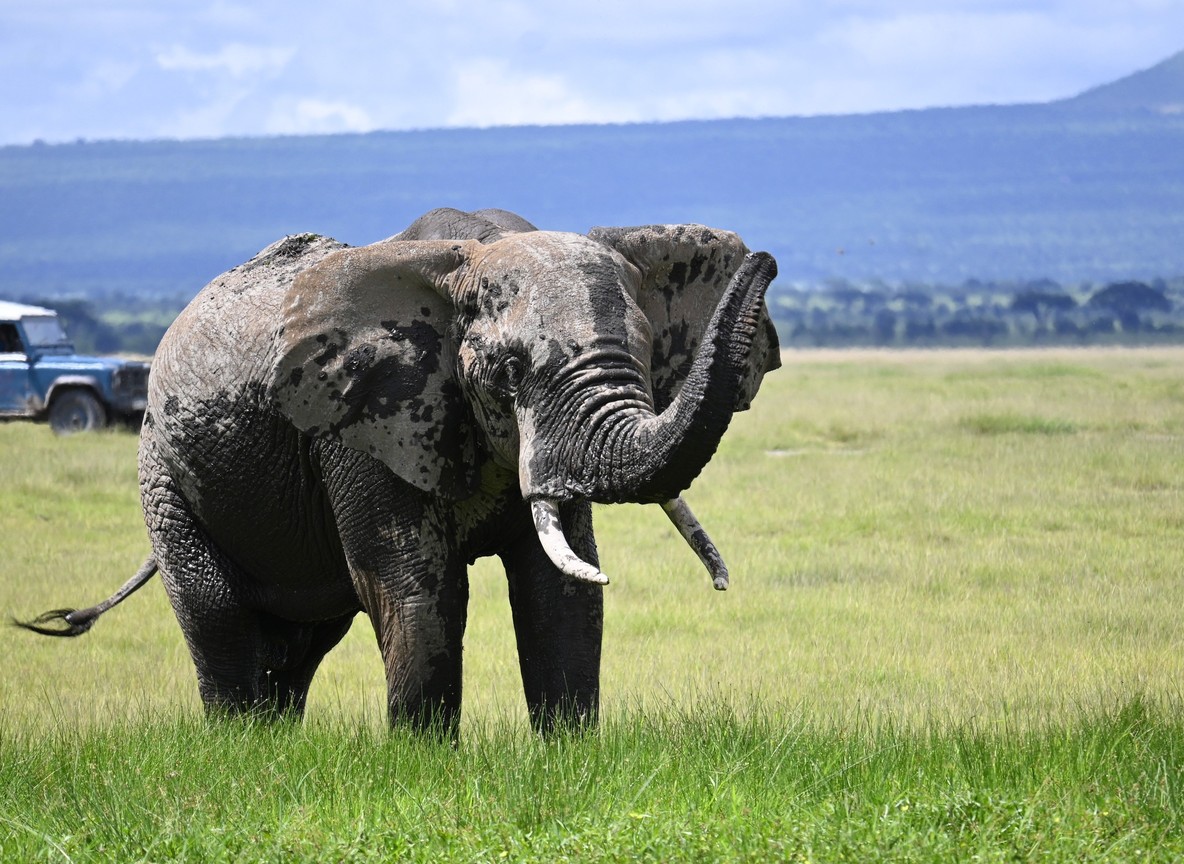
Wildlife photographers who spent years photographing One Ton say his name came from the sheer visual weight of his ivory. Seen in profile, his tusks looked almost too heavy for his skull to carry. That single trait made him one of the most photographed elephants in the region. It is also one of the reasons camera-carrying visitors booked trips to this exact corner of southern Kenya.
Craig’s Death Set the Tone for 2026
Craig died six months earlier, on January 2, 2026, on community land near Amboseli. He was 54. Conservationists believe worn-down molars left him unable to grind food properly in his final weeks. Worn teeth are a common cause of natural death in old elephants. Craig was known as Amboseli’s largest tusker and one of the calmest elephants in the ecosystem. He was comfortable enough around people that he became one of the most photographed animals in Africa.
Losing Craig in January and One Ton in July means Kenya said goodbye to two of its last great tuskers within a single calendar year. Both were old bulls that died naturally rather than through poaching or conflict, which conservationists frame as a sign of a life well protected. But it still shrinks an already small group of elephants that cannot easily be replaced.
Why Super Tuskers Are So Rare
A super tusker is a bull elephant whose tusks each weigh more than 45 kilograms. Older wildlife literature sometimes calls this a hundred-pounder. Genetics that produce tusks this large take decades to show themselves. Only a small number of bulls ever reach that potential before they die of old age, disease, conflict, or hunting. According to Big Life Foundation, roughly 10 super tuskers remained in the Amboseli ecosystem before this year’s losses. That number has been shrinking for decades due to trophy hunting pressure on the Tanzania side of the border and historical poaching across East Africa.
| Fact | Detail |
|---|---|
| Super tusker definition | Tusks each weighing over 45 kg (about 100 lbs) |
| Super tuskers left in Amboseli ecosystem | Roughly 10, per Big Life Foundation |
| Craig’s age at death | 54 years, died January 2, 2026 |
| One Ton’s age at death | Estimated 50 to 60 years, died July 6, 2026 (announced) |
| Main historic threat | Trophy hunting near the Tanzania border, ivory poaching |
| Amboseli National Park size | 392 km2 |
The Ongoing Threats Facing Amboseli’s Remaining Giants
Amboseli’s super tuskers do not stay inside park boundaries. Their home range stretches across the Kenya-Tanzania border into the Chyulu Hills, the Kimana Sanctuary, and community conservancies where protection standards vary. Trophy hunting remains legal in parts of northern Tanzania, and in past years several large-tusked bulls that regularly crossed from Amboseli were hunted there. That cross-border gap is the single biggest ongoing risk to the small number of super tuskers still alive.
Old age is the other factor now closing in fast. Both Craig and One Ton were well past the point where most wild elephants survive. As the surviving super tuskers age, natural death from worn teeth or organ decline is becoming almost as big a threat as hunting. There are simply so few of these elephants left to lose.
How Rangers and Researchers Protect What Remains
Big Life Foundation and the Amboseli Trust for Elephants run some of the most consistent elephant monitoring programs in Africa. They track individual elephants by name, family unit, and movement pattern across the Amboseli-Tsavo landscape. Rangers patrol on foot and by vehicle. They respond to injuries and human-wildlife conflict, and they work with community conservancies bordering the park to keep migration corridors open. This is the same network that tracked One Ton for years. It confirmed his cause of death within a day of his collapse.
Community conservancies play an outsized role here. Much of the land super tuskers use lies outside Amboseli’s official boundary, on Maasai group ranches and conservancies. Local landowners here choose to keep land open for wildlife instead of converting it to fenced agriculture. Tourism revenue, including park fees and conservancy fees paid by visitors, funds a large share of the ranger salaries and monitoring work that keeps this system running.
Amboseli at a Glance: Planning a Visit
Amboseli remains one of the best places on earth to see elephants up close, with Mount Kilimanjaro rising in the background on clear mornings. Here are the practical details for planning tours and safaris to the park.
| Park / Camp | Distance or Location | From Nairobi | Indicative Fee or Rate (USD) |
|---|---|---|---|
| Amboseli National Park | 392 km2 | 240 km, 4 to 5 hr drive, or 45 min flight to Amboseli Airstrip | 60 to 90 per adult per day (non-resident, rate under judicial review in 2026) |
| Kimana Sanctuary | Community conservancy, eastern boundary | Adjacent to Amboseli | Separate conservancy fee, confirm on booking |
| Ol Tukai Lodge | Inside the park, near the swamps | Near Meshanani Gate | 250 to 400 per night, indicative |
| Tortilis Camp | Private conservancy land, southern boundary | Near Kimana Gate | 400 to 700 per night, indicative |
| Amboseli Serena Safari Lodge | Inside the park, western side | Near Meshanani Gate | 200 to 350 per night, indicative |
Prices above are indicative ranges only, and the non-resident park fee is currently under court review in Kenya, so always confirm the rate before booking. Meshanani Gate and Kimana Gate are the two most used entry points, and Amboseli Airstrip serves fly-in guests from Nairobi and the coast.
What This Means for Your Safari
Visiting Amboseli after losing two super tuskers in one year is not a reason to stay away. It is a reason to visit with intention. The elephants that remain, including large family herds and the handful of surviving big tuskers, depend on tourism revenue to stay protected. Every park fee, conservancy fee, and guided game drive booked through a responsible operator adds to the funding that keeps rangers on patrol. That funding also keeps conservancies open for wildlife instead of fences.
Choosing tours and safaris with an operator who understands this history changes what you get from the trip. A good guide can point out which family group descends from which matriarch. That guide can also explain why Amboseli’s remaining super tuskers matter, turning a game drive into something closer to witnessing living history. Trunktrails Safaris builds Amboseli itineraries around this reality. We time game drives for the hours when elephant herds gather near the swamps, and we brief every guest on the conservation story behind what they are seeing.
The Trunktrails Advantage
Trunktrails Safaris is a Kenyan-owned operator. Our Amboseli itineraries are built around what is actually happening in the ecosystem this year, not a generic template copied from years ago.
| What We Provide | What It Means for You |
|---|---|
| Local, Kenyan-owned guiding team | Real knowledge of where elephant herds and remaining tuskers are moving |
| Itineraries built around the swamps and Kilimanjaro views | Better odds of a meaningful elephant sighting on your safari |
| Conservation fee transparency | You see where your park and conservancy fees actually go |
| Small-group game drives | Less pressure on an already fragile super tusker population |
| Flexible lodge and camp options | Choose Ol Tukai Lodge, Tortilis Camp, or Amboseli Serena based on your budget |
Every trip booked through Trunktrails Safaris supports the rangers, researchers, and community conservancies working to protect the elephants that carry Amboseli’s story forward. Our guides do not just point out wildlife, they explain the history standing in front of you. 🌍
Book a Safari That Honors Amboseli’s Giants
Kenya has lost two of its most iconic elephants this year. The ones still walking Amboseli’s swamps deserve travelers who understand what is at stake. Trunktrails Safaris can build an Amboseli itinerary around the conservancies, gates, and lodges best placed for real elephant encounters, timed for the seasons when sightings are strongest.
Further reading
More safari planning resources
- Map of Amboseli from Valley Safaris
- Amboseli National Park guide on Touring Insights
- Amboseli destination guide on FindMySafari
- Big Five safari collection on FindMySafari
Message Trunktrails Safaris on WhatsApp at +254 113 208888, email info@trunktrailssafaris.com, or visit trunktrailssafaris.com to start planning tours and safaris to Amboseli this year. 📸