
Marafa Hell’s Kitchen Kenya — Complete Blog Production File
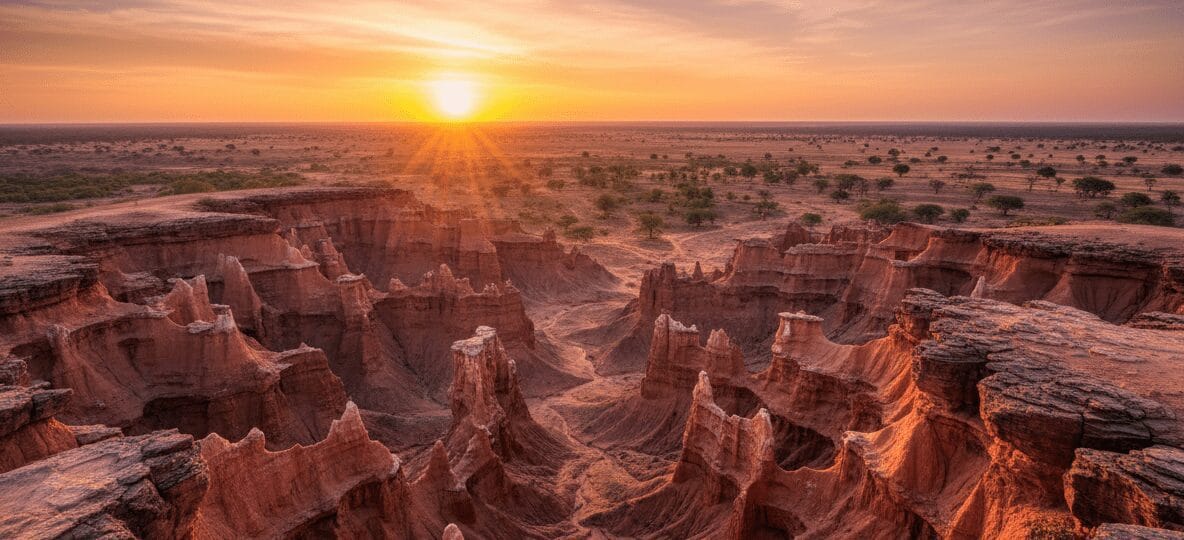
Just 38 kilometres inland from the turquoise waters of Malindi lies one of Kenya’s most dramatic geological wonders. Marafa Hell’s Kitchen Kenya is a sprawling sandstone canyon where rust-red cliffs, cream-coloured pillars, and deep gorges create a landscape so otherworldly it feels like stepping onto another planet. We’ve guided countless travellers through this natural marvel, and every visit reveals something new – whether it’s the way sunset light transforms the rock faces into molten gold, or the quiet power of standing at the edge of a canyon carved by millennia of wind and rain.
At Trunktrails Safaris, we believe Kenya’s magic extends far beyond the savannahs. Marafa Hell’s Kitchen is proof that our coastal region holds secrets as captivating as any wildlife migration. This guide shares everything you need to know about visiting this geological masterpiece, from the science behind its formation to the folklore that gives it its haunting name.
What is Marafa Hell’s Kitchen?
Marafa Hell’s Kitchen is a sedimentary canyon system formed over millions of years through erosion of sandstone and limestone deposits. The Marafa depression Kenya sits in a semi-arid landscape where seasonal rains and persistent winds have carved deep gullies, towering pillars, and labyrinthine passages into the soft rock. The result is a natural amphitheatre of layered stone in shades of crimson, ochre, white, and pink.
The Marafa geological formation tells the story of ancient seas that once covered this region. As water levels receded and tectonic activity shaped the land, layers of sediment compressed into rock. Over time, erosion exposed these layers, creating the dramatic relief we see today. The iron oxide content in the sandstone gives Marafa its signature red hues, while calcium-rich layers appear as pale cream bands running through the canyon walls.
The site covers several square kilometres, with the main viewing areas accessible via walking trails that wind along the canyon rim and descend into the gorge itself. Unlike many geological attractions that require technical climbing, Marafa remains accessible to visitors of all fitness levels, though sturdy footwear is essential for navigating the sandy, uneven terrain.
What to Expect When You Visit Marafa Hell’s Kitchen
Your first glimpse of the canyon takes your breath away. The earth simply drops away, revealing a maze of gullies and spires that seem to glow from within. The colours shift throughout the day – soft pastels in morning light, intense reds at midday, and fiery oranges as the sun sets.
Walking trails lead you along the canyon rim, offering panoramic views across the depression. From these vantage points, you can appreciate the scale of the erosion and spot the various formations that have earned local nicknames. Some pillars stand isolated like sentinels, while others cluster together in groups that resemble ancient ruins.
For the more adventurous, paths descend into the canyon itself. Here, the temperature drops noticeably, and the towering walls create a sense of enclosure that contrasts sharply with the open views from above. You’ll walk through narrow passages where the rock walls rise 30 metres on either side, their surfaces rippled and textured by centuries of weathering.
What to bring:
- Sturdy closed-toe shoes with good grip
- Sun protection (hat, sunscreen, sunglasses)
- At least 1 litre of water per person
- Camera with extra battery (you’ll take more photos than you expect)
- Light jacket for early morning or evening visits
The site has minimal infrastructure – no shops, restaurants, or facilities beyond basic pit latrines at the entrance. This raw, undeveloped quality is part of Marafa’s appeal, but it means you need to come prepared.
The Legend of Marafa – Local Giriama Folklore
The name “Hell’s Kitchen” is a relatively modern invention, likely coined by European visitors struck by the canyon’s fiery appearance. But the Giriama people, who have lived in this region for generations, know it by a different name: Nyari, which translates roughly to “the place that should not be defiled.”
According to local legend, Marafa was once a prosperous village where a wealthy family lived in luxury while ignoring the suffering of their neighbours. Their greed and arrogance angered the spirits, who sent a catastrophic event that swallowed the village whole, leaving only the canyon as a reminder of what happens when communities abandon compassion.
Different versions of the story exist, but all carry the same moral weight. Some elders say the ground opened up during a feast where the rich refused to share food with the hungry. Others speak of a curse placed by a wronged elder. The red colour of the rocks, in these tellings, represents the shame and suffering of those who valued wealth over humanity.
Whether you view the legend as literal history or moral parable, it adds depth to your visit. Standing at the canyon’s edge, it’s easy to imagine how such a dramatic landscape inspired stories of divine intervention. We always encourage our guests to listen to local guides who share these narratives – they connect you to the cultural significance of Marafa beyond its geological interest.
Best Time to Visit Marafa Hell’s Kitchen
Timing transforms your Marafa experience. The canyon is accessible year-round, but the quality of light and the intensity of colours vary dramatically depending on when you arrive.
Sunset visits (4:00 PM – 6:30 PM) are the most popular, and for good reason. As the sun drops toward the horizon, the low-angle light ignites the red sandstone, creating a spectacle of colour that shifts minute by minute. The shadows deepen, adding contrast and dimension to the rock formations. Most photographers and serious visitors aim for the golden hour, arriving around 4:30 PM to secure good viewing positions.
Sunrise visits (5:30 AM – 7:30 AM) offer a quieter alternative with equally stunning light. The morning air is cooler, making the walk more comfortable, and you’ll often have the canyon largely to yourself. The colours are softer than at sunset – more pink and lavender than orange and red – but no less beautiful.
Midday visits are possible but challenging. The overhead sun flattens the landscape, reducing the dramatic shadows that give the canyon its depth. The heat can be intense, especially during the dry season (December to March and July to October). If you must visit midday, descend into the canyon where the walls provide shade and the temperature is more bearable.
Seasonal considerations:
- Dry season (December-March, July-October): Clear skies guarantee good light, but temperatures can exceed 35°C. Dust is more prevalent.
- Wet season (April-June, November): Occasional afternoon rains can make trails slippery. The vegetation around the canyon is greener, and the air is clearer after rain.
We recommend sunset visits for first-timers, as the dramatic light makes the canyon’s features most accessible to cameras and memory alike. If you’re staying in the area for multiple days, a sunrise visit offers a completely different perspective worth experiencing.
How to Get to Marafa from Malindi and Watamu
Marafa Hell’s Kitchen sits approximately 38 kilometres northwest of Malindi town, accessible via a combination of tarmac and murram (dirt) roads. The journey takes 45 minutes to an hour depending on road conditions and your starting point.
From Malindi: Take the Malindi-Tsavo road (A109) heading west toward Sala Gate. After about 25 kilometres, you’ll see signage for Marafa. Turn right onto the murram road and continue for approximately 13 kilometres. The road is generally well-maintained but can become rutted during heavy rains. A standard sedan can make the journey in dry conditions, but a 4×4 vehicle provides more comfort and security.
From Watamu: Drive north to Malindi (approximately 20 kilometres), then follow the directions above. Total journey time is around 1.5 hours.
Public transport options: Matatus (shared minibuses) run from Malindi to Marafa village, but they don’t operate on fixed schedules and may not run late enough for sunset visits. The last matatu back to Malindi typically leaves by 5:00 PM, which means you’d miss the best light. For this reason, we don’t recommend relying on public transport unless you’re prepared to stay overnight in Marafa village.
Organized tours: This is where Trunktrails Safaris excels. Our Malindi day trips include round-trip transport in comfortable 4×4 vehicles, a knowledgeable guide who shares both geological and cultural insights, and perfectly timed arrival for optimal viewing conditions. We handle all logistics, allowing you to focus entirely on the experience. Contact our team to arrange your Marafa visit as part of a coastal Kenya itinerary.
Entry fees: A small conservation fee (typically 500-1000 KES for non-residents) is collected at the site entrance. This supports local community initiatives and basic site maintenance.
Combining Marafa with a Coastal Kenya Itinerary
Marafa Hell’s Kitchen fits beautifully into a broader coastal Kenya adventure. We often incorporate it into multi-day itineraries that balance beach relaxation with cultural and natural exploration.
3-Day Malindi & Marafa Itinerary:
- Day 1: Arrive in Malindi, settle into beachfront accommodation, explore Malindi town and the historic Vasco da Gama Pillar
- Day 2: Morning at Malindi Marine National Park for snorkelling, afternoon visit to Marafa for sunset
- Day 3: Gede Ruins and Arabuko Sokoke Forest before departure
5-Day Coastal Discovery:
- Combine Watamu’s pristine beaches with Marafa, the Gede Ruins, and a dhow sailing experience
- Add a visit to the Kipepeo Butterfly Project or a guided walk through Arabuko Sokoke Forest
- Include a traditional Swahili dinner in Malindi’s old town
Week-long Coast & Culture:
- Start in Mombasa with Fort Jesus and old town exploration
- Move north to Watamu for marine activities
- Visit Marafa as a day trip from Watamu or Malindi
- Continue to Lamu for dhow sailing and cultural immersion
Marafa works particularly well as a contrast to beach days. After several days of ocean activities, the desert-like landscape of the canyon provides a completely different sensory experience. The dry heat, the silence broken only by wind, and the ancient geology create a meditative atmosphere that many of our guests describe as unexpectedly moving.
We design itineraries that showcase Kenya’s diversity while maintaining the highest standards of safety and sustainability. Our local knowledge ensures you experience Marafa at its best, with timing, logistics, and interpretation all optimized for your enjoyment.
Guided Tours from Trunktrails Safaris
While independent visits to Marafa are possible, a guided tour elevates the experience significantly. Our guides bring the canyon to life with geological explanations, cultural stories, and practical knowledge that transforms a scenic visit into genuine understanding.
What our Marafa tours include:
- Round-trip transport from Malindi, Watamu, or other coastal locations in comfortable 4×4 vehicles
- Professional guide with expertise in geology and local culture
- Timed arrival for optimal light conditions (sunset or sunrise)
- All entry and conservation fees
- Bottled water and light refreshments
- Photography assistance and location scouting for the best shots
Tour options:
- Half-day sunset tour: Depart Malindi around 3:30 PM, arrive at Marafa by 4:30 PM, explore until sunset, return by 7:30 PM
- Sunrise tour: Depart Malindi at 5:00 AM, watch sunrise from the canyon rim, return by 9:00 AM
- Full-day combination: Pair Marafa with Gede Ruins or Arabuko Sokoke Forest for a complete inland exploration
Our guides are trained to read the landscape, pointing out features you might otherwise miss – the way certain rock layers indicate ancient water levels, the plants that thrive in this harsh environment, or the bird species that nest in the canyon walls. They also facilitate respectful interaction with local community members, ensuring your visit benefits the people who call this area home.
For photography enthusiasts, we offer specialized tours that prioritize composition and lighting. We know which viewpoints work best at different times of day and can help you capture images that do justice to Marafa’s dramatic beauty.
Ready to experience Hell’s Kitchen Marafa canyon for yourself? Get in touch with us to discuss tour options and availability. We’re available at.
Frequently Asked Questions About Marafa Hell’s Kitchen
Q: Is Marafa Hell’s Kitchen safe to visit?
A: Yes, Marafa is safe for visitors who take reasonable precautions. The main risks are heat exposure and slips on sandy trails. Stay on marked paths, bring adequate water, and avoid getting too close to crumbling cliff edges. Our guided tours include safety briefings and ensure you have support throughout your visit.
Q: How long should I plan to spend at Marafa?
A: Most visitors spend 1.5 to 2 hours at the site. This allows time to walk the rim trails, descend into the canyon, and find good spots for photography. If you’re visiting for sunset, plan to arrive at least an hour before the sun goes down to explore before the light show begins.
Q: Can children visit Marafa Hell’s Kitchen?
A: Yes, families with children regularly visit Marafa. The rim trails are suitable for children who can walk confidently on uneven ground. Supervise children closely near cliff edges, and consider visiting during cooler morning hours rather than hot afternoons. Our family-friendly tours adapt the pace and route to accommodate younger visitors.
Q: What’s the difference between visiting independently and taking a guided tour?
A: Independent visits give you flexibility in timing and pace, but you’ll miss the geological and cultural context that guides provide. You’ll also need to arrange your own transport and navigate unfamiliar roads. Guided tours offer convenience, expertise, and optimized timing for the best experience. For first-time visitors, we strongly recommend a guided tour.
Q: Are there accommodation options near Marafa?
A: Marafa village has very basic guesthouses, but most visitors stay in Malindi or Watamu where there’s a full range of accommodation from budget hostels to luxury resorts. The 45-minute drive from Malindi makes day trips practical and comfortable.
Plan Your Marafa Adventure with Trunktrails Safaris
Marafa Hell’s Kitchen Kenya deserves a place on every coastal Kenya itinerary. This geological wonder offers something rare – a landscape so dramatic it rivals anything you’ll see in East Africa, yet remains accessible and uncrowded. Whether you’re drawn by the science of erosion, the beauty of the light, or the cultural stories embedded in the land, Marafa delivers an experience that stays with you long after you’ve returned to sea level.
We’ve been guiding visitors through Kenya’s coastal treasures for years, and Marafa remains one of our favourite destinations to share. The combination of natural beauty, cultural significance, and sheer visual impact makes every tour memorable. Our team knows the best viewpoints, the optimal timing, and the stories that bring the canyon to life.
For more information about Kenya’s coastal attractions and safari opportunities, visit the Kenya Tourism Board to discover why our country continues to captivate travellers from around the world.
Contact Trunktrails Safaris today to add Marafa Hell’s Kitchen to your Kenya adventure. Call us at, contact us, or visit trunktrailssafaris.com to start planning your journey to one of Kenya’s most spectacular hidden gems.
Further reading
More safari planning resources
- Kenya tour packages from Valley Safaris
- Is Kenya safe to visit? on Touring Insights
- Family safari collection on FindMySafari
- Best time to visit Kenya month-by-month map from Valley Safaris
Contact Trunktrails Safaris
WhatsApp: +254 113 208888 Email: info@trunktrailssafaris.com Website: https://trunktrailssafaris.com