Maasai Cultural Village: How to Visit Respectfully and Meaningfully
Most safari itineraries include a Maasai cultural village visit. Very few of them prepare you for it properly. You arrive, a group of warriors perform a jumping dance, someone offers to sell you beadwork, and you leave with photographs you are not sure you should have taken. Something feels off, and that feeling is worth listening to. 🌍
A genuine maasai cultural village experience is one of the most moving things a traveler can do in Kenya. But the difference between a meaningful exchange and a transactional show depends entirely on how you choose it, how you prepare, and how you show up on the day. This guide gives you the practical framework to do it right, built around the community-owned conservancy model that Trunktrails Safaris has built relationships with over years of cultural tours and safaris.
Why a Maasai Village Visit Is Unlike Any Other Safari Stop
Wildlife can be experienced on any well-run Kenya safari. Witnessing a lion hunt or a river crossing is extraordinary, yet it requires nothing specific from you. You sit, you watch, you photograph.
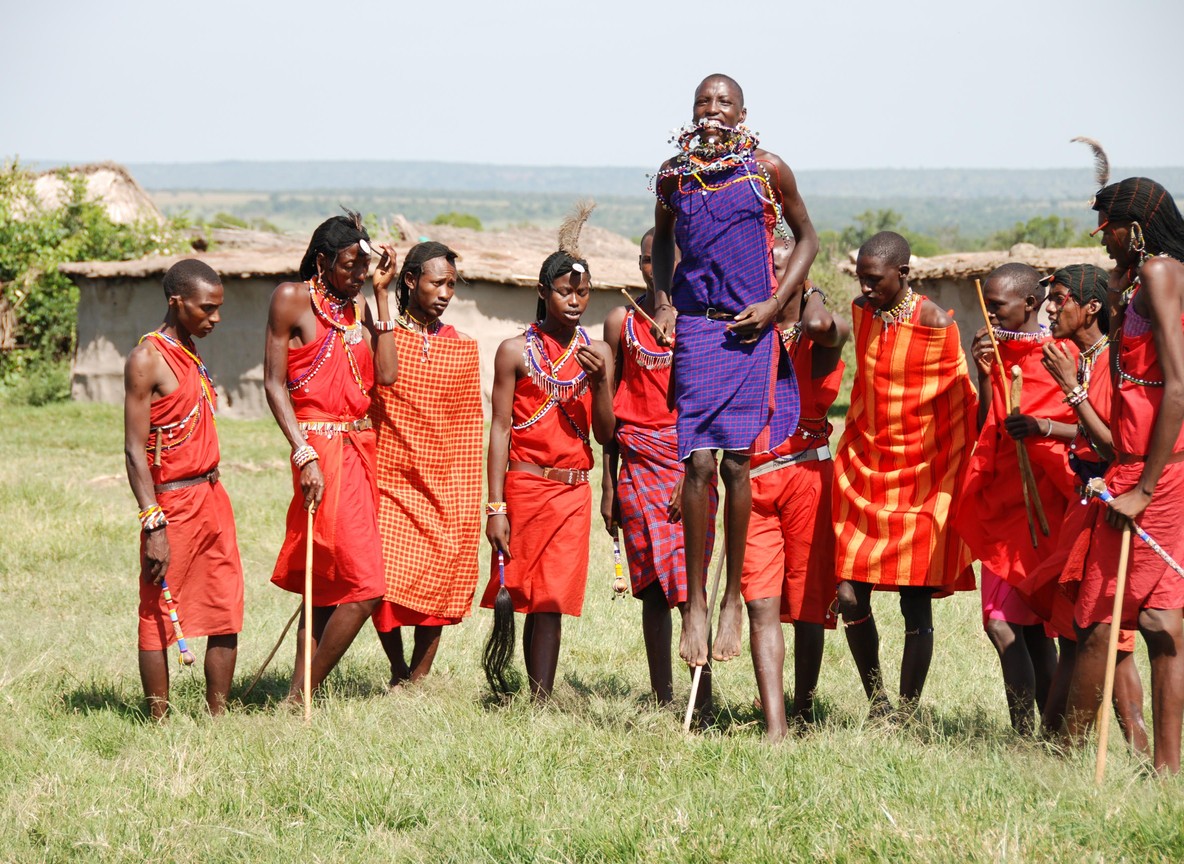
A maasai cultural village visit asks more. It asks you to be present in a different way. You are entering a living community, not a museum. The families who welcome you are not actors. The manyatta (homestead) they show you is where they sleep and raise their children. The warriors who demonstrate the adumu jumping dance do so as a cultural act of welcome, not a performance staged for your camera.
This distinction changes how you should think about the visit entirely. The question is not “what will I see?” It is “how will I engage, and what will I leave behind in terms of respect?”
Community-Owned vs Roadside Shows: Knowing the Difference
This is the single most important decision you will make before your maasai cultural village experience. Not all village visits are equal.
| Factor | Community-Owned Conservancy Village | Roadside or Hotel-Arranged Show |
|---|---|---|
| Revenue model | Fees go directly to the community fund | Revenue often goes to an intermediary |
| Guides | Community elders or trained cultural guides | Outside guides, sometimes unrelated to the village |
| Consent | Community leadership decides visits, numbers, and timing | Visits arranged by tourism brokers without community oversight |
| Authenticity | Daily life is visible alongside cultural demonstration | Demonstration is the entire product |
| Photography policy | Discussed and agreed in advance | Often ambiguous or pressured in the moment |
| Conservation link | Visits often support adjacent wildlife conservancy land | No land-use or conservation connection |
Trunktrails Safaris works exclusively with community-owned conservancies as part of our ethical cultural tours and safaris model. This approach aligns with the community conservancy standards recognized by African Wildlife Foundation. This means your visit fee enters the community fund, which the community leadership decides how to allocate. Schools, water infrastructure, and maternal healthcare have all been funded through this model at the conservancies we partner with.
Ask any operator you consider: “Does the revenue from this visit go directly to the community?” If they cannot answer clearly, that tells you everything.
Before You Arrive: What to Research and Prepare
Preparation is the most underrated part of a maasai community tourism experience. Travelers who do zero preparation leave feeling like passive observers. Those who arrive with even basic knowledge participate in a real exchange. 📸
Learn a few words of Maa, the Maasai language. “Serian” means “fine” or “well.” “Takwenya” is a respectful greeting to an elder. You will not become fluent. But the act of trying communicates that you came to engage, not to consume.
Understand the basic social structure. The Maasai organize life around age-sets called ilkiama. Junior warriors (ilmoran), senior warriors, junior elders, and senior elders each carry distinct roles, privileges, and responsibilities. Knowing this prevents the common mistake of treating all men as warriors or all women as craft sellers.
Check your photography intentions in advance. Some community visits allow photographs freely. Others require asking permission from each person individually. A few ceremonial elements are off-limits entirely. Your Trunktrails Safaris guide will brief you before entry. Listen carefully and follow their lead without question.
Dress modestly and practically. This is not a dress code enforced by the community, but it is a sign of respect. Bright colors are fine. Revealing clothes are not appropriate. Leave expensive jewelry behind.
Bring small, practical gifts if you wish. Not money handed directly to individuals. School supplies for the community school, medical supplies agreed in advance with your guide, or small tools the community has expressed a need for. Your Trunktrails Safaris contact can advise exactly what is useful before departure.
What to Expect During a Maasai Cultural Village Visit
Every community operates its visit slightly differently. That said, a typical community-owned maasai cultural village visit through Trunktrails Safaris follows a consistent pattern.
Welcome ceremony: You are met outside the village by community members. A senior elder or cultural guide introduces the community, its history, and the visit structure. This is where expectations are set on both sides.
Village walk: Your guide leads you through the manyatta. You see the enkiama (sleeping hut), the livestock enclosure, and the central communal space. Your guide explains daily life, seasonal patterns, and how the community interacts with adjacent wildlife conservancy land.
Cultural demonstrations: The adumu jumping dance is performed by the ilmoran. Firemaking using friction is common. Women explain beadwork and its color grammar. Each color carries specific meaning within Maasai culture, functioning as a communication system as much as decoration.
Exchange and questions: This is the most valuable part. You ask questions, your guide translates, and elders respond. Good questions to ask: “How has community conservation affected livestock grazing?” “What are the biggest changes you have seen in the past 20 years?” “How do young Maasai today balance traditional and modern life?”
Marketplace: At the end, community members display beadwork and crafts for sale. Prices are set by the community. Bargaining below asking price is disrespectful here. Buy what you genuinely want. Nothing more.
Maasai Village Etiquette: What Visitors Get Wrong
Even well-intentioned travelers make these mistakes. Knowing them in advance is the preparation.
Pointing with one finger. Considered rude in Maasai culture. Use an open palm or gesture with your chin.
Photographing without asking. Even in communities where photography is generally allowed, individuals have the right to decline. Ask through your guide. Accept “no” gracefully and immediately.
Handing money directly to children. This is one of the most damaging patterns in community tourism across Kenya. It creates incentive structures that pull children toward tourists rather than school. If you want to contribute financially, do so through the community fund.
Treating the visit as a zoo. Wandering away from your guide to photograph something “candid,” entering huts without invitation, or talking over your guide during explanations all communicate that you are there for extraction, not exchange. Stay with your guide. Follow pace. Wait to be invited.
Underestimating time. A meaningful maasai cultural village visit takes 90 minutes to two hours. Visitors who schedule 45 minutes get a highlights reel, not a human exchange. Build proper time into your itinerary when you plan with Trunktrails Safaris.
How to Engage With Maasai Community Tourism Responsibly
Responsible engagement goes beyond etiquette. It extends to how you talk about your visit afterward, and what you take from it. ✨
Share your experience thoughtfully. Photographs of people, especially elders and women, deserve context when you post them publicly. A caption that explains the community-owned conservancy model, names the region (not just “a Maasai village”), and reflects on what you learned is far more valuable than an image posted without framing.
Refer others to ethical operators. The single most powerful thing you can do after a genuine maasai community tourism experience is tell other travelers which operators do it properly. Word of mouth shapes the market.
Consider conservation giving. Many of the conservancies Trunktrails Safaris partners with have direct conservation funds you can contribute to independently. Ask your guide for links. Five percent of all Trunktrails Safaris bookings already goes toward wildlife protection in the regions we work in.
Write a review that matters. Review the experience on Google or TripAdvisor with specific detail about what made it ethical and genuine. This helps community-owned operations rise above roadside alternatives in search results and traveler decision-making.
The Trunktrails Advantage: Community-Rooted Cultural Access
Trunktrails Safaris is a native Kenyan-owned operator. That matters in cultural tourism more than in any other part of our tours and safaris work.
Our guides are not intermediaries. Several of our lead cultural guides are Maasai themselves, or have decade-long personal relationships with community leaders in the Mara ecosystem and Amboseli corridor. When we bring a guest to a maasai cultural village, we are not arranging a transaction. We are introducing a trusted friend’s community to a new guest.
This means we know which communities are genuinely community-governed, which visits are arranged with elder consent, and which have been quietly commercialized in ways that redirect revenue away from the village. We know because we have visited these communities dozens of times, often without clients, simply to maintain the relationship.
We are also, which means our cultural tours and safaris operate under Kenya’s ethical tourism regulatory framework. For cultural visits specifically, this includes community consent protocols and transparency on revenue distribution.
No other guide can tell you these things about a community they met through a hotel booking desk.
Planning Your Maasai Cultural Experience With Trunktrails Safaris
A maasai cultural village visit works best as part of a wider Kenya safari itinerary rather than a standalone day trip. The communities we partner with sit adjacent to wildlife conservancies in the Mara ecosystem and the Amboseli-Chyulu corridor. Combining a morning game drive with an afternoon cultural visit means you experience both the natural and human dimensions of the same landscape in a single day.
This combination is available across several Trunktrails Safaris packages, from 4-day Mara itineraries to 10-day multi-park journeys. We build the cultural visit into the itinerary with full preparation briefing, a dedicated cultural guide, and a post-visit debrief that covers what you experienced and how to share it responsibly.
If you want a maasai cultural village experience that stays with you rather than just adds another tick to a list, start the conversation with our team now. We will match you to the right community visit for your travel dates and your specific interests.
Contact Trunktrails Safaris:
Further reading
More safari planning resources
- Kenya tour packages from Valley Safaris
- Amboseli National Park guide on Touring Insights
- Compare Kenya safari packages on FindMySafari
- Family safari collection on FindMySafari
- WhatsApp: +254 113 208888
- Email: info@trunktrailssafaris.com
- Website: https://trunktrailssafaris.com
Send us a WhatsApp message today with your travel dates. We will confirm availability at our partner communities and build your cultural itinerary within 24 hours.
Trunktrails Safaris. Kenyan-owned. Community-rooted. Ethically led.