Laikipia Wilderness Camp Kenya: Off-Grid Luxury in a Private Conservancy
Most safari camps sit in one place forever. Laikipia Wilderness Camp Kenya does not work that way. The tents move with the seasons. There is no perimeter fence, and the power comes from the sun. This is one of the few places left in Kenya where a genuine tours and safaris experience means walking into the bush on foot. Guests paddle a river by canoe and fall asleep to sounds a fenced lodge would filter out. 🌍
Laikipia Wilderness Camp sits on community-owned land bordering the Il Ngwesi and Lekurruki conservancies. Both lie in northern Laikipia County, part of the Northern Rangelands Trust network. This network has turned community-owned rangeland into some of Kenya’s most effective conservation ground. It is not a private ranch bought and fenced by an outside investor. This is Maasai and Mukogodo community land. Local families lease and manage it in partnership with conservation partners, and that distinction shapes everything about the camp.
This corner of Laikipia suits travelers who want a real off-grid safari kenya experience. It suits guests who want direct contact with community conservation, and anyone who wants days built around movement instead of a fixed itinerary.
Where Is Laikipia Wilderness Camp?
Laikipia Wilderness Camp is located in the Il Ngwesi and Lekurruki conservancies. This is the drier, wilder northern edge of the Laikipia plateau, where the Mukogodo Forest gives way to the Ewaso Ng’iro River valley. Laikipia County covers around 9,500 square kilometres. It holds one of the densest networks of private and community conservancies anywhere in Africa. That density is why the region is often called the model for modern Kenyan conservation. Il Ngwesi and Lekurruki are two of the earliest community conservancies in that network. Both sit on group ranch land owned by local Maasai and Mukogodo families, not by a private landlord.
Getting there is simplest by air. A light-aircraft charter from Nairobi’s Wilson Airport to an airstrip serving the conservancy takes roughly one hour. By road, Nairobi to Nanyuki is about 200 kilometres and three and a half hours on tarmac. From Nanyuki, expect a further two to three hours north on graded and rough tracks into Il Ngwesi and Lekurruki. Many guests fly in one way and drive the other, to see both the plateau and the northern bush country on the same trip.
| Feature | Laikipia Wilderness Camp |
|---|---|
| Location | Il Ngwesi and Lekurruki conservancies, northern Laikipia |
| Ownership model | Community-owned group ranch land, NRT-affiliated |
| Laikipia County size | Approx. 9,500 km2 |
| Distance from Nairobi | Approx. 250 to 280 km |
| Flight from Wilson Airport | Approx. 1 hr |
| Road via Nanyuki | Approx. 200 km / 3.5 hrs to Nanyuki, then 2 to 3 hrs onward |
| Key river | Ewaso Ng’iro |
| Camp structure | Movable, open-sided canvas tents, solar-powered, no perimeter fence |
What Makes It Off-Grid?
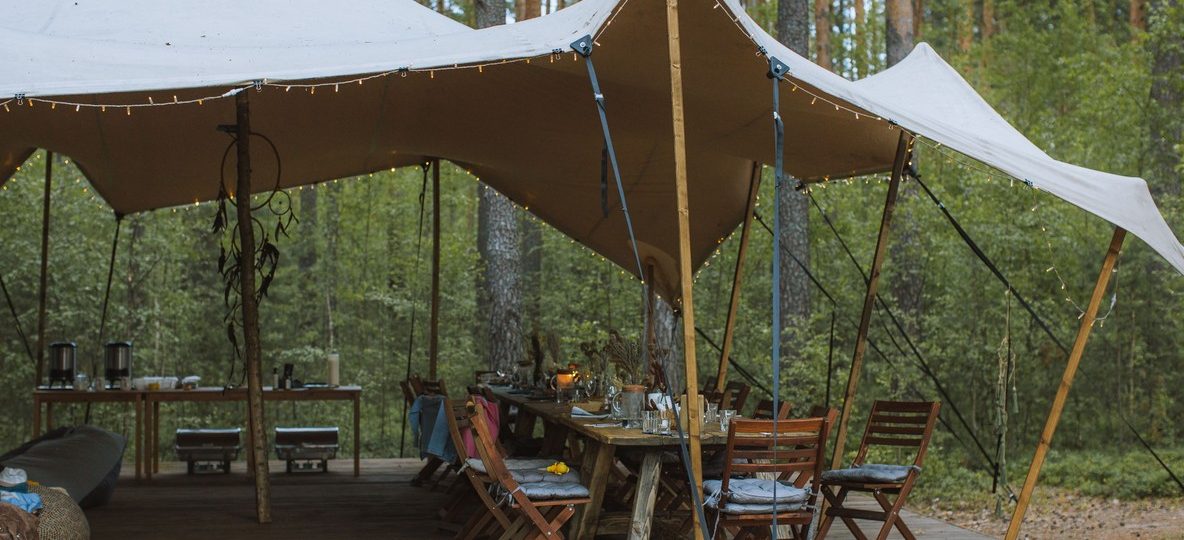
Off-grid is not a marketing word here. The camp runs on solar power and draws its water locally. Tents here are semi-permanent and can move to follow game and river conditions through the year. There is no perimeter fence. Animals move through camp on their own terms, and guests sleep with the sounds of the bush instead of a wall built to keep it out.
This low-impact model matters for a specific kind of traveler. Thread count and infinity pools mean a fixed lodge on the plateau will suit you better. But if your idea of luxury is waking up to a leopard’s tracks near your tent, this camp is built for you. The same goes for anyone who wants to drift down the Ewaso Ng’iro in a canoe with a guide who grew up on this land. Trunktrails Safaris works with a small number of properties built on this philosophy. This is one of the purest examples in the country.
Activities: Walking, Riding, and Canoeing the Ewaso Ng’iro
The camp’s activity list reads differently from a standard game-drive lodge. Here, the vehicle is the exception, not the rule.
- Walking safaris. Guides trained in armed bush-walking lead multi-hour treks through Mukogodo Forest and the riverine bush, tracking on foot at a pace no vehicle allows.
- Canoe safaris on the Ewaso Ng’iro. When water levels allow, guests paddle stretches of the river, watching hippo, crocodile, and waterbirds from the water instead of the bank.
- Horse and camel safaris. Riding routes cross open country a vehicle cannot reach quietly. Camels support multi-day walking routes and carry gear for fly-camping further out.
- Fly-camping. Guests can spend a night away from the main camp under a simple canvas shelter, a step further into the off-grid safari kenya experience the whole property is built around.
- Night drives. This is conservancy land, not national park, so spotlit night drives are permitted. That opens up the nocturnal side of the bush that daytime game drives miss.
Wildlife and Conservation on Community Land
Il Ngwesi and Lekurruki sit within one of the last strongholds of the Grevy’s zebra. This is the largest and most endangered of Africa’s zebra species. The conservancies also hold elephant, lion, leopard, and healthy populations of plains game. Because this is community-owned conservancy land, not a national park, guides can walk, ride, and drive off-road here. The conservancy fees every guest pays go directly to the Maasai and Mukogodo households who own the land.
That funding model is the real story behind the camp. Bed-night and conservancy fees support schools, water projects, and ranger salaries in the surrounding communities. This gives local families a direct financial stake in keeping wildlife alive, rather than converting land to livestock-only use. It is community conservation working as intended. Trunktrails Safaris makes sure every guest understands exactly where those fees go before they book.
Laikipia Wilderness Camp vs. a Conventional Safari Lodge
| Factor | Laikipia Wilderness Camp (Community Conservancy) | Typical Fixed Lodge (National Park Adjacent) |
|---|---|---|
| Structure | Movable, open-sided tents, off-grid solar power | Fixed buildings, grid or generator power |
| Fencing | None | Often fenced for guest safety |
| Core activity | Walking, riding, canoeing, camel trekking | Vehicle game drives |
| Night drives | Yes | Usually prohibited |
| Off-road driving | Yes | Usually prohibited |
| Revenue destination | Direct to Il Ngwesi and Lekurruki communities | Park fees to government agency |
| Indicative rate (per person, per night, full board with activities) | Approx. USD 500 to 850 | Approx. USD 250 to 600 |
Rates above are indicative ranges only. They vary by season, group size, and activity package. Trunktrails Safaris confirms exact current pricing at the time of booking.
Who This Suits
Laikipia Wilderness Camp suits the luxury solo traveler who wants exclusivity measured in solitude, not thread count. It suits guests who value a conservation story that is real and traceable to the community holding the land. The wildlife and conservation enthusiast will also find plenty here, since community conservancies work differently from a park and reward guests who want to understand that difference, not just watch animals from a vehicle window. An active honeymoon couple will love it too, since the trip is built around shared movement: walking together, paddling together, riding together, instead of only lounging by a pool.
It is a less natural fit for young children, travelers with limited mobility, or anyone who wants a heated pool and a spa menu as the centerpiece of their stay. Trunktrails Safaris will steer families with younger kids toward a more infrastructure-heavy Laikipia property, and save this camp for guests ready for its particular kind of luxury.
How Long to Stay
Three nights is the minimum to get real value from the activity list here. Two nights covers a walk and a game drive, but rushes everything else. Four nights lets you walk, canoe, ride, and still add a night of fly-camping without compressing any single activity. Many guests pair a stay here with three or four nights on the classic Laikipia plateau, or in the Masai Mara, using this camp as the wilder, quieter half of a longer Kenya itinerary.
The Trunktrails Advantage
Trunktrails Safaris is a native Kenyan-owned operator. Community conservancies like Il Ngwesi and Lekurruki are ground we know personally, not from a brochure. We understand which conservancies actually return fee revenue to local families. Our team also tracks how the canoe and walking seasons shift with river levels, and how a camp like this slots into a wider northern Kenya route. That local knowledge is what separates a booking from a trip that actually flows.
Our tours and safaris team handles the full chain for this kind of stay. We coordinate charter flights from Wilson Airport, conservancy bed-night fees, activity scheduling around your fitness level, and the ground transfers that tie the whole route together. Every Laikipia itinerary we build follows the rhythms of walking, riding, and canoe safaris, instead of forcing an off-grid camp into a standard game-drive template. That is the difference Trunktrails Safaris brings to community-conservancy tours and safaris across northern Kenya. 🐘
Ready to Go Off-Grid in Laikipia?
Laikipia Wilderness Camp books a limited number of tents at a time, and the strongest canoe and walking windows fill early. If an off-grid, community-conservancy safari sounds like the trip you actually want, reach out to Trunktrails Safaris now. Let us lock in your dates and build the rest of your Kenya route around it.
Further reading
More safari planning resources
- Kenya national parks map from SafariPure
- Ol Pejeta and Sweetwaters safari package from Valley Safaris
- Big Five safari parks guide on Touring Insights
- Big Five safari collection on FindMySafari
📸 WhatsApp us at +254 113 208888, email info@trunktrailssafaris.com, or visit trunktrailssafaris.com to start planning your Laikipia Wilderness Camp safari today.