Kenya’s New Wildlife Conservation and Management Act: What Safari Travelers Should Know
If your Kenya safari is booked for 2026 or later, there is a new piece of legislation quietly reshaping the parks and conservancies on your itinerary. The Kenya wildlife conservation act updates the framework that has governed the country’s wildlife since 2013, and it touches everything from rhino sanctuary funding to who you pay when you cross into a community conservancy.
You do not need to read the legal text to travel smart. This guide turns the Act into a practical checklist: what to ask your operator, which parks are affected first, and where your money is actually going. We run tours and safaris through the exact regions this law reshapes, so we have built this checklist from what our guides see on the ground, not just the headlines. 🦒
What the Wildlife Conservation Act Actually Changes
The Wildlife Conservation and Management Act builds on the 2013 law rather than replacing the whole system. For a safari traveler, the parts worth knowing are narrow and practical:
- Anti-poaching units at rhino sanctuaries and conservancies get clearer legal backing and funding, tied partly to visitor fees.
- Community and private conservancies gain formal legal status, which affects how conservancy fees are collected and shared.
- Human-wildlife conflict compensation is now written into law, which matters most around conservancies bordering farmland.
- Counties gain more control over reserves they manage directly, which can mean faster fee updates than at national parks run by Kenya Wildlife Service.
None of this changes what you see on a game drive. It changes who funds the rangers protecting it and how transparently that funding reaches the communities living alongside the wildlife.
Five Things Every Safari Traveler Should Check Before Booking
Use this as a working checklist when you talk to your operator or compare quotes.
1. Ask which fee schedule applies to each park on your route. County-run reserves can revise fees on a different timeline than Kenya Wildlife Service parks, so a quote built in January may need updating by the time you travel in October.
2. Confirm whether conservancy fees are itemized. Under the Act, conservancies are expected to show conservation fees separately from camp rates rather than folding them into one number.
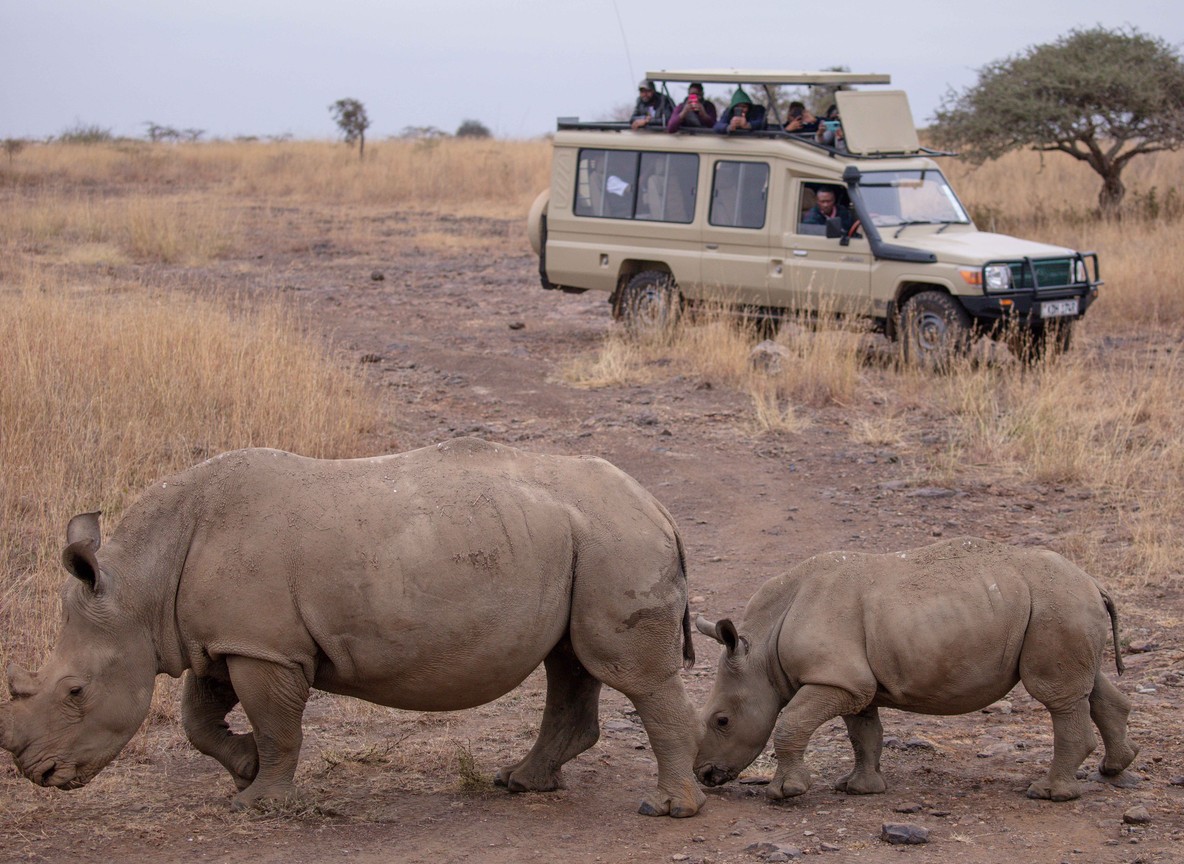
3. Check the anti-poaching and rhino monitoring fee at sanctuaries. Laikipia conservancies like Ol Pejeta and Lewa fund dedicated rhino protection units through visitor fees, and the Act formalizes how that revenue is tracked.
4. Ask about drone and photography permits. Drone use inside national parks and most conservancies requires a Kenya Civil Aviation Authority permit plus park-level approval, and enforcement has tightened as the new legal framework clarifies penalties for unauthorized flights.
5. Ask how much of your fee reaches the local community. The Act sets minimum revenue-share requirements for conservancies on community land, so a transparent operator should be able to tell you the approximate split.
Any operator running tours and safaris in these regions should be able to answer all five questions without hesitation, since the answers change how your itinerary is priced.
Rhino Sanctuaries Get Stronger Legal Footing
Kenya’s black rhino population has been recovering for over a decade, and the Act gives that recovery firmer legal support through tougher penalties for poaching and wildlife trafficking. This matters directly to travelers heading to Laikipia, where most of the country’s rhino sanctuaries are concentrated.
Ol Pejeta Conservancy, Lewa Wildlife Conservancy, and Solio Ranch remain the three anchor sanctuaries for both black and white rhino viewing in Kenya. Under the new framework, the conservation fees you pay at these conservancies are more clearly tied to ranger salaries, anti-poaching dog units, and rhino monitoring collars, rather than being absorbed into general conservancy overhead.
Facts Block: Distances, Sizes, and Fees for Act-Affected Regions
The Act’s practical effects vary by region. Here is what travelers should expect at four destinations outside the heavily covered Maasai Mara corridor, where enforcement funding and fee transparency are changing fastest.
| Destination | Type | Size | Distance/Time from Nairobi | Indicative Fee (non-resident, per person/day) |
|---|---|---|---|---|
| Ol Pejeta Conservancy (Laikipia) | Private rhino sanctuary | ~365 km2 | ~200 km road (~4 hrs) / ~45 min flight to Nanyuki | USD 90-110 (indicative) |
| Lewa Wildlife Conservancy (Laikipia) | Private rhino sanctuary, UNESCO site | ~250 km2 | ~230 km road (~4.5 hrs) / ~50 min flight to Lewa Downs airstrip | USD 100-120 (indicative, often bundled in camp rate) |
| Meru National Park | National park (KWS) | ~870 km2 | ~348 km road (~5.5 hrs) / ~50 min flight to Kinna airstrip | USD 52/day (KWS standard rate) |
| Samburu National Reserve | County-run reserve | ~165 km2 | ~325 km road (~6 hrs) / ~1 hr flight to Samburu airstrip | USD 70/day (indicative, county-set) |
| Tsavo West National Park | National park (KWS) | ~9,065 km2 | ~240 km road via Mtito Andei (~4 hrs) / ~40 min flight to Kilaguni airstrip | USD 52/day (KWS standard rate) |
Indicative fees are drawn from typical published ranges and should be confirmed with your operator at the time of booking, since county boards and private conservancies can adjust rates independently of Kenya Wildlife Service.
Drones, Photography, and Community Access Rules
Two practical rules trip up travelers more often than fee changes. First, drone photography inside national parks and most conservancies is restricted and typically requires prior written permission, so pack the camera gear you plan to actually use on the ground rather than assuming a drone will clear customs and the park gate. Second, entering community conservancy land outside a formal booking, even briefly to photograph a village or livestock boma, generally requires permission from the conservancy office. The new Act strengthens the legal standing of these community-managed areas, which means the informal access some travelers relied on in the past is less likely to be tolerated.
Neither rule should disrupt a well-planned trip. They matter most for independent travelers who assume open access works the same way it did a decade ago.
Common Questions About the Kenya Wildlife Conservation Act
Does the Act apply to all parks and conservancies at once? No. National parks under Kenya Wildlife Service, county-run reserves like Samburu, and private conservancies like Ol Pejeta each implement changes on their own timeline, so enforcement and fee updates roll out unevenly across the country.
Will my rhino tracking experience change because of the Act? Not in how you experience it. Rhino tracking at Ol Pejeta and Lewa continues as before, though the conservation fee funding that activity is now more clearly documented under the new legal framework.
Do I need any new paperwork to visit Laikipia conservancies? No additional paperwork is required for a standard booked visit. The main change is around drone use and unbooked access to community land, both covered above.
Is Meru National Park affected differently than Samburu? Yes, because Meru is run nationally by Kenya Wildlife Service while Samburu is a county-run reserve, similar in structure to the Maasai Mara. That means fee revisions at Samburu can move faster or slower than at Meru, depending on county budget cycles.
The Trunktrails Advantage
Kenya’s wildlife law is evolving quickly, and the operators who track it closely are the ones who keep your itinerary accurate. This is where Trunktrails Safaris does the work most companies skip.
- We confirm current fees before you travel, not after. Whether it is a conservancy conservation fee in Laikipia or a county-set rate in Samburu, we verify the number attached to your quote is the one you will actually pay.
- We prioritize conservancies that fund real rhino protection. Our Laikipia itineraries route through Ol Pejeta and Lewa specifically because their anti-poaching programs are well documented and directly supported by visitor fees.
- Our guides brief you on local rules before you land. Drone permissions, community access, and photography etiquette are covered before your first game drive, not discovered the hard way.
- We itemize every fee. Every Trunktrails Safaris quote separates park fees, conservancy fees, and community levies, so you always know where your spend goes.
Trunktrails Safaris builds tours and safaris around Kenya’s actual conservation rules, not last year’s fee sheet, because the law behind your trip changes as fast as the country protecting its wildlife. ✨
Further reading
More safari planning resources
- Ol Pejeta and Sweetwaters safari package from Valley Safaris
- Samburu National Reserve guide on Touring Insights
- Big Five safari collection on FindMySafari
- Kenya national parks map from Valley Safaris
Ready to Plan a Safari That Gets the Details Right?
The Kenya wildlife conservation act is good news for rhino sanctuaries, community conservancies, and the travelers who visit them, but only if your itinerary reflects the current rules. Trunktrails Safaris builds every safari around up-to-date park fees, conservancy access, and community revenue requirements, so nothing catches you off guard at the gate.
Talk to our team today and get a Kenya safari itinerary built around the parks, conservancies, and rhino sanctuaries this new Act was written to protect.
📱 WhatsApp: +254 113 208888 📧 Email: info@trunktrailssafaris.com 🌍 Website: trunktrailssafaris.com
Trunktrails Safaris is a Kenyan-owned operator with guides who track Kenya’s wildlife law as closely as they track the animals. Let us plan a trip that gets both right. 🐆