Kenya vs Uganda Safari: Big Cats and Migration or Gorillas in the Mist?
You have one trip. Maybe two weeks. And somewhere in your browser you have 14 tabs open comparing a kenya vs uganda safari. 🌍
Both countries deliver the kind of wildlife experiences that people talk about for the rest of their lives. But they are fundamentally different experiences — different landscapes, different species, different logistics, and very different price structures. Getting clear on which one fits your goals is the single most important planning decision you will make.
At Trunktrails Safaris, we run tours and safaris out of Nairobi and work with a trusted network of East African ground operators. This guide gives you the honest, numbers-first breakdown you need — park fees, gorilla permit costs, real distances, named lodges — so you can make a confident choice.
What the Kenya vs Uganda Debate Really Comes Down To
The debate is not about which country is better. It is about what kind of wildlife encounter you want.
Kenya is open-sky, high-drama savannah. It gives you the Great Migration, the Mara River crossings, lion prides hunting at dawn, cheetahs at full sprint. The scenery is wide and the wildlife density is extraordinary.
Uganda is close-range, forest-floor intimacy. It gives you mountain gorillas — sitting 7 metres away from a 200 kg silverback while he strips bark from a tree. You also get chimpanzees, forest elephants, and shoebill storks. The backdrop is prehistoric green.
Both countries also offer tours and safaris built around a completely different rhythm. Kenya is about sweeping game drives. Uganda is about walking into the wild.
What a Kenya Safari Delivers
Kenya’s wildlife credentials are built on the open savannah ecosystems of the south and the semi-arid reserves of the north. The Masai Mara National Reserve (1,510 km²) is the headline act — the northern extension of Tanzania’s Serengeti — and it delivers one of the most reliable wildlife spectacles on earth.
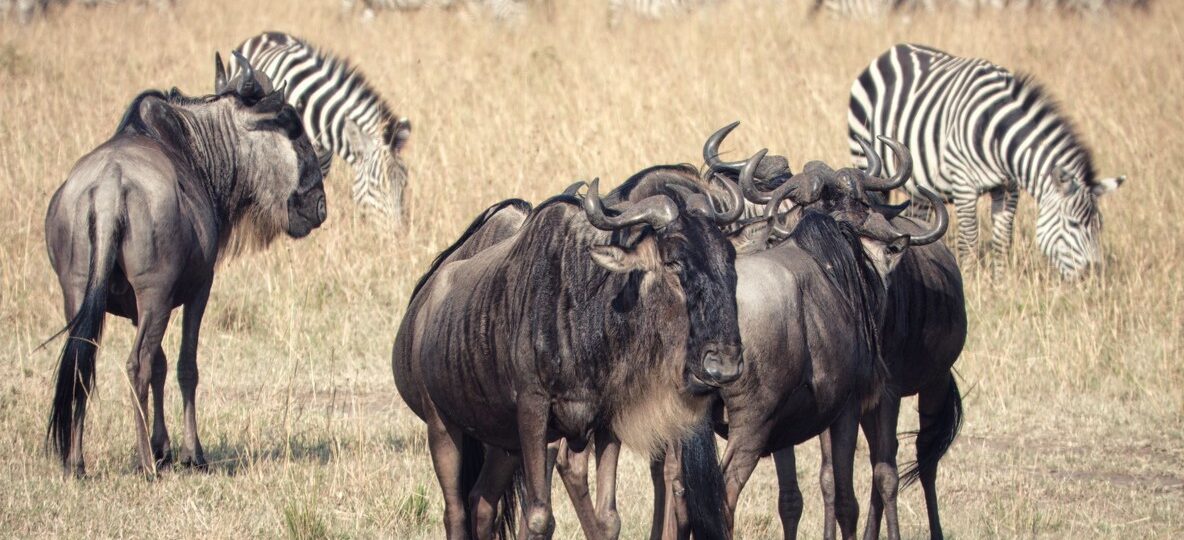
Between July and October, approximately 1.5 million wildebeest and 500,000 zebra cross the Mara River. That crossing — animals lunging into croc-filled water while lion watch from the banks — is the scene most people imagine when they think of an African safari.
But Kenya is not just the Mara. Amboseli National Park (392 km²) gives you elephant herds of 50+ animals walking under the shadow of Kilimanjaro. Samburu National Reserve (165 km²) hosts the Samburu Special Five: Grevy’s zebra, reticulated giraffe, Beisa oryx, gerenuk, and Somali ostrich — species found nowhere else in Kenya. Ol Pejeta Conservancy (360 km²) runs the world’s last northern white rhino programme. 🐘
For the kenya vs uganda safari question, Kenya wins on sheer diversity of open-savannah species and the possibility of seeing all of the Big Five in a single trip.
What a Uganda Safari Delivers
Uganda’s national parks cover forest, wetland, and savannah, but its signature offering is mountain gorilla trekking in Bwindi Impenetrable National Park (331 km²) and Mgahinga Gorilla National Park (33.7 km²).
Bwindi alone has 23 habituated gorilla groups, including the famous Mubare, Habinyanja, and Rushegura groups. A gorilla permit lets you spend exactly one hour with a family. No more. That hour tends to be the most intense hour of most people’s wildlife lives.
Uganda also holds Kibale National Park (766 km²), which offers the best chimpanzee trekking in Africa — around 1,500 habituated chimps across the park. Queen Elizabeth National Park (1,978 km²) covers the Kazinga Channel, where hippos, crocodiles, and water buffalo gather in genuinely spectacular numbers, and tree-climbing lions are regularly seen in the Ishasha section.
Murchison Falls National Park (3,893 km²) is the largest protected area in Uganda. The Nile churns through a 7-metre-wide gorge at Karuma Falls before the full Murchison cascade — one of the most powerful waterfalls in East Africa.
Uganda wins on primate encounters and forest-ecosystem tours and safaris. If gorillas or chimpanzees are on your list, there is no substitute.
Kenya vs Uganda Safari: Head-to-Head Facts
| Category | Kenya | Uganda |
|---|---|---|
| Signature wildlife | Big Five, Great Migration, cheetah | Mountain gorilla, chimpanzee, shoebill |
| Flagship park | Masai Mara (1,510 km²) | Bwindi Impenetrable NP (331 km²) |
| Non-resident park fee | $100-200/day Masai Mara | $40-50/day most UWA parks |
| Gorilla permit | Not available | $800 USD/person (Bwindi or Mgahinga) |
| Chimpanzee permit | Not applicable | $200 USD/person (Kibale) |
| Drive from main gateway | Nairobi to Mara: 270 km, 5-6 hrs | Entebbe to Bwindi: 540 km, 8-9 hrs |
| Charter flight time | Nairobi to Mara: ~45 min | Entebbe to Kihihi airstrip: ~1.5-2 hrs |
| Best season | July-Oct (migration), Jan-Feb (dry) | Jun-Sep + Dec-Feb (dry; best trekking) |
| Accommodation range | Budget tented camp to $1,500+/night luxury lodge | Gorilla lodge $300-$1,200+/night |
| Malaria risk | Moderate; prophylaxis recommended | Moderate-high; prophylaxis essential |
| Visa (US/UK/EU) | eTA $30 USD | Visa on arrival / eVisa $50 USD |
Park fees and permits are indicative for 2026. Confirm current rates with Uganda Wildlife Authority (UWA) and Kenya Wildlife Service (KWS) before booking.
What Does It Actually Cost?
A comparable 7-day mid-range package breaks down as follows:
| Cost Item | Kenya (7 days, Masai Mara focus) | Uganda (7 days, gorilla + chimp) |
|---|---|---|
| Gorilla permit | N/A | $800 per person |
| Chimpanzee permit | N/A | $200 per person (optional add-on) |
| Park entry fees | ~$700-1,400 (2 people, Mara peak season) | ~$280-350 (2 people, 7 days UWA parks) |
| Lodge (mid-range) | $350-700/room/night (e.g. Keekorok Lodge, Elephant Pepper Camp) | $350-600/room/night (e.g. Buhoma Lodge, Gorilla Safari Lodge) |
| Internal flight | $250-400 pp (Nairobi-Mara, Wilson Airport) | $300-600 pp (Entebbe-Kihihi charter) |
| Indicative total (2 pax, mid) | $5,500-9,000 | $7,500-12,000 |
Uganda costs more per trip primarily because the $800 gorilla permit sits on top of all other costs. Kenya delivers more game-drive hours per dollar in the mid-range bracket. For luxury travel where the per-night lodge rate is already high, that permit premium feels proportionally smaller.
These are indicative planning figures. Trunktrails Safaris builds custom, itemised quotes for every itinerary.
When to Go: Seasons Side by Side 🌅
Kenya: The long dry season (July to October) is peak wildlife season. The Mara River crossings happen between July and October. January and February are the second-best window — drier, fewer crowds, and excellent big-cat sightings across the Mara ecosystem. Avoid the April-May long rains (tracks can close) and November short rains (short and manageable, but prices dip).
Uganda: Gorilla trekking runs year-round, but the trails in Bwindi are brutally steep and the forest floor is slippery during heavy rain. June to September and December to February are drier, making the trek easier and photography cleaner. The wet seasons (March-May, October-November) still allow trekking with waterproof kit, and gorilla permits are slightly easier to obtain.
If you want to combine both countries, the clearest window is July to September — Kenya’s migration overlaps with Uganda’s dry trekking season.
Which Traveler Should Choose Which Destination?
This is not a close call once you know what you want:
Choose Kenya if: You want to see the Big Five, you are drawn to open landscapes and game drives, the Great Migration is on your bucket list, you have 7-10 days and want maximum wildlife variety, or you are travelling as a family with teenagers who need that wide-open spectacle.
Choose Uganda if: Mountain gorillas are the reason you are travelling to Africa in the first place, you want a more physically active trip (forest treks, chimp tracking), you have 10-14 days and can afford the permit costs, or you are a serious wildlife photographer targeting primate behaviour.
Choose both if: You have 14-21 days and want two completely different ecosystems back to back. Fly from Nairobi into Entebbe (1 hour on Kenya Airways), trek gorillas and chimps, then fly back to Kenya for a Mara game-drive. Trunktrails Safaris runs tours and safaris that include that combination routing.
The Trunktrails Advantage
Trunktrails Safaris is a Nairobi-based, Kenyan-owned operator with deep network across East Africa’s ground operators, lodges, and conservancy managers. When you book a kenya vs uganda safari comparison itinerary with us, you get:
- A customised itinerary that respects your available days and wildlife priorities — not a templated tour
- Gorilla and chimpanzee permit pre-booking (Bwindi permits sell out months ahead, particularly July-September)
- Trusted lodge and camp selections at every price point, from Keekorok Lodge and Elephant Pepper Camp in the Mara to Clouds Mountain Gorilla Lodge and Mount Gahinga Lodge in Uganda
- On-the-ground support from guides who know both ecosystems
- Honest advice on the routes, the fees, and the genuine safety picture for each country
Our tours and safaris are designed around your specific wildlife priorities, not a brochure that works for everyone and delivers the best of nothing.
Further reading
More safari planning resources
- Kenya national parks map from Valley Safaris
- Mara River crossing guide on Touring Insights
- Big Five safari collection on FindMySafari
- Compare Kenya safari packages on FindMySafari
Ready to Plan Your East Africa Safari?
The kenya vs uganda safari decision is one conversation away from being easy. Tell us what you want to see, how many days you have, and what you are willing to spend — and Trunktrails Safaris will build the specific itinerary that answers it. ✨
Contact us today:
- WhatsApp: +254 113 208888
- Email: info@trunktrailssafaris.com
- Website: www.trunktrailssafaris.com
Both Kenya and Uganda will change the way you see the world. The only mistake is spending too long deciding and not enough time booking.