
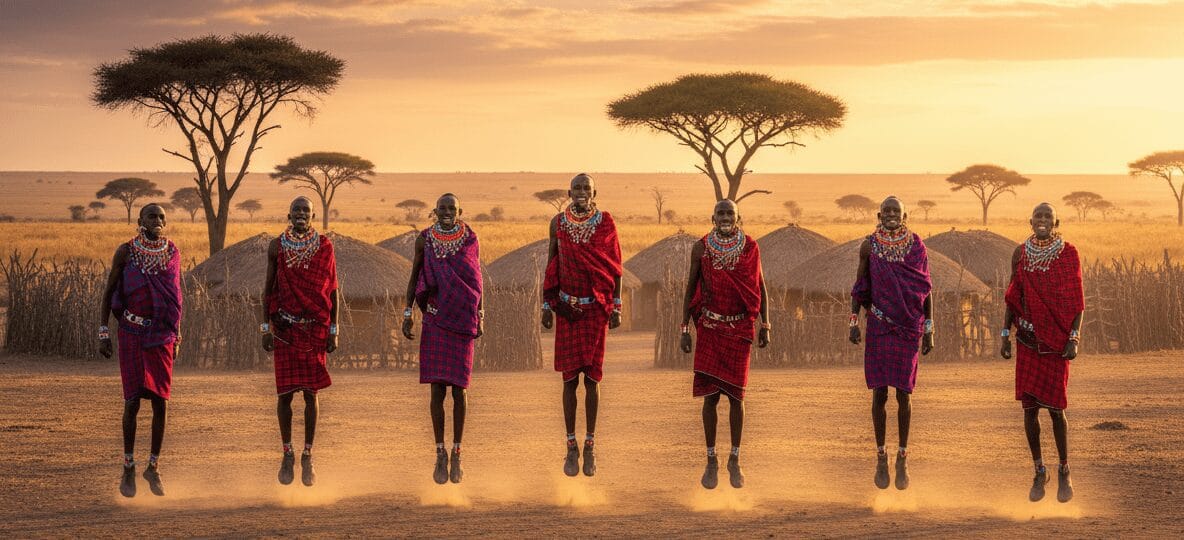
Kenya Cultures and Traditions: Discover the Living Heritage of Africa’s Most Diverse Nation
Kenya’s 43+ Ethnic Groups: A Nation Woven From Many Threads
 Kenya is home to more than 43 officially recognized ethnic groups, speaking languages from three of Africa’s four major language families – Bantu, Nilotic, and Cushitic. This linguistic mosaic shapes daily life across the country. In addition to the 42+ ethnic dialects, almost every Kenyan speaks Swahili (Kiswahili) – the national language that bridges communities from the Indian Ocean coast to the shores of Lake Victoria. English, the official language, is used widely in government, education, and business.But language in Kenya is not just a matter of tradition and protocol. In urban centers like Nairobi and Mombasa, you’ll hear a dynamic urban slang called Sheng – a vibrant blend of Swahili, English, and indigenous tongues that pulses through music, youth culture, and even political campaigns. Sheng is as likely to be heard in a matatu (minibus taxi) as in a radio jingle or a billboard slogan, serving as a linguistic handshake that connects generations and communities across the city.No two communities are alike. Each carries its own language, its own spiritual cosmology, its own agricultural or pastoral wisdom, and its own music and art.
From the bustling Nairobi markets to the quiet villages of the Rift Valley, the creative spirit of Kenya finds expression in a kaleidoscope of arts and crafts. Intricately woven sisal baskets, vibrant Maasai bead jewelry, hand-carved wooden animals, and soapstone sculptures tell stories not only of daily life, but of ancestry and identity. Musical instruments – rattles, drums, lyres – echo the rhythms of ancient ceremonies. Across Kenya, you’ll see kangas – wraparound skirts for women – adorned with bold patterns and Swahili proverbs, and kikoi sarongs, their threads dyed in sun-washed colors. Tribal masks, paintings, batik prints, and beadwork are more than keepsakes: they are living expressions of heritage, often passed down through families or sold as treasured mementos in open-air markets.Understanding the culture of Kenya means understanding this diversity – not as fragmentation, but as extraordinary richness. Kenya is not a single story. It is 43 stories, told simultaneously across plains, mountains, forests, and coastlines.
Kenya is home to more than 43 officially recognized ethnic groups, speaking languages from three of Africa’s four major language families – Bantu, Nilotic, and Cushitic. This linguistic mosaic shapes daily life across the country. In addition to the 42+ ethnic dialects, almost every Kenyan speaks Swahili (Kiswahili) – the national language that bridges communities from the Indian Ocean coast to the shores of Lake Victoria. English, the official language, is used widely in government, education, and business.But language in Kenya is not just a matter of tradition and protocol. In urban centers like Nairobi and Mombasa, you’ll hear a dynamic urban slang called Sheng – a vibrant blend of Swahili, English, and indigenous tongues that pulses through music, youth culture, and even political campaigns. Sheng is as likely to be heard in a matatu (minibus taxi) as in a radio jingle or a billboard slogan, serving as a linguistic handshake that connects generations and communities across the city.No two communities are alike. Each carries its own language, its own spiritual cosmology, its own agricultural or pastoral wisdom, and its own music and art.
From the bustling Nairobi markets to the quiet villages of the Rift Valley, the creative spirit of Kenya finds expression in a kaleidoscope of arts and crafts. Intricately woven sisal baskets, vibrant Maasai bead jewelry, hand-carved wooden animals, and soapstone sculptures tell stories not only of daily life, but of ancestry and identity. Musical instruments – rattles, drums, lyres – echo the rhythms of ancient ceremonies. Across Kenya, you’ll see kangas – wraparound skirts for women – adorned with bold patterns and Swahili proverbs, and kikoi sarongs, their threads dyed in sun-washed colors. Tribal masks, paintings, batik prints, and beadwork are more than keepsakes: they are living expressions of heritage, often passed down through families or sold as treasured mementos in open-air markets.Understanding the culture of Kenya means understanding this diversity – not as fragmentation, but as extraordinary richness. Kenya is not a single story. It is 43 stories, told simultaneously across plains, mountains, forests, and coastlines.Sheng: Nairobi’s Living Language
No exploration of Kenya’s cultural fabric would be complete without mentioning Sheng – a vibrant, ever-evolving urban slang born in the streets of Nairobi. Imagine Swahili as the foundation, then blend in English vocabulary, a dash of Kikuyu here, a snippet of Luo or Luhya there, and you get a playful linguistic tapestry that shifts by the week.Sheng isn’t just a language; it’s a living story of Kenya’s cities, especially among the youth. Step into a Nairobi matatu or scroll through local music charts, and you’ll hear hitmakers like Sauti Sol and Octopizzo weaving Sheng into lyrics that speak directly to their generation. It’s the language of memes, of advertising campaigns aimed at millennials, and even of political rallies where leaders work to connect with younger voters.To speakers, Sheng is more than words. It signals membership, coolness, a wink to “I get you.” For linguists, it’s a perfect case study in creativity and identity construction. Walk through downtown Nairobi or catch a football game at Kasarani Stadium, and you can practically feel the pulse of Sheng – dynamic, inclusive, never static.Understanding this language is to glimpse how Kenya’s diverse communities remix their roots and shape their own future, one clever turn of phrase at a time.Understanding the culture of Kenya means understanding this diversity – not as fragmentation, but as extraordinary richness. Kenya is not a single story. It is 43 stories, told simultaneously across plains, mountains, forests, and coastlines.Yet, within this tapestry of difference, Kenyans are united under the red, white, and black of the national flag and the enduring spirit of Harambee – a Swahili word meaning “pulling together.” This ethos of community and collective strength echoes through daily life, whether in bustling Nairobi neighborhoods or remote pastoral villages. It’s what binds fisherman by Lake Victoria, herders on the Rift Valley escarpments, and entrepreneurs in Mombasa’s old town – reminding us that Kenya’s living heritage is not just about preserving the past, but moving forward together as one nation.Nairobi’s Table and Its Cultural Landmarks
Nairobi’s food scene is as layered as the city itself. In leafy Karen or buzzing Westlands, high-end restaurants serve everything from sashimi to kitfo, and Ethiopian cafes sit alongside Indian curry houses and homegrown eateries. But for a genuine taste of daily Nairobi life, skip the white tablecloths and find a local kibanda – these modest joints serve the city’s real staple: a hearty plate of ugali, sukuma wiki, and a slow-simmered stew, often for the price of a couple of bus rides. Joining the lunchtime queue at a corner café, elbows on the table and conversation in the air, is about as authentically Nairobi as it gets.
For a deeper look at Kenya’s cultures without leaving the city, start at the Bomas of Kenya, a cultural center on Nairobi’s outskirts where dance performances and homestead replicas represent communities from Kikuyu to Luo to Kamba. The African Heritage House, on the city’s eastern edge, takes a different approach – its mud-and-clay walls and rooms full of art and artifacts celebrate architectural forms from across the continent. Between the two, a visitor gets a genuine, if compressed, introduction to the diversity that this guide covers at length.
The Dance Between Tradition and Modernity in Kenyan Life
Walk through any Kenyan village or city street, and you’ll find tradition and modernity entwined like the threads of a vivid kanga. While urban Nairobi hums with the energy of WhatsApp chats and fintech innovations, echoes of traditional African beliefs continue to shape daily life, often in quiet but profound ways.Respect for elders, the intricate bonds of extended family, and the duty to care for neighbors – these are not relics to be dusted off on public holidays. They are values lived out from bustling downtown markets to sun-soaked rural homesteads. Even as Kenyans adopt contemporary lifestyles, these foundational beliefs – humility, communal unity, reverence for rites of passage – persist. Some traditions have adapted, others stand gently defiant. Rites like marriages, child naming ceremonies, and funerals are still steeped in ancestral rituals, with each community practicing its own ceremonies infused with meaning passed down the generations. In more remote areas, certain spiritual beliefs and practices remain especially vibrant, grounding modern choices in centuries-old wisdom.The result? Kenyan culture doesn’t toss out the old in pursuit of the new. Instead, it weaves them together – honoring heritage while embracing change. This living harmony is as much a part of the Kenyan landscape as the Mara’s rolling grasslands or the calls of coastal fishermen heading out at dawn.Traditional Rites: The Heartbeat of Life’s Milestones
In Kenya, milestones like marriage, child naming, and burials are not simply private family affairs – they are communal passages deeply rooted in each group’s ancestral traditions. Nearly every community has its own distinct way of marking these moments:- Marriage ceremonies often weave together elaborate rituals, from Kikuyu dowry negotiations to Maasai wedding dances, uniting families as much as individuals.
- Child naming isn’t just about picking a name – it’s a spiritual celebration that welcomes new life into the community, sometimes aligning the ceremony with the lunar calendar, ancestral honor, or even the day’s weather.
- Burials and funerals are powerful communal events, carrying layers of meaning and customs – whether the Luhya’s night vigils or coastal Swahili poetry recitations – each expressing a group’s respect for both the departed and the living.
Daily Life Across Kenya: Grit, Hustle, and Everyday Triumphs
Step into the heart of Kenya – whether it’s the energetic streets of Nairobi, the markets of Kisumu, or the sunlit villages scattered across the Rift Valley – and you’ll encounter a mosaic of ambition, resilience, and the everyday rhythm of life. Each morning, cities wake up with a chorus of matatu horns and vendors setting up their stalls, while roadside eateries sizzle with the scent of mandazi and chai.From bicycle delivery riders weaving through traffic to artisans crafting wares in open-air workshops, Kenyans meet each day with a fierce determination. Some are executives navigating the Nairobi Securities Exchange; others are farmers tending to small shambas or youth running bustling kiosks in Mombasa’s Old Town. The fortunes of the day are never guaranteed – one afternoon may bring brisk business, while the next brings only patience and hope for tomorrow.What unites all these stories is an unmistakable spirit of enterprise. Whether in beaded jewelry sold at Maasai markets or innovative fintech start-ups springing from tech hubs like iHub, Kenyans are united by a drive to succeed, adapt, and create opportunity, both for themselves and their communities. It is this undercurrent of perseverance and creativity that threads together daily life, echoing the core truth of Kenya: the story of a nation moving forward, one determined step at a time.Staple Foods and Iconic Kenyan Meals
If you want to truly understand a culture, join them at the table. In Kenya, food isn’t just a necessity – it’s a celebration, a handshake, and often, an open invitation.Across the country, staple dishes form the backbone of everyday life. Ugali – a satisfyingly dense maize flour porridge – is the undisputed king, found on nearly every table from Nairobi apartments to Maasai homesteads. It’s often served alongside sukuma wiki (collard greens), the ever-dependable “stretcher of the week.”Other favorites show off Kenya’s diversity:- Chapati: A flaky, pan-grilled flatbread, a legacy of coastal trade and Indian influence, perfect for scooping up just about anything.
- Rice: Especially popular along the Swahili coast, seasoned pilau rice brims with spices brought over centuries of Indian Ocean trade.
- Nyama Choma: This isn’t just a meal – it’s an event. Friends and families gather around sizzling open grills to share tender, fire-roasted goat, beef, or chicken, always with bold conversation and, of course, ugali.
- Samaki (Fish): By Lake Victoria, fresh tilapia and omena (tiny dried sardines) are a daily treat, bringing together lake and land.
The Role of Entrepreneurship and Hard Work in Kenyan Society
Walk through the streets of Nairobi, the fishing docks of Kisumu, or the market lanes in a small Rift Valley town, and you’ll find a current that runs beneath everything – resourcefulness paired with resilience. In Kenya, hard work is more than a value; it’s a way of life, knit deeply into daily routines and aspirations.Entrepreneurship thrives at every turn, driven by necessity and ambition alike. You’ll encounter artisans shaping soapstone in Kisii, women crafting beadwork in rural Turkana, and tech innovators launching startups in Nairobi’s “Silicon Savannah.” For many Kenyans, owning a small business – a roadside kiosk, a fleet of boda bodas, or a vegetable garden – forms the backbone of household survival and future dreams.- Informal markets buzz with sellers of everything from fresh mangoes to handcrafted sandals.
- Investors and executives hustle in the Nairobi Stock Exchange, while young graduates pioneer fintech solutions at iHub and Gearbox.
- Rural cooperatives and urban collectives alike pool resources, proving that teamwork and determination are never out of fashion.
The Maasai: Warriors, Pastoralists, and Custodians of the Land
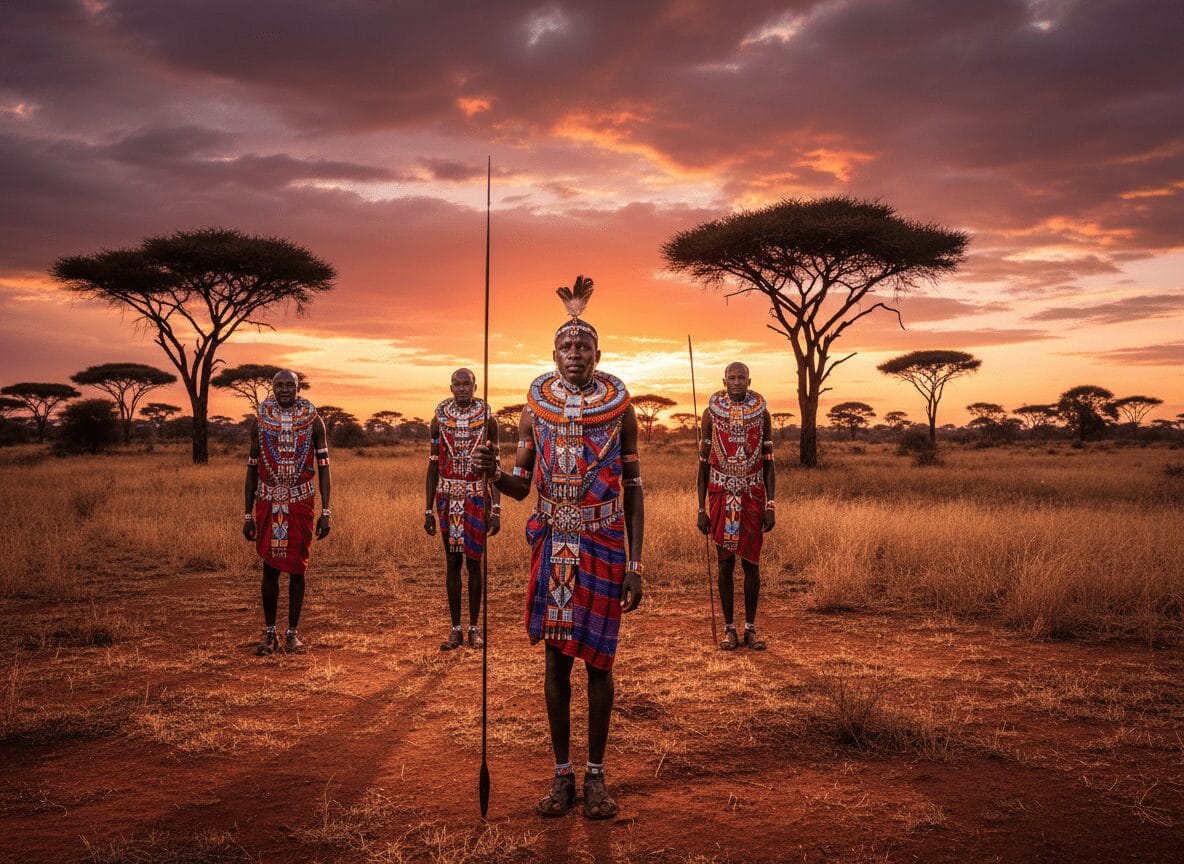
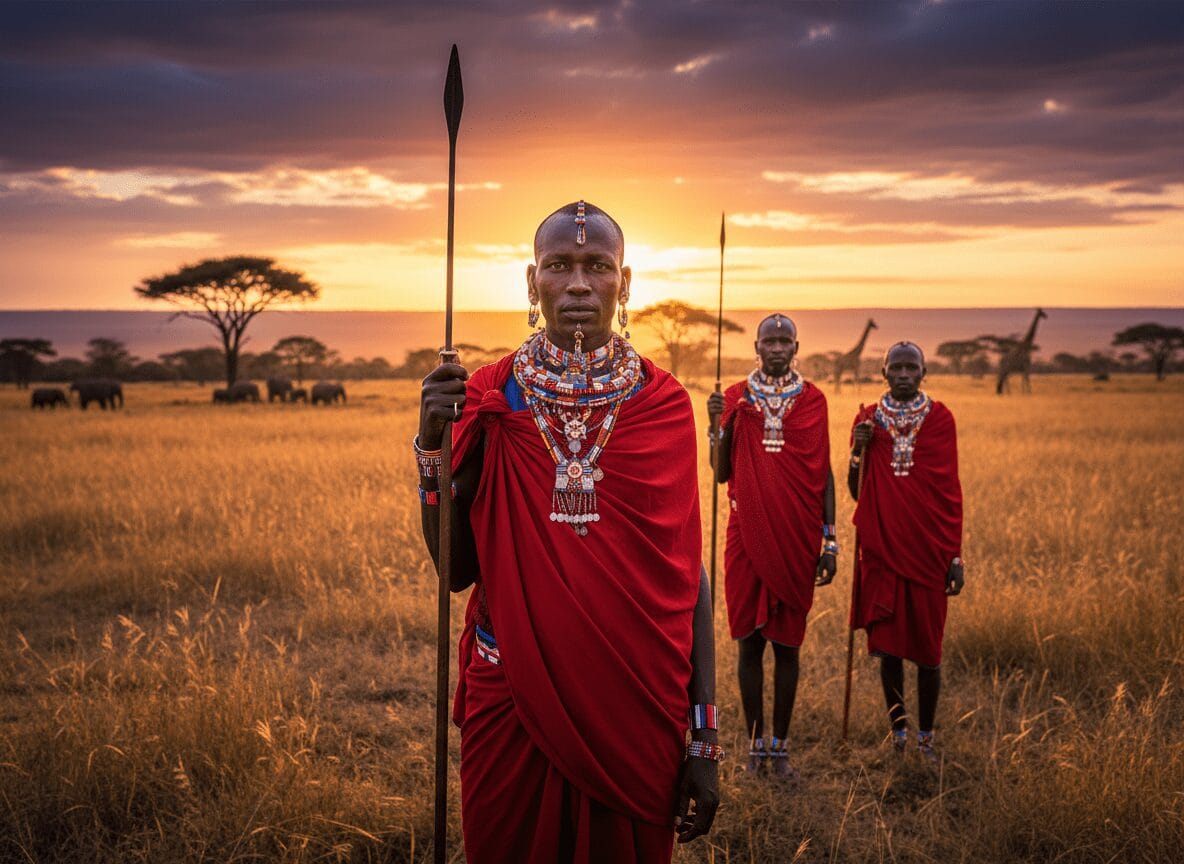 Few communities in the world are as immediately recognized as the Maasai. Their tall, lean bearing, vivid red-and-blue shukas, and beaded jewelry have come to symbolize Kenya for the outside world. But the Maasai are far more than an image. The Maasai are semi-nomadic pastoralists of Nilotic origin, occupying the iconic savannas of southern Kenya and northern Tanzania. Their culture is organized around the age-grade system – a lifelong progression through defined social roles, from junior warrior (moran) to elder, each stage marked by ceremony, responsibility, and earned authority.Kenyan culture within the Maasai community is built on cattle. Cattle are wealth, status, and spiritual currency. The Maasai relationship to land is pastoral and custodial – they do not own the land; they belong to it. This philosophy maps directly onto modern conservation principles, and it is no accident that Maasai community conservancies are among the most effective wildlife protection zones in Africa. On a Trunktrails walking safari through Maasai territory, you may have the opportunity to visit a manyatta (homestead), share tea with elders, and learn to track wildlife the Maasai way – through patience, silence, and a reading of the earth that no GPS can replicate.But a genuine encounter with Maasai culture goes far deeper than the postcard moments. The manyatta itself is a living classroom: at its center, the cattle pen – heart of Maasai wealth and spiritual life – surrounded by mud-and-stick houses arranged in a circle and protected by a thorn-fence. The placement of each house isn’t random but reflects a social order that is explained only if you ask, with the elder’s wife’s house always holding a special position by the gate.You’ll likely meet morans, the young Maasai warriors recognized by their ochre-braided hair and proud stance. Their role isn’t just ceremonial; morans move through a lifelong progression of age-sets, each marked by elaborate rites of passage. Often, the morans you encounter in villages are not simply performers but young men between ceremonial duties, contributing to their families while awaiting the next stage of adulthood.
Much like the extended Kenyan family in general, a manyatta is never just about the individuals living in each hut. Family here stretches across generations and households – cousins raised as siblings, aunts and uncles honored as extra parents. Step into a homestead and you’ll likely be greeted by a constellation of relatives, each eager to share stories and make you feel welcome, even as you lose count of who belongs to whom.
One thing worth keeping in mind: a manyatta isn’t a museum exhibit. The routines unfolding around you are daily life, not a show staged for visitors. Ask before photographing, take the time to ask questions and genuinely listen to the answers, and if something catches your eye – a piece of beadwork, a craft – consider supporting the community with a purchase. A visit built on curiosity and respect, rather than a rush of photos, is the one that stays with you.
Cattle are more than livestock here – they are the Maasai’s currency of status, faith, and kinship, used for everything from paying bride price to resolving disputes. The Maasai believe their god, Enkai, entrusted them with all the world’s cattle, a conviction that shaped their history and their often-complex relationship with neighboring groups and wildlife authorities. Today, many community conservancies exist because Maasai landowners have chosen to set aside grazing land for wildlife, partnering with eco-lodges in arrangements that benefit both people and preservation.If you’re seeking a deeper immersion, you might consider experiences like an overnight stay at a place such as Maji Moto Maasai Cultural Camp in the Rift Valley. Here, there are no souvenir stalls or staged performances – just the rhythms of Maasai life: waking to cattle bells, sharing meals, and listening to the songs that greet the dawn.Such encounters reveal the Maasai not as relics of a distant past, but as a living, evolving people – warriors, pastoralists, and wise custodians of the land – whose traditions and philosophies still shape both their own destinies and Kenya’s wild heart.Tradition Isn’t Poverty – Rethinking a Common Assumption
It’s an easy mistake for outsiders to make: confusing a traditional lifestyle with hardship. Living in a homestead that’s centuries old, or tending livestock across the open savannah, isn’t a sign of lacking something – it’s a deliberate choice, rooted in heritage and a different measure of wealth altogether. For many Maasai elders, a manyatta isn’t a symbol of deprivation; it’s a proud continuation of a way of life that has thrived for generations.
Judging rural custom by urban standards leads to real misunderstandings. Wealth in many Kenyan communities is measured less by apartments or bank balances and more by herds, land, and the health of one’s family – and someone with hundreds of cattle in the Mara wouldn’t trade that standing for a city penthouse. Seen on its own terms, this isn’t a story of scarcity. It’s people choosing to continue their story their own way.
The Samburu: Northern Cousins With a Distinct Identity
Travel north into the sun-baked expanse of Samburu County, and you’ll encounter the vibrant world of the Samburu – a people closely related to the Maasai, yet proud guardians of their own unique traditions. Though their language, Maa, and age-grade social structure echo the Maasai way, the differences are as striking as the northern escarpment at sunset.Samburu culture flourishes in expressions of color and adornment. While both communities revere beaded jewelry, Samburu warriors take personal decoration to a whole new level – painting their faces and bodies with vivid ochre, and wearing elaborate beaded collars and necklaces that shimmer in the desert light. So iconic is their aesthetic flair that neighboring groups affectionately call Samburu warriors “butterflies.” Among women, layered beadwork is a living language, signaling social status and marital ties with artistic complexity and bold, bright palettes that set the Samburu apart.Adaptation is woven into Samburu heritage. In these arid lands, camels – rather than cattle – serve as the cornerstones of life. Samburu pastoralism revolves around mixed herds, and their effortless mastery as camel handlers is legendary. Embark on a camel trek with Samburu guides and you’ll quickly see: this is no choreographed tourist spectacle, but a living tradition, shaped across countless generations.The Samburu’s story extends to conservation, too. They are pioneers, home to the continent’s first community-run elephant sanctuary, Reteti. Here, Samburu men and women – among them Africa’s first female elephant keepers – care for orphaned calves, embodying a model of stewardship rooted not in outside imposition, but in communal values and adaptability. In creating Reteti, the Samburu embraced a future where safeguarding elephants benefits people and wildlife alike – a powerful evolution of cultural wisdom.In every bead, every melody sung around a thorn-fenced boma, and every camel trek across the rugged north, the Samburu reveal a culture at once kin to the Maasai and unmistakably its own.The Samburu and Their Camels: Masters of the Northern Drylands
Venture farther north and you’ll meet the Samburu, pastoralist cousins of the Maasai who have carved a distinct identity in Kenya’s arid heartlands. Where the landscape grows harsh and water grows scarce, the Samburu’s relationship with livestock shifts. Here, camels are not a novelty – they are the beating heart of survival.Among the Samburu, camels have a status as essential as cattle have for the Maasai. Camels thrive in the dry, rugged zones where cattle might struggle, able to walk for days with minimal water and graze on tough, thorny plants. Samburu herders travel long distances alongside their mixed herds, reading the land for pasture and water sources with an expertise that comes from generations of desert living.If you join a camel trek near camps like Sasaab, you’ll see this bond firsthand. Watching Samburu guides handle their camels – calm, confident, utterly at ease – makes it clear: this is not some performance for visitors. For the Samburu, camel herding is a living tradition, passed from elder to youth, binding families to the rhythms of the land in a dance as ancient as the northern winds.Turkana and El Molo: Life on Kenya’s Northern Frontier
Beyond Samburu country, as the landscape hardens into black volcanic rock and shimmering heat, you reach the shores of Lake Turkana and communities rarely encountered on a standard itinerary. The Turkana people have built a life here through nomadic pastoralism – goats, camels, cattle, and sheep form the backbone of survival, with herders traveling long distances in search of grazing and water. Their thatched domed huts, called akeny, dot the lakeshore, and traditions here run deep: intricate beadwork, elaborate body adornment, and dances that have carried on for generations against the ever-present wind.
On the lake’s shores live the El Molo – Kenya’s smallest ethnic group, numbering only a few hundred people. Unlike their Turkana neighbors, the El Molo build their lives around fishing, paddling slender canoes across the jade-green water for tilapia and Nile perch, and living in modest clusters of palm-frond huts. Visiting either community takes real effort and comes with none of the polish of a typical safari stop – this is Kenya without spectacle, where hospitality is humble and traditions are shared with those willing to travel far off the well-worn routes.
The Kalenjin and Mursik: A Taste of the Rift Valley Highlands
Home to the Rift Valley highlands – and to an outsized share of the world’s best distance runners – the Kalenjin have their own distinct culinary tradition, and none is more emblematic than mursik. This fermented milk drink is prepared in a sotet, a special gourd cured with soot from the itet tree, which gives the finished drink its smoky tang and distinctive greyish color.
Mursik isn’t an everyday curiosity; it’s steeped in ceremony, served to welcome distinguished guests and mark milestones within the community. If you’re ever handed a calabash of it, treat it the way it’s intended – not just as a drink, but as an invitation into Kalenjin tradition and belonging.
The Kikuyu: Kenya’s Largest Community and Its Highland Roots
Kenya’s largest ethnic group calls the fertile slopes around Mount Kenya home, and its influence runs through the country’s economy, politics, and daily life far beyond the highlands. The Kikuyu are traditionally skilled agriculturalists, farming the region’s rich soil for coffee, maize, and vegetables, and their creation story ties them directly to the land: Gikuyu and Mumbi, the first Kikuyu man and woman, are said to have received their home from Ngai, the creator, on Mount Kenya itself. Kikuyu enterprise shows up everywhere from Nairobi’s markets to its business districts, and Kikuyu leadership shaped much of Kenya’s path through colonial resistance and independence.
That connection to the mountain isn’t just historical – it’s still visible today. Traditional Kikuyu homesteads are built so their doors open toward Mount Kenya, a quiet architectural gesture of respect for the source of blessing and protection. Every sunrise glimpsed through such a doorway, snow-capped slopes in the distance, renews a connection that goes back to the creation story itself.
Kikuyu cuisine centers on the harvest of those highland farms. Githeri – beans and maize simmered together – is a comfort staple from roadside cafés to family tables, while irio mashes potatoes, peas, corn, and greens into something worth celebrating after a good harvest. Nyama choma, Kenya’s beloved fire-roasted goat, owes much of its national popularity to Kikuyu feasts and gatherings. And for a proper welcome, there’s muratina – a tangy, lightly fermented brew made from the fruit of the sausage tree, offered at ceremonies and to guests worth honoring.
No Kikuyu gathering is complete without mugithi – a musical tradition built around a solo guitarist (sometimes with an enthusiastic backing crowd) weaving folk tales and modern wit into songs everyone already half-knows the words to. Whether it’s a wedding, a birthday, or a spontaneous Friday night, mugithi is less a performance than an invitation to join in.
Kikuyu tradition hasn’t stayed still, either. Outside Nairobi, Kikuyu grandmothers have turned communal values into modern livelihoods, running cooperative pig farms and pooling resources in a spirit that echoes Harambee – elders mentoring youth, neighbors supporting neighbors, the old model powering something new. That same generosity shapes Kenyan hospitality more broadly: dishes like githeri and irio and rituals like nyama choma have spread well past Kikuyu communities to become touchstones of Kenyan culture nationwide.
To see it firsthand, the Bomas of Kenya cultural center outside Nairobi offers dance performances and homestead replicas alongside groups from other communities. For something less staged, community-based visits sometimes offer a seat at the table with those same grandmothers and their farms – a conversation over tea that says more about Kikuyu resilience than any exhibit could.
The Swahili Coast Communities – Where Africa Meets Arabia
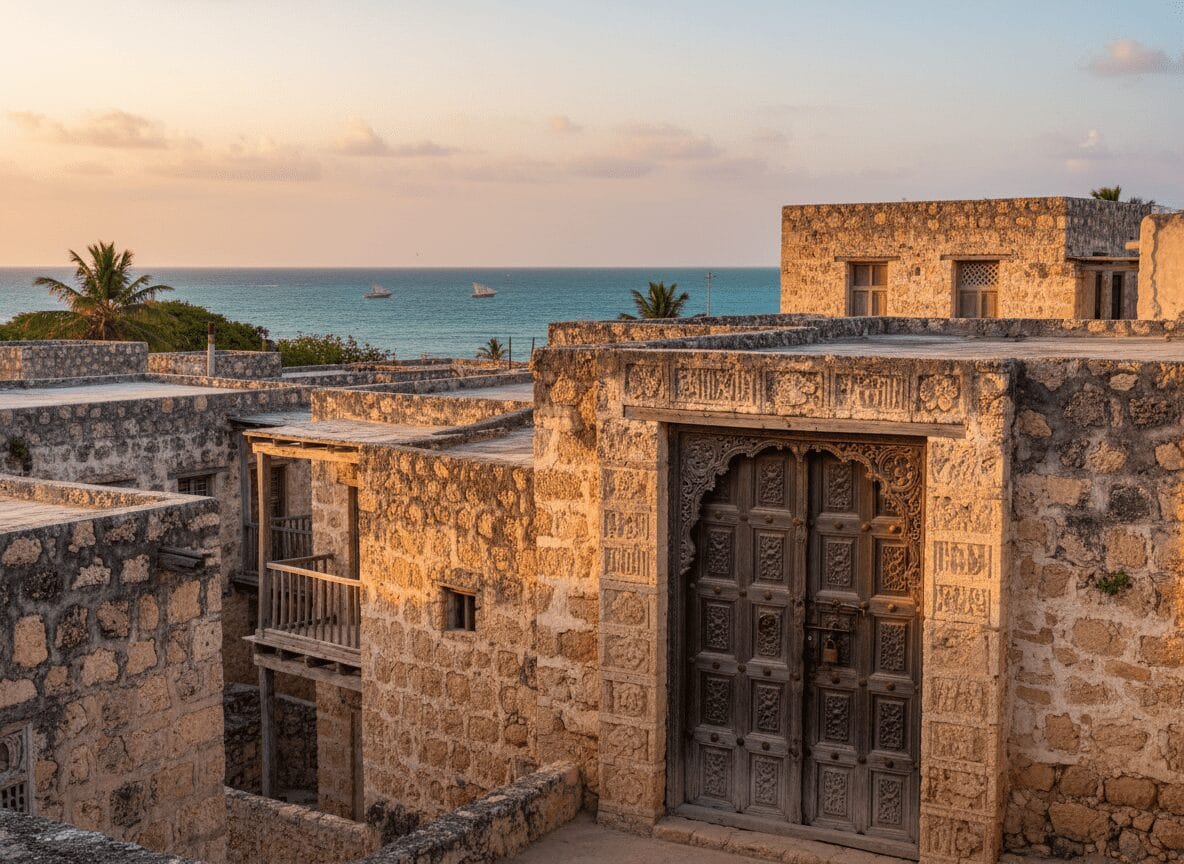 Along Kenya’s Indian Ocean coastline, the Swahili people represent one of the world’s great cultural syntheses. Born from centuries of trade between African, Arab, Persian, and South Asian merchants, Swahili culture produced a distinctive language (now spoken by over 200 million people across East Africa), a sophisticated maritime tradition, and an architectural heritage of coral-stone towns and carved wooden doors.Kenya traditions and customs on the coast are shaped by Islam, Bantu identity, and the sea. The ancient towns of Lamu and Mombasa are living UNESCO World Heritage Sites – places where the medieval and the contemporary exist in the same street, sometimes in the same building.
Lamu Old Town: Kenya’s Living Swahili Heart
Few places capture Swahili culture as completely as Lamu Old Town, a UNESCO World Heritage Site and Kenya’s oldest continuously inhabited town. There are no cars here – donkeys are still the preferred way to move goods and people – and the coral-stone houses lining the car-free lanes are fronted by intricately carved wooden doors, each one a small heirloom passed down through generations.
The real heartbeat of Lamu, though, isn’t the doors – it’s the barazas, stone benches built into nearly every house’s exterior, where residents gather to trade news, settle disputes, and welcome newcomers over a cup of chai. Daily life unfolds to the call to prayer, the clatter of donkey hooves, and the smell of cardamom-scented pastries drifting from street stalls. For the Swahili people, Lamu isn’t a historic curiosity on display – it’s an ongoing, everyday expression of a community built on connection and hospitality.
Mombasa’s Old Town: History Layered in Coral Stone
Mombasa’s Old Town tells a similar story on a grander scale. Fort Jesus has stood guard over the harbor since 1593 – built by the Portuguese, fought over by Omani Sultans, and now a UNESCO World Heritage Site whose weathered walls carry the marks of every power that’s passed through these waters.
Wander the alleys behind it and the architecture becomes a living museum in its own right: coral-stone houses with ornately carved teak doors, brass-studded lock plates, and glimpses of hidden gardens through wrought-iron grilles. Persian, Indian, and Arab influences all show up in the same streetscape, where minarets rise beside colonial balconies. And as with Lamu, it’s the food stalls that tie it all together – fragrant pilau, spice-layered biryani, and viazi karai (battered, golden potato bites) sold by vendors whose recipes trace back through generations of coastal trade.
Distinctive Flavors of Swahili Coastal Cuisine
To truly understand Swahili coastal life, you have to start in the kitchen. Here, food is a crossroads – where Africa, Arabia, and India all leave their mark. Coconut milk isn’t just an ingredient; it’s the backbone of nearly every meal. You’ll find it simmered in wali wa nazi (coconut rice), ladled over samaki wa kupaka (grilled fish gently swathed in coconut sauce), and even tucked into the dough of mahamri – pillowy, cardamom-scented pastries perfect for breakfast or a midday snack.Spices tell their own story: cloves, cinnamon, and cardamom wind through savory stews and sweets alike, while the aroma of pilau (fragrant rice) rises from kitchens as it has for centuries. Street vendors and Old Town restaurants in places like Mombasa still turn out recipes passed down through generations – dishes that capture the fusion of coastal trade, local bounty, and hospitality. Each bite is an echo of the sea, the history, and the vibrant blend of cultures that define Kenya‘s Swahili coast.Food Traditions of the Swahili Coast – A Culinary Crossroads
Swahili coast cuisine is a sensory celebration shaped by centuries of cultural exchange – African, Arab, Persian, and Indian influences all simmering in the same pot. Nowhere is this blend more vivid than in the narrow alleys and bustling markets of historic Old Towns like Mombasa and Lamu.Here, meals are stories in themselves. Aromatic rice dishes such as pilau (fragrant with cardamom, cinnamon, and cloves) and biryani signal coastal festivities, while coconut-rich curries – often starring fresh fish or prawns – reflect the sea’s daily gift. Street food is abundant: try viazi karai (deep-fried spiced potatoes), samosas, and mahamri (sweet, puffy bread) served hot from market stalls, often alongside tangy chutneys.If you’re open to tasting something truly local, search out mnazi – a traditional palm wine tapped straight from the coconut palm and lightly fermented. Cherished in communities north of Mombasa, it’s a brew best enjoyed in neighborhood gathering spots rather than tourist hotels, often accompanied by stories from the locals who pour it.Food on the Swahili coast is not just nourishment – it is living heritage, connecting generations through flavor and hospitality.Experiencing Authentic Swahili Culture Beyond the Resorts
To truly experience Swahili culture, step beyond the hotel gates and into the living heritage of the coast. Strolling through the narrow lanes of Lamu Old Town or Mombasa’s Old Port District, you’ll encounter scents of cardamom and cloves, hear the lilting cadence of Kiswahili, and see intricately carved doors that have guarded families for centuries.Consider joining a local guide for a walking tour – they will unlock stories hidden behind coral-stone walls and introduce you to artisans preserving ancient crafts. Modesty matters here more than elsewhere in Kenya, especially in Islamic communities like Lamu, Shela, and Mombasa’s Old Town: both men and women are best served by lightweight trousers or long skirts and tops that cover the shoulders, and women may want to carry a scarf for entering mosques or wandering historic neighborhoods. With respectful dress and an open mind, you might be welcomed into a centuries-old mosque or invited to sample coconut-laced Swahili dishes at a neighborhood café. Here, far from the resort buffet, you’ll find the heart of the Swahili coast: hospitality, history, and a rhythm of life shaped by tides, trade winds, and generations of cultural exchange.Taarab – A Musical Mosaic of the Swahili Coast
To understand the soul of Kenya’s coast, listen for taarab. This music accompanies you like a sea breeze – ornate, layered, and shaped by centuries of exchange. Taarab emerged along the Swahili coastline as a living record of interaction: Arab melodies, Indian rhythms, African instruments, and poetry sung in Swahili. In places like Lamu and Mombasa, you’ll hear taarab drifting out from weddings, celebrations, and the famed Lamu Cultural Festival.If your visit lines up with the Lamu Cultural Festival itself, you’re in for more than music – dhow races cut through the harbor, donkey races thunder through the sandy lanes, and the whole town turns out to celebrate Swahili heritage. Further north, the Lake Turkana Cultural Festival gathers more than ten distinct ethnic groups from the region for several days of music, dance, and ritual beneath the open desert sky – one of the most vivid reminders that Kenya’s living heritage isn’t confined to any single community. Maasai ceremonies, by contrast, aren’t scheduled for visitors at all; catching one is a matter of timing and local knowledge, so lean on your guide if that’s what you’re hoping to see.
Unlike the driving beats of Nairobi’s nightlife or the chanting of Maasai ceremonies, taarab is lush and orchestral. Its lyrics speak of longing, joy, and everyday life, reflecting the cosmopolitan roots of these coastal towns. The sounds of oud, violin, and percussion echo the cultural bridges between Africa and the wider Indian Ocean world. In this way, taarab is more than music – it’s an audible map of how Kenya’s coast has absorbed, blended, and reimagined global influences. It’s a reminder that Kenyan culture is not static, but ever-evolving, shaped by movement, meeting, and the tides that have always linked Africa to the rest of the world.Beyond Taarab: Gospel and Benga, Kenya’s Other Soundtracks
Move inland from the coast and Kenya’s soundtrack changes completely. Gospel music dominates the highlands and central regions – head inland on a Sunday morning and you’ll hear it spilling from churches, car radios, and passing matatus alike. It’s more than background music; powerful harmonies and call-and-response singing turn a church service into a genuine cultural immersion, whether in a rural chapel or a packed Nairobi congregation.
Further west, around Lake Victoria, benga tells a different story. Born from Luo tradition and the syncopated strum of the nyatiti (a stringed instrument), benga picked up electric guitars and rapid, danceable rhythms by the 1960s and never looked back. Today it’s just as likely to be blasting from a matatu stereo in Nairobi as from a roadside bar near the lakeshore – energetic, communal, and, honestly, impossible not to move to.
Mnazi: The Palm Wine of the Swahili Coast
For those seeking an authentic taste of the Kenyan coast, one tradition stands out: mnazi. This is the local palm wine, skillfully tapped from coconut palms and left to ferment naturally for a day or two. The result? A cloudy, gently sweet, and slightly tangy drink with just enough alcohol to start a conversation – but not enough to end one.Mnazi isn’t typically found on hotel bar menus or glossy resort brochures. Instead, it’s woven into everyday coastal life, cherished in villages like Kikambala and Mtwapa, north of Mombasa, where locals gather for an evening cup and a story or two. If you’re curious to try mnazi, your best bet is to ask your guide or a friendly hotel staff member to point you toward a local mnazi den. These humble, thatched spots are where palm wine is poured fresh, and where visitors are treated more like guests than customers.Sampling mnazi isn’t just about the drink – it’s about sharing in a time-honored ritual, hearing coastal tales from the person serving it, and experiencing firsthand a coastal tradition that rarely makes its way into the tourist brochures.Experience Kenyan Culture Authentically – Walking Safaris With Trunktrails
A vehicle safari gives you access to Kenya’s wildlife. A Trunktrails walking safari gives you access to Kenya itself – its textures, its sounds, its people, and its stories.Walking is the oldest form of travel in East Africa. Long before the Land Rover, people moved through this landscape on foot, reading it step by step. Our walking safaris restore that intimacy. When you walk, you notice things that a vehicle never reveals: the termite mound that has been standing for a century, the medicinal shrub the Maasai use for fever, the bird call that signals a predator nearby.We design every itinerary to include meaningful community encounters – not staged performances, but genuine interactions with the custodians of these landscapes. Sit with elders. Watch artisans at work. Walk with a guide who has lived this land all his life.KSamburu Innovation – Community-Driven Conservation at Reteti
Travel north into Samburu country, and you’ll find a different rhythm – a landscape of rolling hills, thorny acacia, and the proud, brightly adorned Samburu people who have long moved with their herds beneath vast skies. Here, a remarkable story of adaptation and stewardship is unfolding at the Reteti Elephant Sanctuary.What sets Reteti apart isn’t just its mission to rescue and rehabilitate orphaned elephants, but the fact that it’s the first sanctuary in Africa that is fully community-owned and operated by the Samburu themselves – including a groundbreaking team of female elephant keepers. The roots of Reteti run deep in Samburu values: the sanctuary was born out of a realization that protecting elephants could sustain both culture and livelihood, creating shared prosperity where once there was competition for water and pasture.When you visit Reteti, you witness conservation not as a paternalistic export but as a living partnership between people and wildlife. Samburu wisdom guides every aspect – from how calves are bottle-fed to the rituals entrusted to heal the bond between land and animal. This is cultural heritage evolving, not erasing itself – proof that in Kenya, tradition and modern conservation walk hand in hand.What to Expect from Food on Safari
While out on safari, most lodges serve meals that blend international influences with a touch of Kenyan flair – think buffet spreads offering everything from pasta and grilled fish to chapati and spicy stews. The aim is broad appeal, so you’ll find dishes that are familiar, well-prepared, and comforting after a day in the bush.However, there’s a world of Kenyan flavor beyond the lodge dining room. Traditional Kenyan cuisine is incredibly diverse – ranging from nyama choma (roast meat, often goat or beef) savored around an open fire, to ugali (a maize flour staple), sukuma wiki (braised collard greens), or freshly caught fish along Lake Victoria’s shores. Each community brings its own culinary heritage, often shaped by the land, the season, and the gathering of people.So, while you’ll eat well at your lodge, the most authentic tastes – those rooted in centuries of tradition – are usually found outside, shared at a homestead, a roadside grill, or a local café in town. If your journey allows, make room for these experiences; they are as much a part of Kenya as its landscapes and wildlife.How to Respect Kenyan Traditions as a Visitor
Authentic cultural engagement requires respect. As a guest in these communities, a few principles will ensure your visit is welcomed and meaningful:sk before photographing. Many communities have specific beliefs around photography, and personal respect must come before any shot. Always ask permission and accept a no graciously. Remember, these are real people with real lives and real pride – not actors or props for a travel album. Treat every interaction as an exchange between equals, not a performance for your benefit.Dress modestly when visiting homesteads or coastal communities. Covered shoulders and knees are a sign of respect across most traditional Kenyan contexts.Accept hospitality. If you are offered tea, milk, or food, accepting it is a sign of respect. Refusing without explanation can cause offense.This isn’t a coastal or highland quirk – sharing food or tea with a guest is a near-universal Kenyan gesture, not limited to any one community. If you genuinely can’t accept, a warm, specific reason goes a long way; but saying yes is almost always the better – and more appreciated – response.
Listen more than you speak. Elders and community leaders hold knowledge that cannot be Googled. The silence of careful listening is the most valuable thing you can bring. Ask genuine questions and listen to the answers – don’t just rush through to the next photo opportunity.Support the community. If you see something handmade or meaningful, consider making a purchase. Engaging in this way ensures your visit leaves a positive impact, rather than just memories or photographs.Engage through your operator. Trunktrails Safaris coordinates all community visits in partnership with local leaders. This ensures your visit benefits the community directly and is conducted with full cultural consent.Above all, remember that the village visit is not a zoo, and the people you meet are not exhibits. Approach each encounter with humility and openness, and you’ll find your experience deepened – and your welcome warmer – at every step.Understanding Kenyan Greetings and Social Etiquette
In Kenya, greetings are not a mere formality – they are the foundation of every social interaction. Whether you’re in a bustling Nairobi market, a Samburu village, or along the Swahili coast, beginning any conversation with a warm greeting is essential. This simple act shows respect and recognition, opening the door to genuine connection.Visitors should make it a habit to greet people before asking a question, making a request, or joining in conversation. A friendly “Jambo” (hello) or an inquiry about someone’s well-being – often exchanged with a smile and sometimes a handshake – sets the tone for all further interaction. This small courtesy is universal across Kenya’s many cultures and is perhaps the most important norm to embrace.Take the time to acknowledge people individually, especially elders or community leaders. It’s a gesture that goes beyond politeness; it signals your openness and your willingness to participate respectfully in Kenyan life.Respect for elders runs even deeper than the greeting itself. Traditionally, the oldest person in a room is greeted first, their counsel is invited and heeded, and many communities reserve special greetings for them – in Swahili, saying “Shikamoo” to an elder (met with the reply “Marahaba”) is instantly recognized as a sign of respect, and similar customs exist across the country. Watch closely during a handshake with someone older, too: you’ll often see the left hand placed on the forearm or elbow, a small, quiet gesture that acknowledges the weight of an elder’s experience. Even Kenyan staff at lodges and camps tend to do this instinctively – it’s simply how respect is shown, whether or not anyone’s watching.
Ready to Experience the Cultures and Traditions of Kenya?
Kenya is not a destination you visit; it is a place you encounter, person by person, story by story, tradition by tradition. The wildlife will exceed your expectations. But it is the people – the Maasai guide who knows this valley as his own, the Samburu elder who sings the morning in, and the Luo grandmother whose stories have crossed ten generations – who will stay with you long after the dust has settled.Every region adds its own thread to that encounter. On the savannah, Maasai and Samburu communities share deep pastoral roots even as their beadwork, ceremonies, and camel-versus-cattle economies set them apart. Along the coast, Swahili culture carries the scent of cardamom and coconut through Lamu’s coral-stone lanes and Mombasa’s Old Town markets. In the highlands around Nairobi, Kikuyu farms and family tables shape a food culture – githeri, irio, nyama choma – that’s since spread to kitchens across the country. And in every direction, the same underlying values hold: share what you have with a guest, greet the oldest person in the room first, and treat family as something far wider than parents and siblings.
Trunktrails Safaris exists to create those encounters. Our walking safaris are built around the spirit of the custodian – the conviction that Kenya’s cultures deserve the same reverence as Kenya’s wildlife and that the two cannot be separated. Ready to experience Kenyan culture and traditions for yourself? Book Your Safari