
Karen Blixen Museum Nairobi: The House That Gave the World Out of Africa
There is a moment, standing on the veranda of the Karen Blixen Museum, when the noise of Nairobi completely disappears. The manicured lawn drops away toward what was once the Ngong Hills coffee farm. The Ngong Hills themselves rise blue-green to the southwest. For a few seconds, you understand exactly why a Danish baroness spent 17 years here and never fully recovered from leaving. 🌍
The Karen Blixen Museum is one of Nairobi’s most visited cultural sites — and one of its most misunderstood. Most people arrive having watched the 1985 film or read Out of Africa. They expect a set. What they find is more interesting: a real farmhouse, a real life, and a complicated story about colonialism, love, and belonging that hasn’t dated at all.
This guide covers everything you need to plan a visit in 2026: opening hours, tickets, what you’ll actually see, how long to allow, and how to build it into a Nairobi day trip or pre-safari afternoon.
What Is the Karen Blixen Museum?
The Karen Blixen Museum is the original farmhouse where Karen Blixen (pen name Isak Dinesen) lived from 1914 to 1931. She came to Kenya as a young Danish woman who had agreed to marry her cousin, Baron Bror Blixen-Finecke, partly to escape a stalled engagement and partly because the idea of running a coffee farm in British East Africa sounded like freedom.
The farm was never profitable. Blixen managed it largely alone after her husband proved more interested in hunting than farming. She had a long, unconventional relationship with British big-game hunter Denys Finch Hatton, who died in a plane crash in 1931 — the same year she lost the farm to falling coffee prices and returned to Denmark. She never came back.
Her memoir, Out of Africa, published in 1937, became one of the most celebrated books of the 20th century. The Sydney Pollack film starred Meryl Streep and Robert Redford and won seven Academy Awards. The suburb of Karen — one of Nairobi’s most affluent residential areas — was named after her.
The Danish government purchased the farmhouse in 1963 and gifted it to Kenya at independence. Today it operates as a national museum managed by the National Museums of Kenya.
What You Will See Inside
The farmhouse is furnished as it would have been during Blixen’s occupation — a mix of authentic period pieces and careful reconstruction. The guided tour, which is mandatory and takes roughly 45 minutes, moves through each room with commentary from well-trained guides.
The study is the most atmospheric room. This is where Blixen wrote the letters and dispatches that would eventually become her memoir. The writing desk is positioned to face the window — toward the hills. Guides explain her daily routine and the social world she inhabited: the settler community, the Kikuyu workers on the farm, the periodic visits from Finch Hatton.
The living room holds original furniture and personal effects, including photographs of Blixen and the farm. The décor reflects the colonial aesthetic of the era: heavy wood furniture, animal trophies, Danish domestic touches layered onto an East African setting.
The dining room is where some of the most culturally significant encounters in the memoir took place. Blixen describes elaborate dinners with both European settlers and Somali, Kikuyu, and Masai guests — unusual for the era’s rigid social segregation.
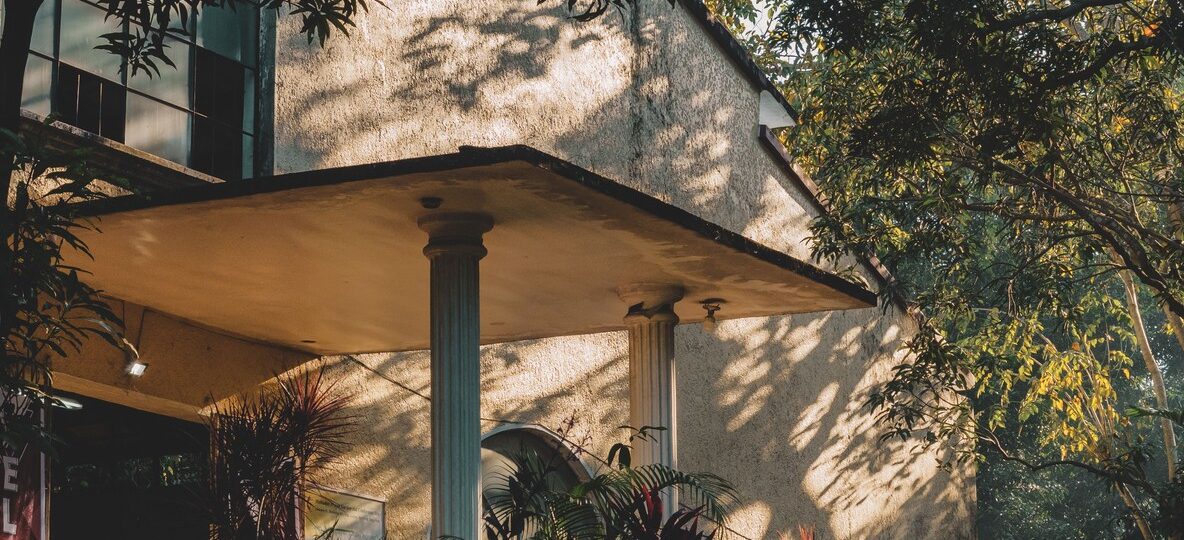
The veranda is perhaps the most photographed spot. It faces the garden and frames a view of the Ngong Hills that remains largely unchanged. The silence here, inside what is now a dense Nairobi suburb, is surprising.
Outside, the servant quarters have been preserved and provide important context. Blixen’s relationship with her Kikuyu and Somali workers — particularly her head servant Farah Aden and the young Kikuyu boy Kamante Gatura — is central to the memoir. The museum handles this material honestly, noting both her genuine personal affection and the structural inequality of the relationship.
What the Museum Does Not Show You
This is worth knowing before you go. The museum is small. The farmhouse has eight rooms and the tour is thorough but brief. There is no film screening, no interactive exhibit, and limited archival material on display. If you come expecting a cinematic recreation, you may find it modest.
The gardens are pleasant but not spectacular. The farm itself is long gone — the surrounding land is residential Nairobi, which makes the experience of standing on the veranda both evocative and slightly surreal.
What the museum does excellently is human-scale context. The guides are knowledgeable and willing to discuss the complicated aspects of Blixen’s legacy — the colonial framing of her relationships with Africans, the romanticization of a period that was objectively exploitative, and how Kenya itself has reclaimed the story.
Karen Blixen Museum: Practical Information
| Detail | Information |
|---|---|
| Address | Karen Road, Karen, Nairobi |
| Opening hours | Daily, 9:30 AM — 6:00 PM |
| Admission (resident) | KES 500 |
| Admission (non-resident) | USD 15 / KES 1,930 |
| Tour duration | 45 minutes (guided, mandatory) |
| Photography | Permitted (no flash inside) |
| Parking | Free, on-site |
| Accessibility | Farmhouse is single-storey; garden paths are flat |
Tours depart continuously from the entrance — you join the next available guide. Maximum wait is typically 15-20 minutes. The museum provides audio guides in Danish, German, English, and French for an additional fee.
How to Get There
The museum is in the Karen suburb, approximately 20 km southwest of Nairobi city centre. The drive from the CBD takes 30-50 minutes depending on traffic.
By taxi/Bolt/Uber: The most practical option for visitors. A Bolt from central Nairobi costs approximately KES 600-900 each way. Ask the driver to wait or arrange a return pickup — there are no taxis waiting at the museum.
By matatu: Take a matatu from the CBD to Karen shopping centre (Route 111 from Ambassador Hotel). From Karen shopping centre, it is a 10-minute walk or short boda-boda ride to the museum. This costs around KES 60 but requires confidence with Nairobi public transport.
Further reading
More safari planning resources
- Kenya tour packages from Valley Safaris
- Maasai Mara National Reserve guide on Touring Insights
- Compare Kenya safari packages on FindMySafari
- Nairobi to Maasai Mara route guide from Valley Safaris
By tour vehicle: Trunktrails Safaris can arrange museum visits as part of a Nairobi day programme or as a pre-safari morning. WhatsApp +254 113 208888 to discuss logistics.
What Else Is in Karen: Building a Full Day
The Karen suburb has a concentration of Nairobi’s best attractions within a 3 km radius of the museum. A half-day here works well.
Karen Blixen Museum (1.5 hours including transit and tour)
Giraffe Centre (1.5 km away, open 9 AM – 5 PM): The African Fund for Wildlife home to a herd of Rothschild’s giraffe. You can hand-feed giraffe from an elevated platform and, on request, receive a giraffe kiss. Admission: USD 20 for non-residents. 🦒
David Sheldrick Wildlife Trust (2 km away, open 11 AM – 12 PM for public visiting): Kenya’s most celebrated elephant orphanage. Baby elephants bottle-fed in front of visitors, with keepers explaining each animal’s rescue story. Admission by donation (USD 40 suggested). Book in advance at sheldrickwildlifetrust.org.
Karen Blixen Coffee Garden and Restaurant (500m from the museum): A colonial-era property that has operated as a restaurant and curio market since the 1990s. Good Kenyan coffee, light lunches, and a craft market worth 30 minutes.
The Hub Karen (shopping centre, 2 km): If you need ATM access, a pharmacy, or a proper supermarket, this is the most convenient option in the area.
Combining the Museum With a Nairobi Safari
Most visitors arrive in Nairobi the night before their safari begins. The Karen Blixen Museum is a good use of a Nairobi morning — it is meaningful rather than time-filling, it grounds you in Kenya’s history before you head into the bush, and it is logistically close to Wilson Airport (5 km), which handles domestic and charter flights to the Masai Mara and other parks.
A workable Nairobi arrival day looks like this:
- Morning: International arrival, transfer to Karen area accommodation
- 10:00 AM: Karen Blixen Museum tour (allow 1.5 hours)
- 12:00 PM: Lunch at Karen Blixen Coffee Garden
- 1:30 PM: Giraffe Centre (if family group) or David Sheldrick (advance booking required)
- 3:30 PM: Transfer to Karen/Langata accommodation
- Next morning: Depart Wilson Airport for bush
Trunktrails Safaris includes Nairobi day programming in its multi-day packages. If you are building a custom itinerary, WhatsApp Micah directly at +254 113 208888 to add a Nairobi cultural day.
The Trunktrails Advantage: Nairobi as Part of the Safari
Most safari operators treat Nairobi as a transit point. Trunktrails Safaris approaches it differently. As a Nairobi-based team, we know which cultural sites are worth your time and which are polished tourist traps. We know which guides at the Karen Blixen Museum will give you the nuanced historical reading rather than the condensed film version. We know the difference between a David Sheldrick visit that moves you and one that feels rushed.
When you book tours and safaris with Trunktrails Safaris, your Nairobi time is designed with the same care as your time in the Mara. We are, locally owned, and built around Kenyan expertise rather than imported tour packages.
Is the Karen Blixen Museum Worth It?
Yes — with one honest qualification. If you want a full-sensory, immersive experience, add the Giraffe Centre or Sheldrick visit on the same day. The museum alone, at 45 minutes, is meaningful but brief.
What the Karen Blixen Museum offers cannot be found elsewhere: a physical connection to a story that shaped how the entire world imagined Kenya for a century. Standing in the room where Out of Africa was written is different from reading it. Kenya looks different through that window than it does on a screen.
For anyone visiting Kenya for the first time, or for cultural travelers who want to understand the country’s colonial history with clear eyes, it belongs on the itinerary.
Plan Your Kenya Visit With Trunktrails Safaris
The Karen Blixen Museum pairs well with a Nairobi day before your bush safari. Trunktrails Safaris runs tours and safaris to all of Kenya’s major parks and conservancies, from Masai Mara and Amboseli to Laikipia and the northern frontier. ✨
Contact us to build your itinerary:
- WhatsApp: +254 113 208888
- Email: info@trunktrailssafaris.com
- Website: trunktrailssafaris.com
- | Nairobi-Based | Kenyan-Owned