
Fig Tree Camp Masai Mara Review: Is This Family-Friendly Tented Camp Worth It? 🌍
If you have been comparing camps and keep landing on fig tree camp masai mara in your research, you are not alone. This Heritage Hotels property on the Talek River sits in the sweet spot most families hunt for: genuine bush immersion at a price point that does not require selling a car. It delivers Big Five game drives, riverside tents, a pool, and a kids-friendly setup that actually functions in the real world. At Trunktrails Safaris, we include it in our Kenya tours and safaris regularly for families and couples at every budget tier. This review covers location, accommodation, wildlife, activities, rates, and the honest trade-offs, so you can decide whether Fig Tree Camp belongs in your itinerary.
Where Is Fig Tree Camp Located in the Masai Mara?
Fig Tree Camp stands on the southern bank of the Talek River, inside the Masai Mara National Reserve in southwestern Kenya. It sits roughly 2 km from Talek Gate, one of the reserve’s main eastern entry points, which means your game drive starts the moment you leave the property boundary.
The 1,510 km² reserve surrounds the camp on all sides. Elephants and hippos use the Talek River as a daily corridor, so wildlife sightings at the camp itself are normal, not exceptional.
Getting there:
| Route | Distance | Typical Duration |
|---|---|---|
| Nairobi (Westlands/CBD) to Fig Tree Camp by road | ~270 km via B3 highway through Narok | 5 to 6 hours |
| Wilson Airport (Nairobi) to Talek Airstrip by charter flight | N/A | ~45 minutes |
| Talek Airstrip to camp by road transfer | 3 km | 10 minutes |
| JKIA (Nairobi) to Talek Airstrip (scheduled/charter) | N/A | ~50 minutes |
For families travelling with young children, the flight option is worth budgeting for. Six hours on murram road after a long-haul international flight takes a real toll.
What Can Families Expect from the Tents and Facilities at Fig Tree Camp?
The camp runs three main accommodation categories: Superior Tents, Deluxe Tents, and Family Tents. Family tents feature interconnecting canvas rooms, which is the primary reason many families choose Fig Tree over smaller boutique camps that offer no adjoining options.
All tents sit on raised wooden platforms along the Talek riverbank. Each unit comes with a private verandah, en suite bathroom with hot shower, and earthy safari furnishings in local fabrics and carved wood. Ceiling fans handle the heat adequately for most of the year. There is no air conditioning, which keeps the experience authentic.
Shared facilities include:
- Swimming pool with views toward the bush (invaluable during March-October heat peaks)
- Main restaurant and bar with a verandah overlooking the river
- Wi-Fi in common areas (adequate for messaging; not streaming speed)
- Camp boutique stocked with safari essentials and curios
- Campfire area for evening storytelling sessions
The pool and riverside verandah are where families tend to decompress between morning and afternoon game drives.
What Wildlife Do Families See at Fig Tree Camp?
The Talek River corridor is reliably active year-round. 🦁 Hippo pods are visible from the riverbank every evening. Elephants cross the water at the camp’s perimeter most mornings. The Big Five, including lion, leopard, elephant, Cape buffalo, and rhino, are all resident in this section of the reserve.
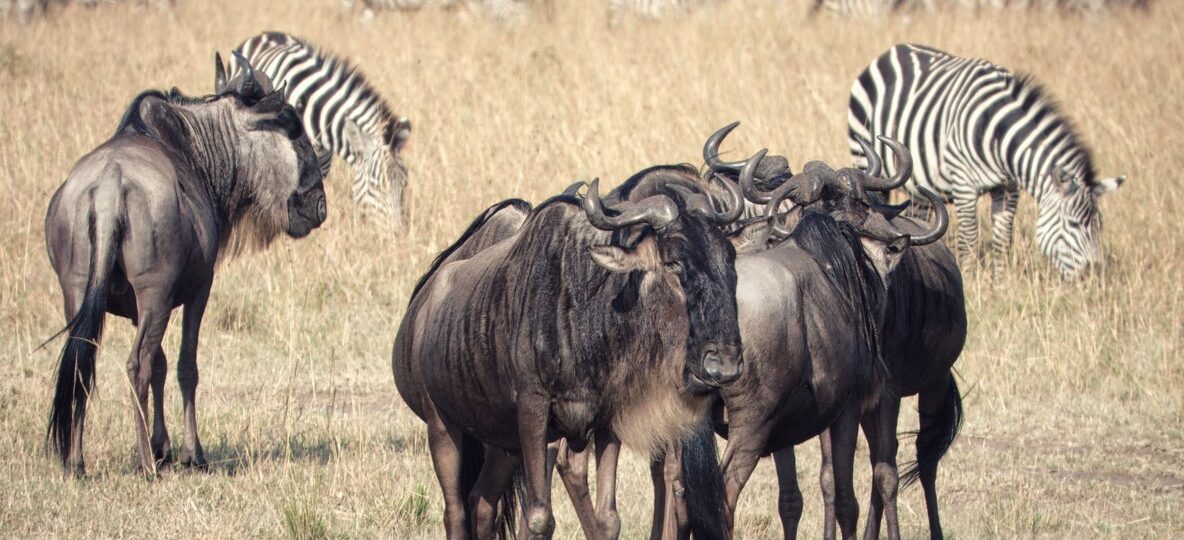
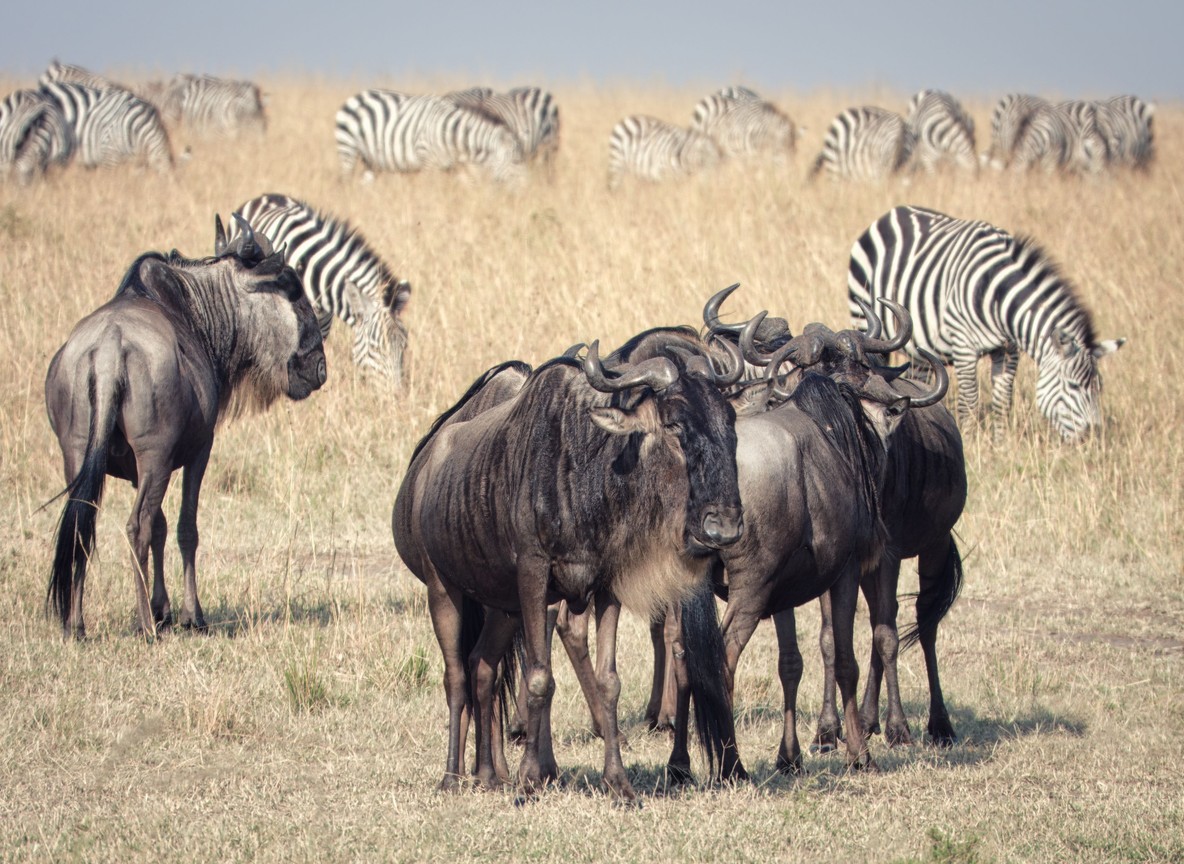
This eastern area of the Masai Mara sits squarely on the Great Migration corridor. Between roughly July and October, wildebeest columns move through the landscape in numbers that still stop experienced guides mid-sentence. The famous Mara River crossing points sit approximately 35 km west of camp, well within day-trip distance.
Year-round sightings families consistently report include:
- Masai giraffe browsing acacia and sycamore fig trees along the riverbank
- Plains zebra and topi on the open grass plains surrounding camp
- Nile crocodile sunning on exposed river sandbars
- Spotted hyena clans active in the pre-dawn and post-sunset hours
- Vervet monkeys and baboons moving through the camp perimeter daily
The Talek area holds several well-habituated lion prides with known territories, which allows close vehicle approaches without disturbing the animals.
What Activities Does Fig Tree Camp Offer for Families?
Game drives are the core daily activity and depart twice daily: early morning at approximately 6:30 AM and late afternoon at approximately 4:00 PM. Experienced Kenyan naturalist guides lead both sessions in open 4×4 Land Cruisers.
Additional activities available near the camp:
- Hot air balloon safari (third-party operator): Indicative rate $450-550 per adult; typically not recommended for children under 7 years old
- Guided bush walk on the conservancy boundary with an armed Kenya Wildlife Service ranger
- Maasai village visit to a community boma, usually 30-45 minutes drive from camp
- Night game drive subject to current reserve permits (confirm at the time of booking)
- Sundowner on the Mara plains: Afternoon drives extend into golden-hour stops with drinks, a favourite with families
Children aged 8 and above can join all standard game drive activities. A junior naturalist program operates on select seasons; confirm current availability when you book. Families travelling with younger children should ask the camp specifically about cub programmes or in-camp nature activities.
Game drives at Fig Tree Camp cover a wide section of the reserve. Guides often rotate routes to avoid other vehicles and find quieter sightings. On a full-day game drive, you can reach the Mara River hippo pools, the Musiara Marsh area, and the central Mara plains in a single day. That kind of range is genuinely hard to match at camps with more restricted operating zones. 📸
How Does Fig Tree Camp Compare to Other Family Camps in the Masai Mara?
| Camp | Location | Indicative Rate PPNS (USD) | Nearest Airstrip | Standout for Families |
|---|---|---|---|---|
| Fig Tree Camp | Talek River | $350-550 | Talek (3 km) | Family tents, pool, river access |
| Mara Intrepids Camp | Talek River | $400-620 | Talek (5 km) | Tree-house tents, good children’s program |
| Keekorok Lodge | Southern Mara | $250-380 | Keekorok (2 km) | Budget-friendly, historic property |
| Governors’ Camp | Mara River | $600-950 | Mara North (8 km) | Luxury finish, Mara River proximity |
| Mara Sarova Camp | Central Mara | $380-580 | Keekorok (15 km) | Large capacity, conference facilities |
PPNS = per person per night sharing. All rates are indicative only and vary significantly by season. High season July-October carries a premium. Confirm current rates directly with each property at time of booking.
Kenya Wildlife Service conservation fees (non-residents, indicative): approximately $80 per adult per day and $50 per child (ages 3-12), charged separately by KWS. Verify current KWS tariffs before finalising your budget, as these fees are reviewed annually.
Fig Tree Camp holds its position well against this peer set. It offers more family-specific infrastructure than Keekorok without the premium of Governors’, and sits closer to Talek Gate than most of its competitors.
What Are the Best Seasons to Visit Fig Tree Camp?
The Masai Mara is open and productive year-round, but two windows stand out for families doing Masai Mara tours and safaris:
July to October (Great Migration peak): Peak wildlife density, dry and dusty conditions, cooler overnight temperatures. This is also peak pricing and peak visitor density. Book at least six months ahead for July-August travel.
January to February (short dry season): Excellent predator activity, fewer visitors than the migration peak, and more competitive rates. Calving season on the Serengeti pulls large predator groups into high hunting activity.
March through May covers the long rains. Some families use this window for reduced rates and a quieter experience. Road conditions can slow transfers significantly, so the fly-in option becomes more sensible during this period.
The Trunktrails Advantage
Trunktrails Safaris has been building Kenya family safari itineraries that include the Masai Mara for years. When we recommend Fig Tree Camp as part of a Masai Mara family safari package, it is because we know which tent categories have the most direct river views, which season gives families the most consistent big cat encounters, and which activities actually hold a child’s interest versus which ones look good on a brochure.
We build our tours and safaris around what works for your specific family: the ages of your children, your group’s energy level, and your honest budget. Fig Tree Camp often pairs well with an Amboseli leg for elephant encounters or a Laikipia stay for a walking-focused, smaller-conservancy experience.
When you book through Trunktrails Safaris, you get a single point of contact who knows the camp’s current guide roster and can put you in front of the field team before you travel. No guesswork from three-year-old online reviews.
Ready to lock in your Masai Mara family safari? ✨
Spaces at Fig Tree Camp during July through October sell out well in advance. Reach out to Trunktrails Safaris today and we will build your itinerary, confirm current rates, and handle every detail:
Further reading
More safari planning resources
- Interactive Maasai Mara map from Valley Safaris
- Maasai Mara National Reserve guide on Touring Insights
- Family safari collection on FindMySafari
- Masai Mara destination guide on FindMySafari
- WhatsApp: +254 113 208888
- Email: info@trunktrailssafaris.com
- Website: trunktrailssafaris.com
The Talek River does not wait. Neither should your booking.
Image credits: Photo by Jos van Ouwerkerk on Pexels