
Best Time to Visit Tsavo National Park: Season-by-Season Guide 🌍
The best time to visit Tsavo National Park is during the long dry season, from June to October, when thinning vegetation pushes lions, elephants, and buffalo toward permanent water sources and game drives turn into sighting after sighting. But Tsavo is not a park with one good window and eleven bad ones. Kenya’s rain calendar splits the year into four distinct seasons here, and each one changes the wildlife, the roads, and the price tag in a different way.
At Trunktrails Safaris, we build tours and safaris to Tsavo across every month of the year, and our guides know exactly what each season delivers on the ground. This guide breaks Tsavo down season by season so you can pick the window that matches what you actually want from your safari.
Quick Facts: Tsavo National Park at a Glance
| Fact | Detail |
|---|---|
| Combined size | Tsavo East (~13,747 km²) + Tsavo West (~9,065 km²) ≈ 22,812 km² |
| Distance from Nairobi (Tsavo East, Voi Gate) | ~330 km, approx. 4.5-5 hours by road on the A109 |
| Distance from Nairobi (Tsavo West, Mtito Andei Gate) | ~240 km, approx. 3.5-4 hours by road |
| Fly-in option | Wilson Airport to Voi or Tsavo West airstrips, approx. 1-hour charter |
| Non-resident park entry | Indicative $52 per adult, per 24 hours (KWS sets rates via eCitizen; confirm current fees before booking) |
| Peak dry season | June to October |
| Short dry window | January to February |
| Long rains | March to May |
| Short rains | November to December |
Tsavo’s Four Seasons at a Glance
Kenya’s weather calendar shapes everything in Tsavo, from the density of wildlife at the waterholes to how firm the tracks feel under your tyres. Here is how the four seasons compare:
| Season | Months | Wildlife Viewing | Roads | Visitor Numbers | Rates |
|---|---|---|---|---|---|
| Long Dry Season | June-October | Excellent, concentrated at water | Firm, easy driving | High (Jul-Aug peak) | Peak |
| Short Dry Season | January-February | Very Good | Good | Low | Mid |
| Long Rains | March-May | Moderate, dispersed | Some muddy tracks | Very Low | Lowest |
| Short Rains | November-December | Good | Improving through Dec | Low-Moderate | Mid |
Long Dry Season (June to October): The Peak Window
This is Tsavo at its most concentrated. As surface water disappears across the plains, wildlife gathers around the few sources that remain, and that predictability is exactly what makes game drives so productive.
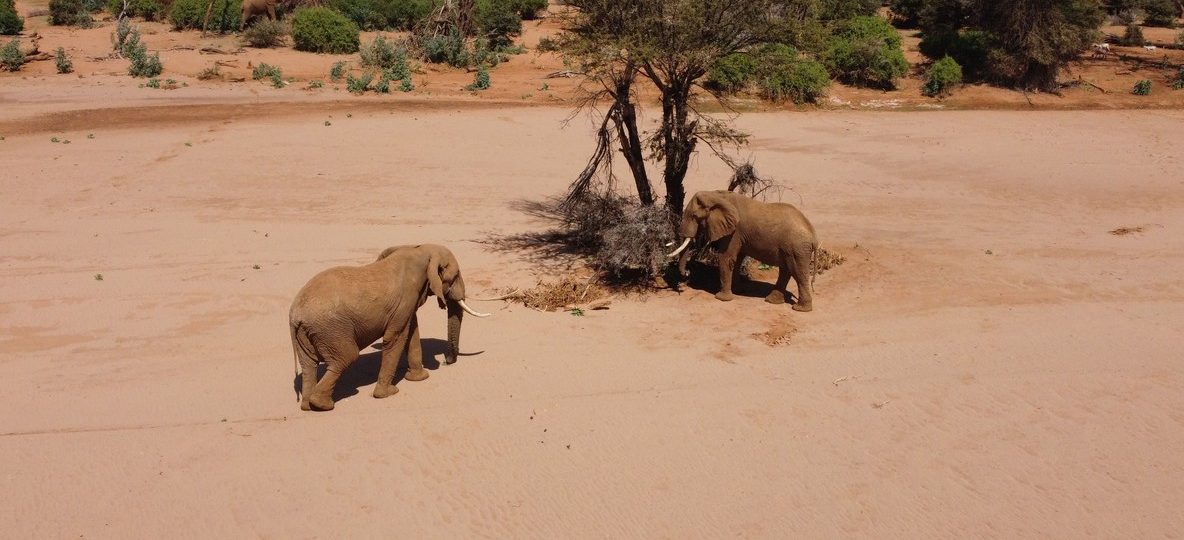
At Aruba Dam in Tsavo East, elephant herds of 50 to 200 animals arrive to drink through the morning and late afternoon, moving in slow convoys across the red dust that gives Tsavo’s elephants their signature color. Over in Tsavo West, Mzima Springs turns the dry season into a different kind of spectacle: hippos and crocodiles gather in crystal-clear, spring-fed pools, and an underwater viewing chamber lets you watch them glide beneath the surface. 🐘
What the long dry season delivers:
- Elephant convoys at Aruba Dam and along the Galana River
- Hippo pods visible underwater at Mzima Springs
- Lions and leopards easier to spot as tall grass retreats
- Firm roads across both parks, including the Yatta Plateau route, the world’s longest lava flow at roughly 290 km
- Dramatic views at Lugard Falls, where the Galana River narrows through sculpted rock channels
July and August are the busiest months of the year here, though Tsavo still feels far less crowded than the Masai Mara at the same time. Book camps at least 3 months out if you are traveling in this window, especially at Satao Camp or Voi Safari Lodge in Tsavo East and Finch Hattons or Kilaguni Serena in Tsavo West.
Short Dry Season (January to February): The Insider’s Window
Tucked between the short rains and the long rains, January and February are Tsavo’s best-kept secret. Vegetation has not fully thickened again, wildlife is still easy to find, and visitor numbers stay low across both parks. Temperatures are warm and consistent, typically between 23°C and 32°C.
This window suits travelers who want strong game viewing without the crowds or the July-to-August rate premium. Skies are generally clear, which also makes it a strong choice for photography, and newborn impala and zebra from the previous season are already growing into confident young animals on the plains.
Long Rains (March to May): Tsavo’s Green Season
Kenya’s long rains typically build through March and April before easing by mid-May. In Tsavo, this means afternoon downpours, some slippery tracks in the remote sectors, and the lowest visitor numbers of the year. It is also, for the right traveler, one of the most rewarding times to visit.
Green season advantages:
- Indicative lodge rates drop 20 to 40 percent below peak season (confirm current package pricing directly with Trunktrails Safaris)
- Newborn impala, zebra, and warthog calves appear from March onward
- Migratory birds swell Tsavo’s resident population, and the park records more than 600 species overall 📸
- Landscapes turn a deep, photogenic green rarely seen by visitors outside this window
Green season trade-offs:
- Afternoon rain can shorten evening game drives
- Some remote tracks in Tsavo East’s northern sector may close temporarily after heavy rain
- Thicker vegetation reduces sightlines compared with the dry season
Wildlife does not leave Tsavo during the rains. It simply spreads out, since water is available almost everywhere rather than concentrated at a handful of dams and springs.
Short Rains (November to December): The Balanced Window
November brings Kenya’s short rains, generally lighter and more predictable than the April peak. Mornings tend to stay clear, with showers arriving in the afternoon, which still leaves a full window for a productive morning game drive. By mid-December, Tsavo typically settles into a brief dry spell that carries strong wildlife viewing through the Christmas and New Year holidays.
December has become increasingly popular with travelers chasing school-holiday timing without the peak-season rates of parks like the Masai Mara. Tsavo offers dependable sightings, moderate camp pricing, and roads that firm up steadily as the month progresses.
Does the Season Change Whether You Should Visit Tsavo East or Tsavo West?
Season affects this choice less than you might expect, but it still matters. Tsavo East’s open plains and long sightlines hold up well even when grass grows taller in the rains, since the terrain is naturally more exposed. Tsavo West’s hillier, more vegetated landscape gets noticeably denser in the wet season, which can make game viewing feel slower, though Mzima Springs remains reliable in any month because it is fed by underground water, not rainfall.
| Size | ~13,747 km² | ~9,065 km² |
|---|---|---|
| Landscape | Open semi-arid savannah | Volcanic hills, lava flows, forest patches |
| Rain-season impact | Lower; plains stay open | Higher; vegetation thickens fast |
| Key water features | Aruba Dam, Galana River | Mzima Springs |
| Top lodges | Satao Camp, Voi Safari Lodge, Galdessa | Finch Hattons, Kilaguni Serena, Severin Safari Camp |
| Main gate | Voi Gate (A109 highway) | Mtito Andei Gate |
Many of our Trunktrails Safaris tours and safaris combine both parks on a single itinerary, crossing between them through the connecting Tsavo Gate regardless of season.
What Does a Tsavo Safari Cost by Season?
Pricing swings meaningfully across the year, and knowing the pattern helps you plan a budget that matches your priorities.
| Safari Type | Duration | Peak Season (Jun-Oct, Dec) | Low Season (Mar-May) |
|---|---|---|---|
| Budget Safari | 2-3 nights | From $650 | From $480 |
| Mid-Range Safari | 4-5 nights | From $950 | From $700 |
| Premium Safari | 6-8 nights | From $1,835 | From $1,350 |
All figures are indicative starting points and vary by exact dates, group size, and camp choice. Our tours and safaris to Tsavo are tailor-made around your travel window, so contact Trunktrails Safaris directly for a quote matched to your season and budget.
The Trunktrails Advantage
Trunktrails Safaris is a native Kenyan-owned operator, licensed by the Tourism Regulatory Authority (Licence No. TRA1/22/C01/92750, Class C). We do not outsource your safari to a third party or stack on agency markups. You deal directly with the same team that plans, drives, and delivers your trip.
For a season-driven Tsavo safari, that means:
- Season expertise: Our guides track Tsavo’s rhythms year-round, from which Aruba Dam approach holds elephants in August to which Tsavo West tracks to avoid after a March storm.
- Tailor-made timing: We build your itinerary around the season that fits your priorities, whether that is peak-season drama or green-season solitude.
- 24/7 direct support: No call centers, no intermediaries, just a direct line to the person running your safari.
- Conservation commitment: 5 percent of every booking goes directly to wildlife conservation work in Kenya.
- Every budget covered: From budget tented camps to Finch Hattons-level luxury, across every season of the year.
Plan Your Tsavo Safari Around the Season That Fits You
Chase the drama of the waterhole in the long dry season. Slip into the quiet, well-priced window of January and February. Or come during the rains for a green, uncrowded Tsavo that very few travelers ever see. Every season in Tsavo National Park rewards a traveler who knows what to expect, and that is exactly what Trunktrails Safaris helps you plan for.
Message our team today and tell us your travel dates. We will match them to the right season, the right park, and the right camp, and build a Tsavo itinerary around exactly what you want to see.
Further reading
More safari planning resources
- Best time to visit Kenya map from SafariPure
- Best time to visit Kenya month-by-month map from Valley Safaris
- Tsavo complete guide on Touring Insights
- Tsavo destination guide on FindMySafari
📞 WhatsApp: +254 113 208888 📧 Email: info@trunktrailssafaris.com 🌐 Website: https://trunktrailssafaris.com