
Maasai Culture and Traditions: A Complete Guide 🌍
Stand still in the middle of the Masai Mara at dawn, and you begin to understand it.
The immensity of the landscape. The silence beneath the bird calls. The sense that this land has been watched, tended, and understood for a very long time. That understanding belongs to the Maasai — a people whose culture and traditions are not relics of a distant past, but a living daily practice.
Maasai culture and traditions have survived colonialism, modernisation, climate change, and the constant pressure of a world that doesn’t always understand what it is about to lose. They’ve survived because they are rooted in something essential: a coherent philosophy about how people should live with each other, with cattle, and with the land.
This complete guide covers every major aspect of Maasai cultural life — from rites of passage and ceremonies to music, marriage, values, and the social structures that hold it all together. Whether you’re preparing for tours and safaris through the Mara or simply want to understand one of Africa’s most celebrated peoples, this is the guide for you.
The Core Values of Maasai Culture
Before diving into specific maasai traditions, it helps to understand the values that underpin all of them.
Enkiama (respect) — Respect for elders, for age-mates, and for the land is the foundation of Maasai social life. Decisions are made by consensus among elders. Young men defer to elders in public, even when they disagree in private.
Ilkisongo (courage) — Maasai cultural identity prizes bravery above almost all other qualities. Warriors are expected to be fearless. Elders are expected to lead with moral courage. Even children are raised with a strong sense of personal accountability.
Enkiama nabo (hospitality) — Guests are sacred in Maasai culture. A visitor to a Maasai homestead will not leave hungry. Hospitality is not optional — it is a social obligation and a source of pride.
Cattle as currency — The Maasai way of life revolves around cattle. Cattle represent wealth, status, spiritual connection, and social obligation. Bride price (lobola) is paid in cattle. Ceremonies involve cattle. The rhythms of daily life follow cattle herding schedules.
Maasai Rites of Passage
No aspect of maasai culture and traditions is more significant than the rites of passage that move individuals from one life stage to the next. These ceremonies are public, communal, and deeply meaningful.
Circumcision — The Gateway to Adulthood
For both Maasai men and women, circumcision is the defining rite of passage into adulthood. For young men, circumcision marks the beginning of the Moran (warrior) phase. The ceremony requires the initiate to endure the procedure in complete silence — any sound or flinching is considered deeply shameful and reflects on the family.
In the days before circumcision, initiates wear black clothing and travel through neighbouring communities to collect gifts. On the morning of the ceremony, they are bathed in cold water to numb the body. The community gathers. This is not a private event.
The Moran Phase — Warrior Life
After circumcision, young men enter the warrior phase (Il-Murran). They grow their hair long, dye it with red ochre, and live separately from the main village in warrior camps. This phase can last up to 15 years. It is the period of maximum freedom and maximum responsibility — warriors protect the community, herd cattle over vast distances, and develop the bonds with their age-mates that will define their friendships for life.
Eunoto — Transition to Elder
The Eunoto ceremony marks the end of the Moran phase. Mothers shave their sons’ long warrior hair in a deeply emotional public ceremony. The young men transition to senior warrior status, become eligible to marry, and begin the long journey towards elderhood.
Marriage Ceremonies
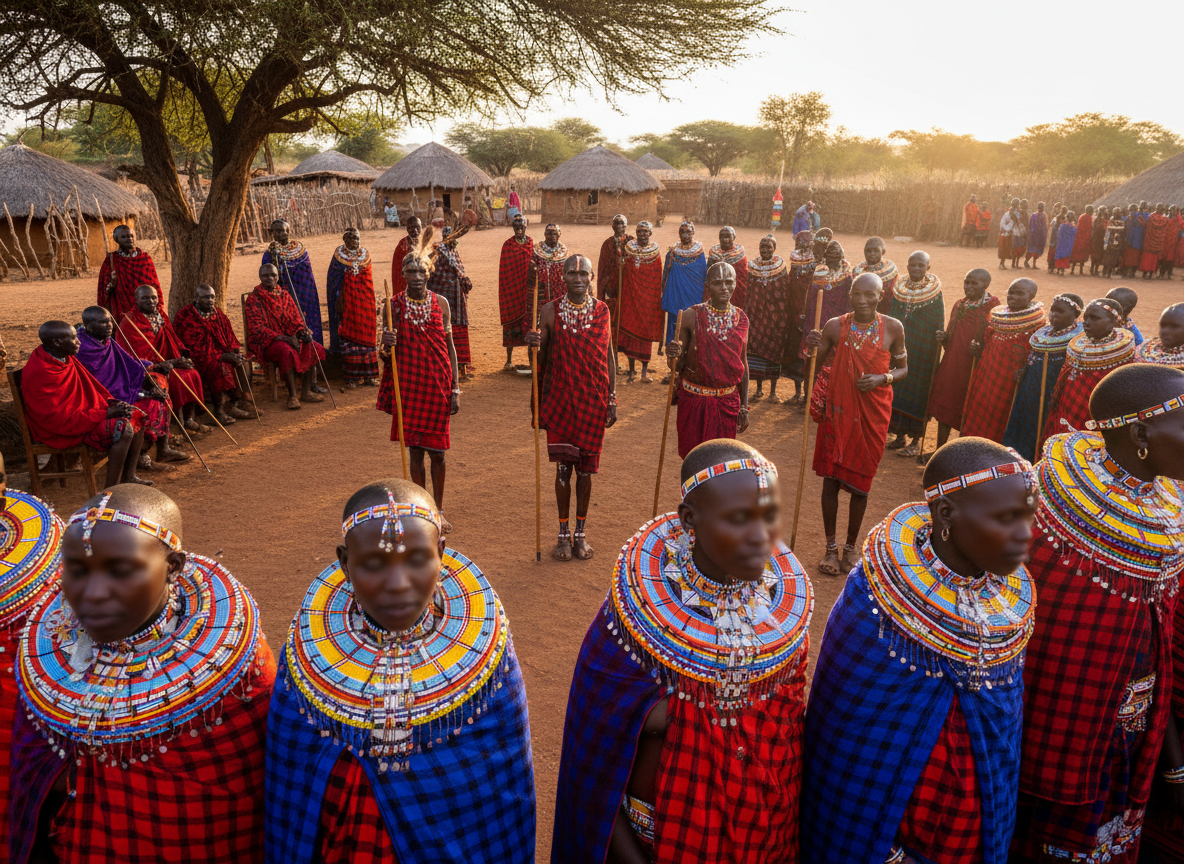
Maasai marriage is arranged and polygamous :a senior man may have several wives, each with her own house within the shared homestead. The bride price is paid in cattle, goats, and sometimes honey beer. Wedding ceremonies last several days and involve singing, dancing, animal slaughter, and feasting.
Women move to their husband’s village at marriage, leaving their birth community behind. This makes the bonds formed between women within the new homestead community essential :Maasai women rely on each other deeply, and those friendships are lifelong.
Maasai Ceremonies and Rituals
Beyond the core rites of passage, maasai ceremonies punctuate the calendar year and mark important transitions in community life.
The Enkiama Enkare (Milk Ceremony)
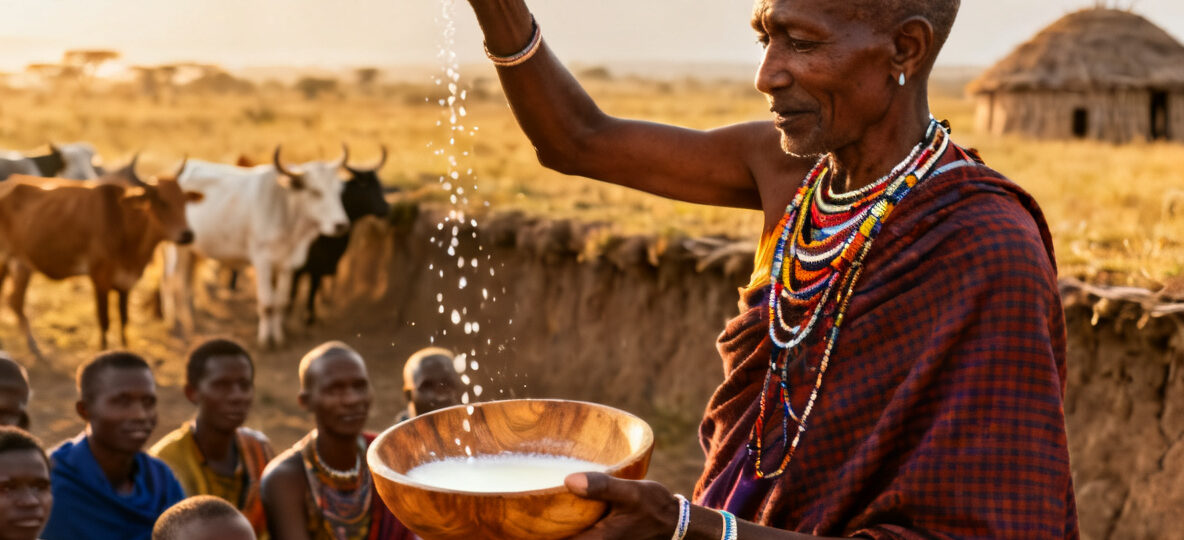
Milk is sacred in Maasai cultural practices. Before a long journey or an important decision, elders pray over milk and sprinkle it as a blessing. The ceremony is simple, quiet, and profoundly intentional.
The Almasi Ole Enkare (Cattle Blessing)
Before cattle are moved to new pastures, a ceremony is held to bless the herd and ask Enkai (God) for protection from predators and disease. Elders lead the prayer; women ululate; warriors stand guard.
Coming-of-Age Songs
When a new age-group of warriors is created, the community comes together for multi-day maasai festivals involving singing, dancing, feasting, and ceremony. Each age group receives a name that they carry for life — a form of collective identity that no modern institution quite replicates.
The Adumu — Jumping Dance
The Adumu is the most internationally recognisable of all maasai rituals. Warriors form a circle and take turns jumping as high as possible while the group sings. The chanting deepens, the jumping height increases, and the sense of collective energy builds into something electric. It is performed at weddings, during warrior phase celebrations, and for important visitors. 🦁
Maasai Music, Dance, and Oral Tradition
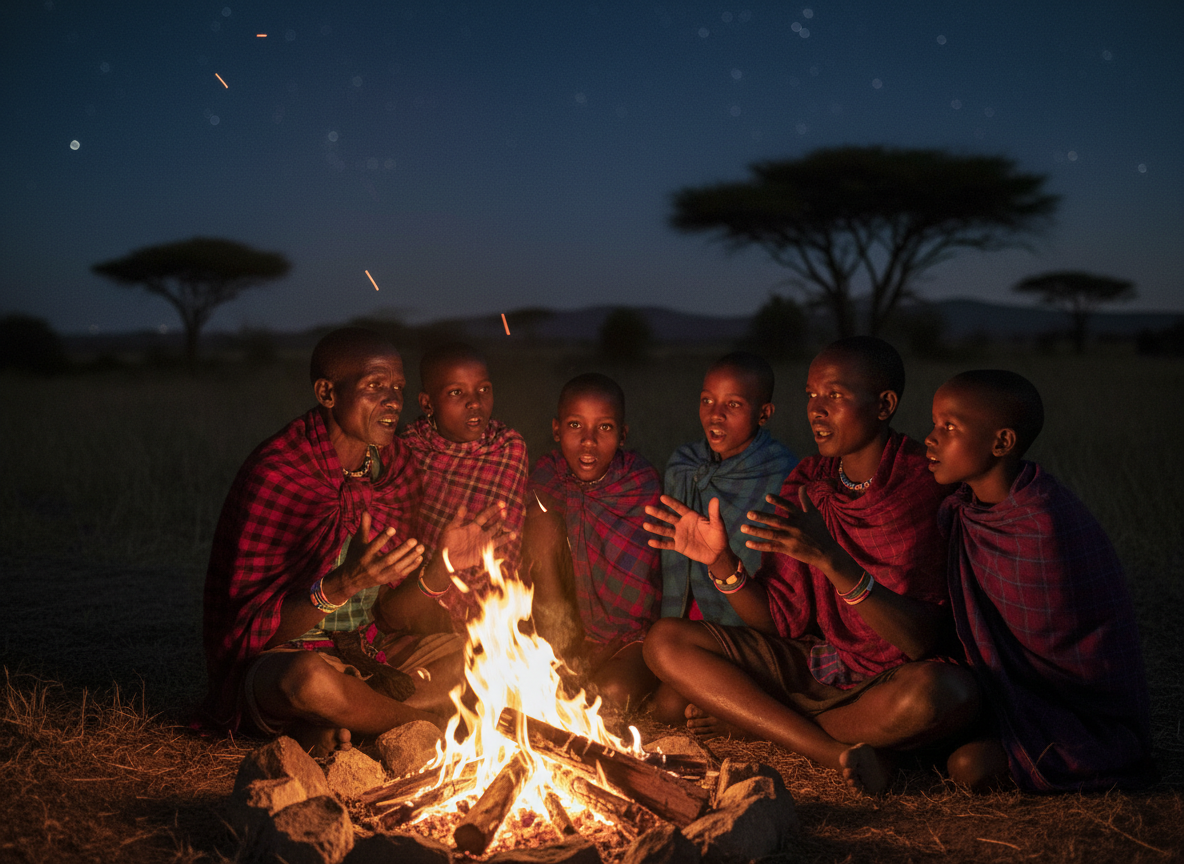
Maasai music is vocal-only. There are no traditional instruments — every sound is made by the human voice. The distinctive call-and-response singing (nkiama) involves a lead voice setting a phrase and the group responding in harmony. The sound is extraordinary and unlike anything else in East Africa.
Maasai oral tradition carries the community’s history, values, and knowledge. Elders are living libraries. Proverbs — short, wise, often darkly funny — are the preferred form of guidance. A few Maasai proverbs that reveal the maasai values underlying the culture:
- “The cattle are the Maasai, and the Maasai are the cattle.” — on identity and livelihood
- “Do not say the first thing that comes to your mind.” — on restraint and wisdom
- “A good name is better than wealth.” — on reputation as the ultimate currency
Stories are told at night, around fires, with children sitting close. This is how cultural knowledge transfers — not through books, but through presence and repetition.
Maasai Social Structure
Maasai social structure is built on three interlocking systems: the age grade system, the clan system, and the gender division of roles.
Age Grades (Ilkiama)
Every Maasai male advances through age grades in a cohort with his peers. This creates bonds of loyalty that transcend family lines. Men from the same age grade are expected to support each other throughout their lives — lending cattle in times of need, supporting each other’s children, and acting as a permanent safety net.
Clans (Iloshon)
The Maasai are divided into clans, each with its own cattle brands, songs, and ceremonial responsibilities. Clan identity is inherited through the father. Marriage between clan members is prohibited — clan exogamy ensures social mixing and genetic diversity.
Women’s Roles
Maasai women are the builders, the craftswomen, the mothers, and the economic foundation of the homestead. Women build and own the inkajijik (houses). Women create the beadwork that signals social status and life events. They manage the daily milk production, the cooking, and the children.
Traditional maasai customs assigned women a largely domestic role, but this is changing. More Maasai women are entering formal education, starting small businesses from their beadwork craft, and participating in community governance. The change is gradual and uneven — but it is real.
Maasai Culture and Conservation
One of the most important — and least understood :aspects of maasai culture and traditions is their relationship with wildlife. The Maasai are pastoralists, not hunters. They have historically coexisted with wildlife because their livelihood depends on the same grasslands that support wildebeest, zebra, and gazelles.
The Maasai understanding of seasonal grass patterns, water sources, and predator behaviour is extraordinary. It is knowledge built over centuries, encoded in oral tradition, and applied daily by herders across the Mara ecosystem.
Trunktrails Safaris partners with Maasai communities in the Mara region because we believe this knowledge is as important to conservation as any scientific study. Our tours and safaris bring visitors into contact with that knowledge — and help fund the community projects that make coexistence economically viable for Maasai families.
The Trunktrails Advantage
At Trunktrails Safaris, we are a native Kenyan-owned operator who has built genuine relationships with Maasai communities over years. We don’t just visit Maasai villages — we work with them, fund projects in them, and employ guides who grew up speaking Maa.
Our Kenya tours and safaris are designed for travellers who want cultural depth alongside wildlife drama. We offer:
- Tailor-made itineraries that pair game drives with community visits
- Guides fluent in Maa, Swahili, and English
- Direct community access — entrance fees go to the village, not to agencies
- 5% of every booking to wildlife and community conservation
- KATO certified | TRA licensed ✨
Whether you’re planning a 4-day Mara fly-in or a 12-day Kenya circuit, we’ll design a safari that honours both the wildlife and the people who’ve shaped this landscape for centuries.
Conclusion
Maasai culture and traditions are not a spectacle to observe from a safe distance. They are an invitation — to understand a different philosophy of life, to question your own assumptions about wealth and progress, and to recognise the depth of knowledge that communities accumulate when they live closely with a landscape for generations.
Come with curiosity. Come with respect and be ready to have your thinking changed.
Start Planning Your Cultural Safari
Experience Maasai culture and traditions first-hand on a safari with Trunktrails Safaris.
📞 WhatsApp: +254 113 208888
📧 Email: info@trunktrailssafaris.com
🌍 Website: https://trunktrailssafaris.com
✅ KATO Member | TRA Licensed
Tell us your travel dates and what matters most — we’ll do the rest.
maasai culture and traditions