
Maasai Religion and Beliefs: Enkai, the Laibon, and Maasai Spirituality ✨
Before the sun rises over the Mara, an elder faces east and speaks.
Not to another person. Not to an audience. To Enkai – the one god of the Maasai – in a private morning prayer that has opened every day in this landscape for as long as anyone’s memory reaches. The prayer is short. It asks for cattle to be safe, children to be healthy, and rain to come when it is needed.
Maasai religion and beliefs are not a separate category from daily life. They are woven into every herding decision, every ceremony, every conversation between elders, and every drop of milk drunk at dawn. Understanding Maasai spirituality is not a detour from understanding the Maasai – it is the core of it.
This guide covers everything: who Enkai is, what the maasai laibon does, how Maasai spiritual beliefs shape social decisions, and how the traditional Maasai religious worldview has interacted with Christianity and Islam over the past century.
Is the Maasai Religion Monotheistic?
Yes. The Maasai are monotheistic – they believe in a single god, Enkai (sometimes written Ngai or Engai). This surprises many visitors who assume the presence of elaborate ceremony and ritual means polytheism. It does not.
Enkai is present everywhere – in the sky, in the rain, in cattle, in good fortune and in hardship. The Maasai do not build temples to Enkai or maintain a formal priesthood. Worship is direct, personal, and continuous.
What religion are the maasai? Technically, the Maasai practice an indigenous African monotheistic faith centred on Enkai. Many Maasai also identify as Christian, particularly younger generations and those in urban areas, but traditional Enkai belief remains strong in rural communities and coexists fluidly with Christianity for many individuals.
Enkai: The Maasai God
Enkai is the central figure in all maasai beliefs. The name translates roughly as “sky” or “rain” – reflecting the understanding that Enkai is manifest in the natural world, especially in the rain that brings grass and therefore life.
The Two Aspects of Enkai
Maasai theology recognises two aspects of the same god:
Enkai Narok (Black God) – The benevolent, nurturing aspect of Enkai. Associated with dark rain clouds, abundance, and blessings. When rains come, when cattle thrive, when children are born healthy, Enkai Narok is present.
Enkai Nanyokie (Red God) – The punishing, withholding aspect. Associated with drought, lightning, and hardship. When cattle die, when crops fail, when communities suffer, it is understood as Enkai Nanyokie expressing displeasure or testing the community’s resilience.
This duality – one god with two faces – gives the Maasai religious framework a nuanced relationship with hardship. Suffering is not random; it is meaningful. And meaning creates the possibility of response.
Enkai and Cattle
One of the most famous maasai spiritual beliefs is that Enkai gave all the world’s cattle to the Maasai at the beginning of time. This belief is encoded in oral tradition and helps explain the cultural centrality of cattle – they are not just livestock, they are a divine gift, a sacred trust, and a permanent bond between the Maasai and their god.
Maasai Prayer and Religious Practices
Maasai prayer (inkiama) is a daily practice. Elders pray at dawn and dusk, facing east (towards the rising sun) or towards the sacred mountain Ol Doinyo Lengai in Tanzania, which is considered a dwelling place of Enkai.
Prayer is spoken, not sung – short, specific requests delivered in Maa. Common prayer themes include:
- Protection for cattle from predators and disease
- Rain and good grass for grazing
- Health and fertility for children
- Safe passage for warriors on herding journeys
- Guidance for community decisions
Community prayer occurs at ceremonies, before cattle movements, at births, and before circumcisions. Senior elders lead these prayers, and the community responds collectively. The Maasai do not have a formalised prayer schedule like daily salat in Islam or Sunday services in Christianity – prayer flows into daily activity rather than interrupting it.
Sacred Spaces
The Maasai do not build formal temples. Sacred space is found in:
- Ol Doinyo Lengai (“Mountain of God”) – an active volcano in Tanzania, considered the most sacred site in Maasai spirituality. Major ceremonies and pilgrimages have historically been oriented towards this mountain.
- Certain large fig trees – specific trees in the landscape are considered Enkai’s resting places and are used as natural prayer sites
- The eastern horizon – the direction of the rising sun, used as the orientation for prayer
The Laibon: Maasai Spiritual Leader
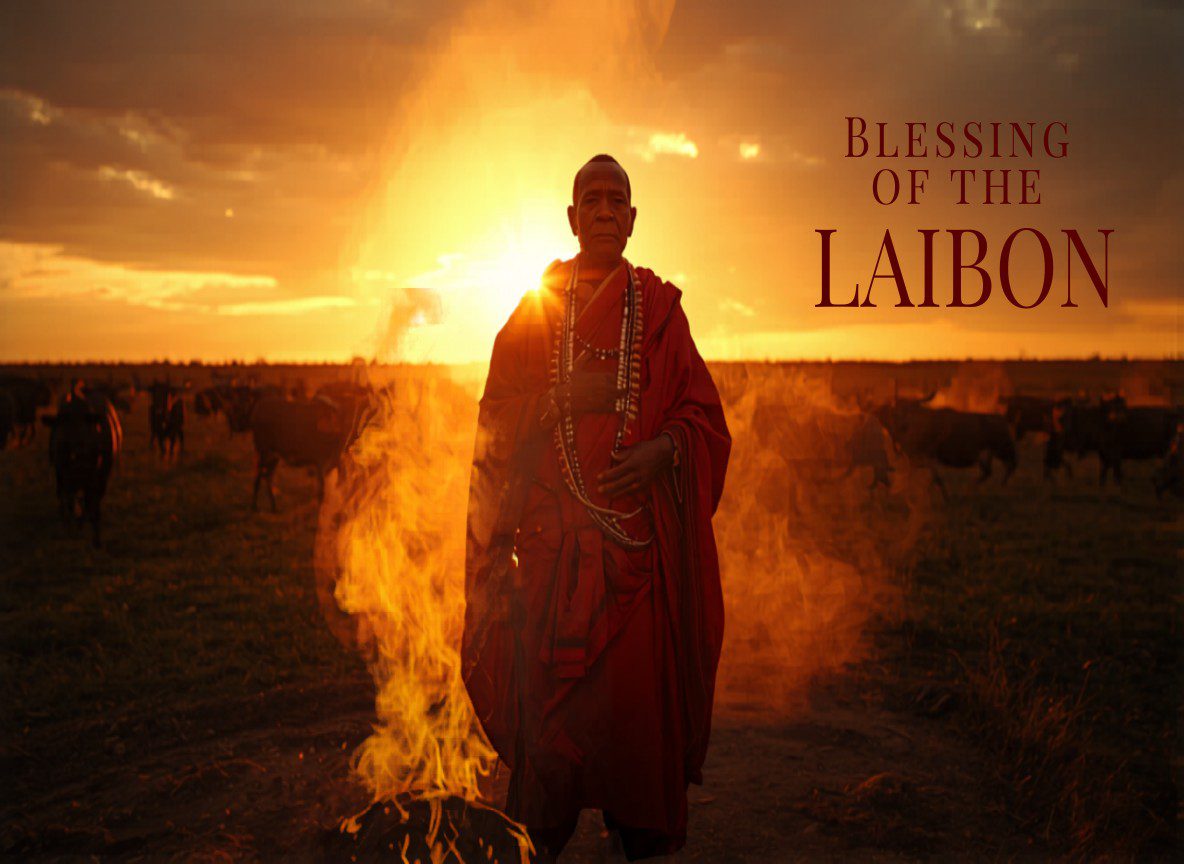
No discussion of maasai religion and beliefs is complete without the Laibon (plural: Ilaibonok). The Laibon is a hereditary spiritual leader, healer, and political advisor – the closest thing the Maasai have to a priest, though the role is much more complex than that.
What Does a Laibon Do?
Maasai laibon responsibilities include:
- Divination – using gourd gourds (or other tools) to read portents before important decisions, including cattle movements, warfare, and ceremonial timing
- Healing – prescribing herbal remedies and spiritual interventions for illness
- Community leadership – advising elders on political decisions and conflict resolution
- Ceremony management – overseeing the timing and conduct of major life-cycle ceremonies
- Protection – providing individuals and herds with spiritual protection through blessing and ritual
The Laibon role passes within specific lineages and is believed to be a gift from Enkai. Some Laibon are extraordinarily influential across wide geographic areas – the Laibon of the Purko Maasai section, for example, has historically had authority recognised across multiple counties.
The Laibon Today
The role of the maasai spiritual leader has evolved under the pressure of modernity, Christianity, and formal governance. In many communities, Laibon still hold significant influence, particularly on matters of ceremony and traditional medicine. In others, the role has diminished as formal healthcare and Christianity have replaced some of their functions. The two systems often coexist – a Maasai man may visit a clinic and a Laibon in the same week, seeing no contradiction.
Maasai Beliefs About Death and the Afterlife
Maasai afterlife beliefs are distinctive and often surprise visitors who expect beliefs paralleling Christian or Islamic theology.
Traditional Maasai culture does not feature a strong concept of an afterlife for ordinary people. When a person dies, the body is traditionally left in the bush for scavengers – particularly hyenas. The logic is ecological and theological at once: the person returns to the earth, feeding the animals, completing the cycle of life that Enkai set in motion.
Only very important elders – those whose influence on the community has been extraordinary – were historically buried. This is because burying someone interrupts the return to the earth cycle; it is therefore reserved for those whose significance requires a different kind of remembrance.
This tradition has changed in many communities, particularly where Christianity has influence. Christian Maasai follow burial customs similar to other Kenyan Christians.
Do the maasai believe in god after death? The emphasis in traditional Maasai theology is on Enkai’s presence in this life, not on reward or punishment in an afterlife. The goal of righteous living – generosity, courage, hospitality, respect for elders – is a good life and a good community, not a heavenly reward.
Maasai Religion and Christianity
Missionaries arrived in Maasailand in the 19th century. Their reception was mixed. The Maasai were less susceptible to conversion than many other East African communities, partly because their self-sufficient pastoralist lifestyle gave them less economic incentive to engage with mission schools, and partly because Enkai theology was already coherent and robust.
Christianity has nonetheless spread significantly, particularly since the 1970s. Today, many Maasai identify as Christian while maintaining elements of traditional belief – praying to Enkai for rain, consulting the Laibon for healing, and participating in traditional ceremonies at life-cycle transitions. Syncretism is common and largely untroubled.
The Trunktrails Advantage
When you visit Maasai communities through tours and safaris with Trunktrails Safaris, our guides explain the cultural and spiritual context of everything you see. You’re not just watching a ceremony – you understand what it means, who is praying, and why cattle are at the centre of it.
Trunktrails Safaris is a native Kenyan-owned operator with genuine community relationships in the Masai Mara region. We offer:
- Culturally deep Maasai village experiences led by Maa-speaking guides
- Tailor-made tours and safaris combining wildlife and cultural immersion
- 5% of every Trunktrails Safaris booking supporting community conservation in the Mara
- certified | 🌍
Plan Your Cultural Kenya Safari
Experience Maasai religion, beliefs, and living culture first-hand.
Further reading
More safari planning resources
- Kenya tour packages from Valley Safaris
- Is Kenya safe to visit? on Touring Insights
- Family safari collection on FindMySafari
- Interactive Maasai Mara map from Valley Safaris
📞 WhatsApp: +254 113 208888 📧 Email: info@trunktrailssafaris.com 🌍 Website: https://trunktrailssafaris.com ✅
QA Checklist: