2 Week Kenya Safari Itinerary: The Perfect 14-Day Route From Nairobi to the Coast
Two weeks is the ideal length for Kenya tours and safaris. It is long enough to move through five distinct ecosystems, watch elephants under Kilimanjaro, stand at the Mara River during migration season, and still finish your trip with sand between your toes at Diani Beach. At Trunktrails Safaris, we have refined this 14-day route over dozens of client trips. This guide gives you the exact sequence, real distances, park entry fees, and named camps so you can plan with confidence, not guesswork. 🌍
What Does a 2 Week Kenya Safari Itinerary Look Like Day by Day?
Here is the route we recommend for your 2 week Kenya safari itinerary, built for smooth logistics and maximum wildlife diversity:
| Days | Destination | Nights | Key Experience |
|---|---|---|---|
| 1-2 | Nairobi | 2 | City wildlife, elephant orphanage, Nairobi National Park |
| 3-5 | Masai Mara | 3 | Big Five, migration, Mara River crossings |
| 6-7 | Lake Nakuru / Naivasha | 2 | Flamingos, rhinos, Crescent Island boat walk |
| 8-10 | Amboseli | 3 | Giant elephant herds, Kilimanjaro sunrise views |
| 11-13 | Tsavo East | 3 | Red elephants, Aruba Dam, vast wilderness |
| 14 | Diani Beach (Coast) | 1+ | Indian Ocean, marine park, Swahili culture |
This sequence flows southeast from the Rift Valley toward the coast, cutting driving time and keeping each leg to under five hours by road or under one hour by charter flight.
Why Should You Start Your 14-Day Kenya Safari in Nairobi?
Most international flights land at Jomo Kenyatta International Airport. Two nights in Nairobi is not dead time. It is a genuine wildlife start.
Nairobi National Park sits just 7 km from the city centre. You can watch lions against a Nairobi skyline backdrop for a $60 indicative non-resident day fee. The David Sheldrick Wildlife Trust at Karen runs free elephant orphanage visits (donation-based) from 11 am to noon. The African Fund for Endangered Wildlife Giraffe Centre charges $20 per adult.
Where to stay: Karen Blixen Camp in the Karen suburb puts you five minutes from the park. City Park Hotel in Westlands suits tighter budgets.
These two nights also let you clear jet lag, pick up SIM cards, meet your Trunktrails Safaris guide team, and pack for the bush properly.
What Wildlife Can You Expect in the Masai Mara on a 14-Day Itinerary? 🦁
Days 3 to 5 belong to the Masai Mara National Reserve, Kenya’s most celebrated game destination and the heart of any serious 2 week kenya safari itinerary.
Getting there: Charter flights from Wilson Airport (Nairobi) take 45 minutes to Kichwa Tembo airstrip (northwest Mara) or Ol Kiombo airstrip (southeast Mara). Road transfers from Nairobi take around 5 to 6 hours via the Narok highway, roughly 270 km.
Park facts:
- Size: 1,510 km²
- Entry fee (non-resident adults, July-December): $200 per day | $100 per day (January-June)
- Children 9-17: $50 | Under 8 free
- Note: ticket validity is 12 hours, not 24. Overnight guests inside the reserve pay the fee again the next calendar day.
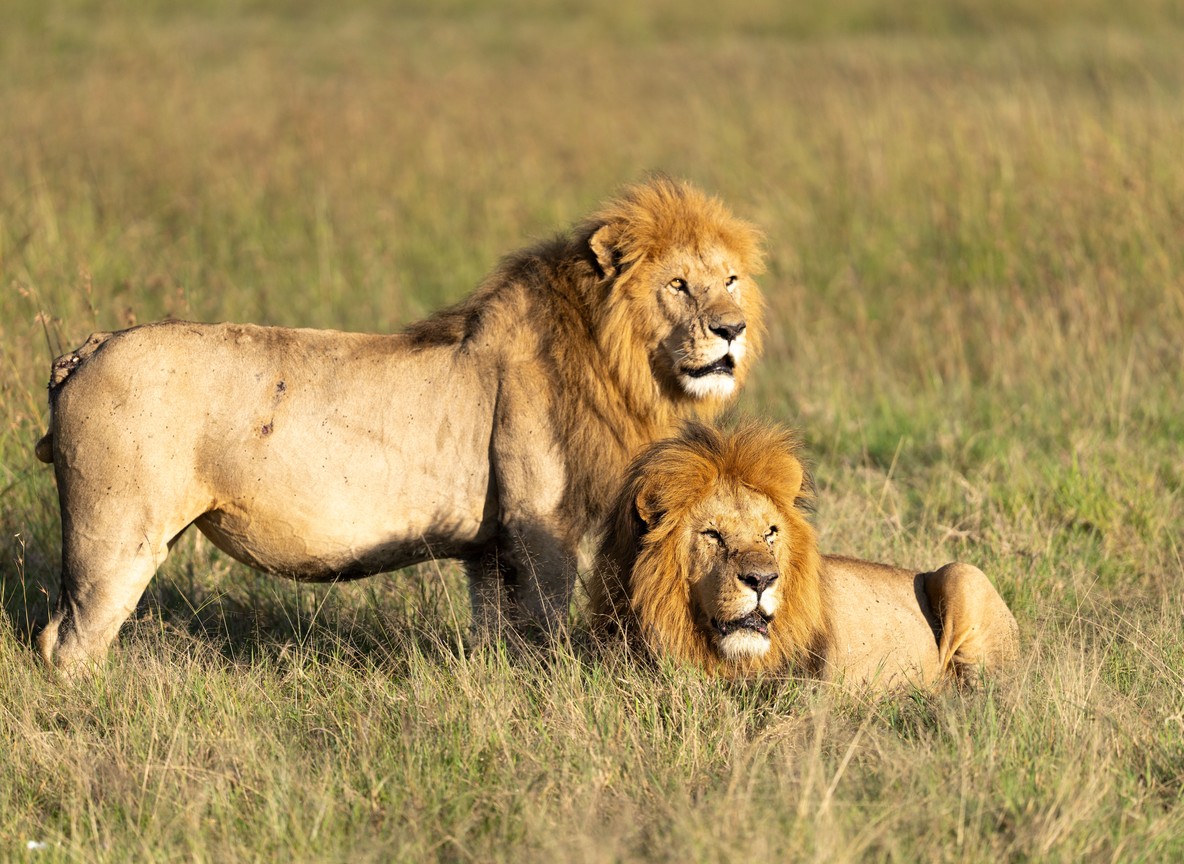
Between July and October, the wildebeest migration brings over 1.5 million animals through from the Serengeti. The Mara River crossing at Crossing Point 1 (near Governors’ Camp) is the most dramatic wildlife spectacle in Africa. Outside migration, the Mara consistently delivers lion prides, leopards on acacia trees, cheetahs, and large resident elephant herds.
Where to stay (indicative rates): Basecamp Masai Mara near Talek Gate ($300-420 per person per night all-inclusive), Mara Serena Safari Lodge on the Mara River ($350-500 pppn), or Angama Mara above the Oloololo escarpment ($1,000+ pppn for luxury). See our Masai Mara migration safari itinerary guide for deeper planning detail.
How Does Lake Nakuru Fit Into a Two-Week Kenya Safari Route?
After the Mara, days 6 and 7 take you north into the Great Rift Valley. Lake Nakuru National Park is 160 km from Nairobi (around 3 hours drive), but from the Mara it is approximately 200 km northeast (around 4 hours).
Lake Nakuru (188 km²) is one of Africa’s great soda lakes. Flamingo numbers fluctuate but can reach tens of thousands, turning the lake shoreline pink. More reliably, the park holds both black and white rhinos, making it one of the best places in Kenya for rhino sightings.
Pair Nakuru with a half-day on Lake Naivasha to the south. A boat ride out to Crescent Island lets you walk among zebras and giraffes on a private island, with no predators. This is a rare, uncaged wildlife experience that families rate as a highlight of the entire tour.
Entry fee (indicative, verify on KWS eCitizen): approximately $60 per adult per day.
Where to stay: Sarova Lion Hill Game Lodge inside Nakuru park sits on a ridge with panoramic lake views (indicative $200-350 pppn). Flamingo Hill Tented Camp on the lake shore offers a more intimate experience.
What Makes Amboseli Essential on a Kenya Safari Itinerary? 🐘
No kenya safari itinerary is complete without Amboseli. Days 8 to 10 cover three nights here, and most guests say this is where they fall deepest in love with Africa.
Amboseli National Park (392 km²) sits at the foot of Mount Kilimanjaro, with the volcano’s glacier-capped summit dominating the southern horizon. The elephants here are large, relaxed, and often photographed with Kilimanjaro as a backdrop. These are the same elephant families followed by the Amboseli Elephant Research Project since 1972, the world’s longest-running elephant research program.
Getting there: Amboseli is roughly 240 km south of Nairobi via the Namanga road (about 4 hours). Alternatively, fly from Wilson Airport to Amboseli airstrip in 45 minutes. From Lake Nakuru, allow 5 to 6 hours of road travel (approximately 300 km via Nairobi).
Entry fee (indicative, verify on KWS eCitizen): approximately $60 per adult per day.
Where to stay: Ol Tukai Lodge sits at the heart of Amboseli with direct elephant views from the terrace (indicative $250-450 pppn). Kibo Safari Camp near Kimana Gate offers a mid-range tented option (indicative $180-300 pppn). Read our full Amboseli safari from Nairobi planning guide before booking.
What Can You See in Tsavo East on a 14-Day Kenya Safari?
After Amboseli, the route swings southeast into Tsavo East National Park for days 11 to 13. This is the largest protected area in Kenya, at 13,747 km², and one of the least-visited relative to its size.
The signature experience is the red elephants. The park’s laterite-rich soil stains their skin brick red, a sight found nowhere else. Aruba Dam (about 65 km from Voi Gate) is a water point where hundreds of elephants, buffalos, and plains game gather in the dry season. The Galana River runs through the park and supports hippos, crocodiles, and riverine forest birds.
Getting there from Amboseli: approximately 200 km (3 to 4 hours) via Voi town. Voi Gate is the main southern entry point. Manyani Gate on the western boundary is used for camps in the north of the park. From Nairobi, Tsavo East is 330 km (about 5 hours) along the Nairobi-Mombasa highway.
Entry fee (indicative, verify on KWS eCitizen): approximately $52 per adult per day.
Where to stay: Satao Camp near Aruba Dam sits around a waterhole floodlit at night (indicative $450-600 pppn all-inclusive). Voi Safari Lodge (indicative $100-200 pppn) is a solid mid-range option above the plains. Ashnil Aruba Lodge is another reliable mid-range property near the dam.
Is the Kenyan Coast Worth Adding to Your 2-Week Kenya Safari?
Yes, and most guests tell us the coast turns a great safari into an unforgettable trip. Day 14 takes you from Tsavo East to Diani Beach or Watamu, about 200 km from Voi Gate (approximately 2.5 to 3 hours by road). Alternatively, charter flights serve Ukunda Airstrip (Diani) or Malindi Airport directly from Tsavo airstrips.
Diani Beach stretches 17 km along the Indian Ocean south of Mombasa. The Kisite-Mpunguti Marine National Park offers snorkelling and dolphin spotting. The food pivots to Swahili seafood, the pace drops, and the contrast with the bush is immediate and wonderful. Most guests who try a “fly-and-flop” ending to their tours and safaris say they would never go home without it. 📸
How Much Does a 2-Week Kenya Safari Cost?
Indicative pricing per person (double occupancy, international flights excluded):
| Safari Tier | Indicative Cost (14 days) | Camp Style |
|---|---|---|
| Budget | $2,500 – $3,800 | Tented camps, shared game drives |
| Mid-range | $4,500 – $7,000 | Private tented lodges, private vehicles |
| Premium | $9,000 – $16,000+ | Luxury bush camps, private transfers |
These figures include park fees, accommodation, all meals, game drives, and internal charter flights where applicable. International flights from Europe average $700-$1,400 return; from North America $900-$1,800 return (both indicative ranges, vary by season and airline).
Park fees across all five destinations in this itinerary total approximately $1,200-$1,400 per adult for 14 days at current indicative rates. If you are comparing trip lengths, our 10-day Kenya safari itinerary covers three parks instead of five and starts from around $2,200. Our 7-day Kenya safari guide is the entry point for first-time visitors with limited time.
Trunktrails Safaris builds all packages to match your budget. For tours and safaris in the mid-range, three nights in Tsavo East instead of the Mara can save $400-600 per person. If you want to see what a leaner 2-week build looks like, our affordable Kenya safari guide walks through the best value options by park.
What Is the Trunktrails Advantage?
Trunktrails Safaris is a native Kenyan-owned operator based in Nairobi. Every itinerary in this guide is designed by a team that grew up navigating these parks, not a foreign agency selling Kenya from a database.
What this means for your 14-day safari:
- No middlemen. You deal directly with us. No agents skimming margins from your budget.
- Tailor-made sequencing. We adjust the route, pacing, and camp choices to your travel style. Families get child-safe camps and slower morning drives. Photographers get positioned at Aruba Dam before dawn.
- 24/7 direct support. If anything changes on the road, our team picks up the phone.
- Conservation contribution. 5% of every booking goes directly to wildlife conservation projects in the parks you visit.
- Real local expertise. Our guides hold Kenya Professional Safari Guide Association certification. They know the Mara River crossing points by name, the elephant matriarchs in Amboseli by face, and the best red-elephant light at Tsavo East by season.
Tours and safaris built this way cost less than you expect and deliver more than any cookie-cutter package can. ✨
Further reading
More safari planning resources
- Kenya tour packages from Valley Safaris
- Best safaris in Kenya on Touring Insights
- Compare Kenya safari packages on FindMySafari
- Diani Beach guide on FindMySafari
Ready to Plan Your 2-Week Kenya Safari Itinerary?
Your 14 days in Kenya can begin with a call that takes five minutes. Tell us your travel dates, how many people are coming, and whether you want more bush or more beach at the end. Trunktrails Safaris will build you a day-by-day itinerary with real camps, honest pricing, and no pressure.
Tours and safaris designed this way fill up fast, especially for July-October migration season. Start the conversation now.
📞 WhatsApp: +254 113 208888 📧 Email: info@trunktrailssafaris.com 🌐 Website: https://trunktrailssafaris.com