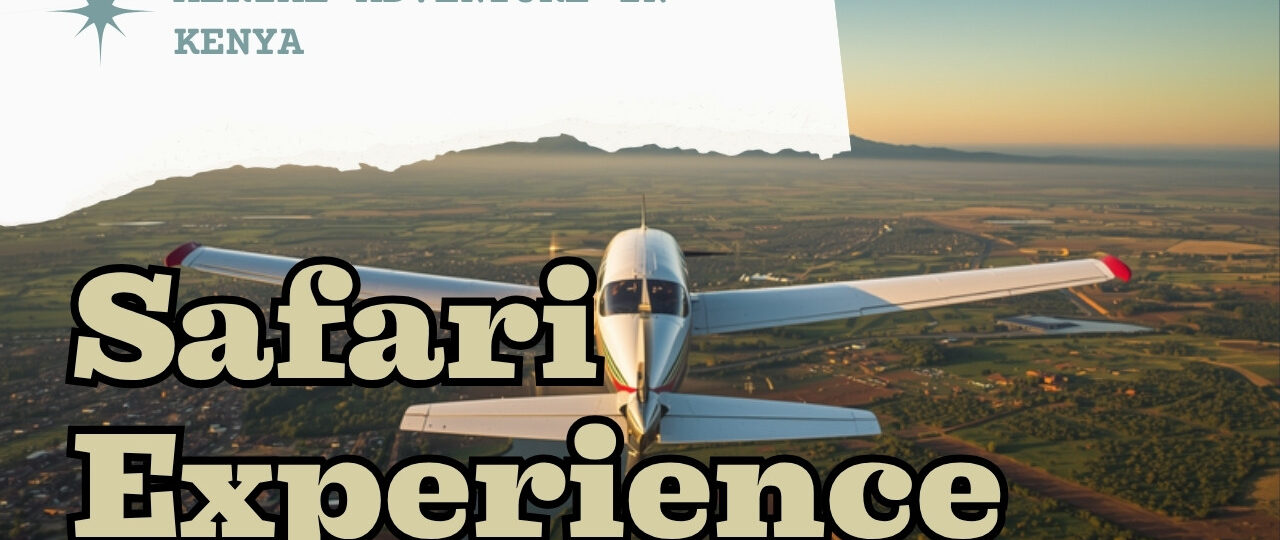
Nairobi to Amboseli by Air: Your Complete Fly-In Guide
Picture this: you step off a light aircraft at Kimana airstrip, Kilimanjaro filling the sky above the treeline, and a Trunktrails Safaris vehicle is already waiting on the dirt track beside the runway. Your morning game drive starts in twenty minutes. That is what a well-planned nairobi to amboseli by air guide gets you: not just a faster trip, but a fundamentally different safari day. 🌅
This guide covers everything you need to know before you book a fly-in: departure logistics at Wilson Airport, Kimana airstrip specifics, flight time, luggage rules, cost comparison, and exactly who benefits most from flying versus driving. By the time you finish reading, you will know whether the air route suits your itinerary or whether the road is the smarter call.
Why Flying to Amboseli Changes the Whole Day
The overland drive from Nairobi to Amboseli takes roughly four to five hours in good conditions, longer if you hit Mombasa Road traffic or road diversions near Emali. A nairobi to amboseli flight cuts that to approximately 35 minutes in the air.
But the real saving is not just clock time. It is how the day feels. Guests who drive often arrive tired, skip the afternoon game drive, and spend their first evening recovering. Guests who fly arrive sharp and are in the bush before lunch.
Flying is especially strong for:
- 2-night and 3-night Amboseli itineraries where every hour counts
- Honeymooners who want arrival to feel seamless and special
- Older travellers who want less road fatigue
- Premium tours and safaris where time efficiency is part of the value proposition
The drive still makes sense for guests who want the overland experience, carry heavy bags, or are combining Amboseli with Tsavo by road. More on that below.
Wilson Airport: Where Your Amboseli Flight Actually Departs From 📸
This is one of the most misunderstood logistics points in Kenya safari travel. The wilson to amboseli flight does not leave from Jomo Kenyatta International Airport (JKIA). It departs from Wilson Airport, a dedicated light-aircraft hub about 6 km south of Nairobi’s city centre.
Wilson is the operational base for most scheduled safari air services in Kenya. AirKenya runs a published Wilson to Amboseli service departing around 07:30, arriving approximately 08:05, a block time of roughly 35 minutes. Safarilink also operates this route on selected days.
What this means for your travel plan:
- Book your Nairobi hotel within easy reach of Wilson, not just JKIA
- Allow at least 45 minutes from your hotel to Wilson if you are travelling in morning traffic
- Trunktrails Safaris handles the full logistics handoff: hotel pickup, Wilson drop-off, and Kimana pickup on arrival
If you are flying in from Europe or North America the day before, consider arriving in Nairobi at least 24 hours before your safari flight. A Wilson departure requires being on the ground and rested, not scrambling from JKIA in the early hours.
Kimana Airstrip: What to Expect When You Land
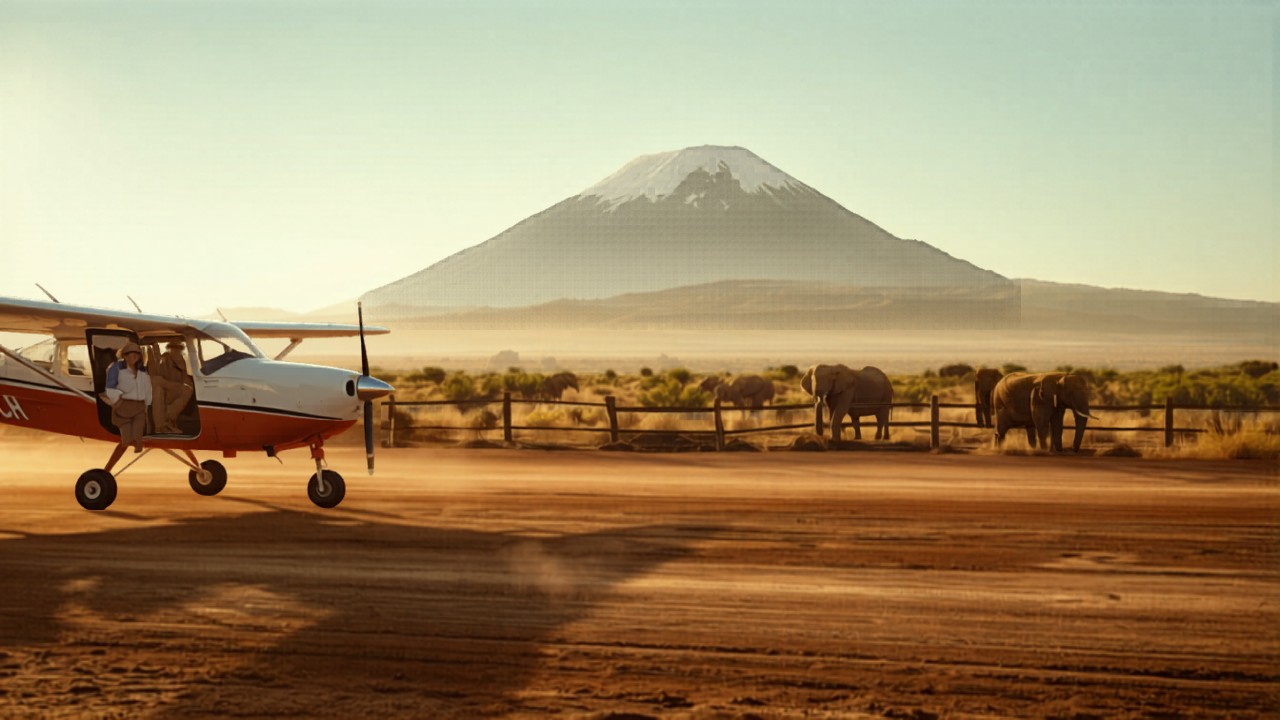
Kimana airstrip is the tarmacked light-aircraft strip inside the Amboseli ecosystem, identified by Kenya Wildlife Service as the primary air access point for the park. It is not a commercial airport. There is no terminal building, no baggage carousel, and no taxi rank.
What you will find:
- A short paved runway capable of handling light twin-engine aircraft
- A vehicle waiting area where lodges and operators send pickups
- Open savannah on all sides, often with elephants visible from the airstrip itself
The amboseli airstrip guide experience is part of the safari, not a delay before it. Most guests spot their first wildlife from the airstrip, not the vehicle.
One important planning note: your lodge location still matters even after you fly in. Some properties sit closer to Kimana than others. Trunktrails Safaris maps lodge position against airstrip access when building any amboseli fly in safari itinerary. This is a small detail that makes a large difference on arrival day.
Amboseli Flight Luggage Limits: Pack for the Aircraft, Not the Airport
The amboseli flight luggage limit is one of the first things Trunktrails Safaris covers with every fly-in guest because it catches people off guard. Light aircraft have strict weight restrictions. See our full Amboseli safari planning guide for a complete packing checklist.
Standard allowance on most Amboseli air routes:
| Item | Limit |
|---|---|
| Total checked + carry-on | 15 kg per person |
| Bag type | Soft duffel only (no hard shells) |
| Overweight handling | Extra bags must go by road or be stored in Nairobi |
These limits apply on AirKenya, Safarilink, and most charter operations. Always reconfirm with your specific operator at booking, as limits can vary slightly. Visit Kenya also publishes general domestic flight guidance for first-time safari travellers.
Who this affects most:
- Photographers carrying camera bodies, lenses, and tripods
- Families with multiple bags and children’s gear
- Guests linking several parks and carrying a full two-week wardrobe
The rule is simple: travel light, travel soft. A soft duffel that compresses under the seat is your best friend on any amboseli safari by air. If you have excess luggage, Trunktrails Safaris can arrange secure Nairobi hotel storage while you are in the bush.
Drive or Fly to Amboseli: Honest Comparison
This is the question most travellers are actually asking. Here is a clear-eyed breakdown:
| Factor | Fly | Drive |
|---|---|---|
| Travel time | ~35 min (air) + logistics | 4-5 hours |
| Cost | $200-$350 per person one way | Included in most ground packages |
| Luggage flexibility | Strict 15 kg soft bag | No practical limit |
| Arrival energy | Fresh, ready to safari | Tired, often skips first activity |
| Scenery en route | Aerial view of Rift escarpment | Mombasa Road, dry plains |
| Best for | Short high-value trips, honeymooners, seniors | Budget travellers, road-trip fans, heavy packers |
| Weak spot | Cost, luggage limits | Time loss, fatigue |
For most guests on a 2-night or 3-night amboseli safari by air, flying pays for itself in safari time recovered. For guests on a 5-day or longer road itinerary, driving often remains the better value.
In short, there is no universally correct answer. The right choice depends on your trip length, budget, luggage reality, and what you actually want the arrival experience to feel like.
How Much Does a Nairobi to Amboseli Flight Cost?
Scheduled one-way fares on AirKenya and Safarilink range from approximately $180 to $320 per person, depending on season and booking lead time. Charter flights on a private light aircraft cost significantly more but offer complete flexibility on departure time and luggage.
As a result, return (round-trip) bookings almost always offer better per-seat value than two separate one-way tickets.
Trunktrails Safaris packages fly-in tours and safaris at all budget levels:
- Budget fly-in: From $650 for 2 nights, shared scheduled flight
- Mid-range fly-in: From $1,100 for 3 nights, scheduled flight, mid-tier lodge
- Premium fly-in: From $1,835 for 4 nights, private charter option, luxury tented camp
All prices include park fees, game drives, full board, and airstrip transfers. Contact us for a custom quote.
The Trunktrails Advantage
Trunktrails Safaris is a native Kenyan-owned operator with deep on-the-ground knowledge of the Amboseli ecosystem. When you book a fly-in safari with us, you are not buying a flight and a bed separately. You are buying a complete, coordinated experience where the logistics fit together from Wilson Airport to your first game drive. ✨
Here is what sets Trunktrails Safaris apart:
- No middlemen. You deal directly with the team that knows Kimana airstrip, knows the lodges, and knows the park. No agency mark-ups, no third-party handoffs.
- Tailored for every budget. Fly-in tours and safaris start from $650 and scale to private charter + luxury camp packages above $2,200. Every itinerary is built from scratch for your dates and priorities.
- 24/7 direct support. If your Wilson flight is delayed, your Trunktrails Safaris contact is reachable on WhatsApp, not a call-centre queue.
- Conservation commitment. Five percent of every booking goes directly to wildlife conservation in the parks we operate in. Your safari funds the ecosystems you are visiting.
We have run fly-in tours and safaris to Amboseli for guests from six continents. We know when flying is worth it and when driving is the smarter call, and we will tell you honestly.
Is a Fly-In Amboseli Safari Right for You?
Fly if:
- Your trip is 2-3 nights and time is tight
- You want an elevated, arrival-day experience
- You are travelling as a couple, solo, or with older family members
- Your budget allows for the extra flight cost
Drive if:
- Your itinerary is 5+ days and you want the Tsavo corridor route
- You are travelling with large bags or heavy photography kit
- Budget is a primary concern
- You enjoy the overland journey as part of the safari
If you are still unsure, reach out to Trunktrails Safaris directly. We will map your exact dates, lodge preferences, and luggage reality against both options and give you a concrete recommendation.
Further reading
More safari planning resources
- Map of Amboseli from Valley Safaris
- Amboseli National Park guide on Touring Insights
- Amboseli destination guide on FindMySafari
- Nairobi to Maasai Mara route guide from Valley Safaris
Ready to Plan Your Nairobi to Amboseli Fly-In Safari? 🦁
A well-planned fly-in safari turns a short Amboseli trip into something that feels expansive and unhurried. The flight is short. The payoff is long. Trunktrails Safaris handles every detail from Wilson to wilderness.
Get in touch today and we will build your fly-in itinerary:
📞 WhatsApp: +254 113 208888 📧 Email: info@trunktrailssafaris.com 🌍 Website: https://trunktrailssafaris.com