

Masai Mara October vs November: Two Very Different Months After the Migration Peak
Masai mara october and november can deliver two completely different safaris in the same destination. Light changes, grass height shifts, crowds move, and wildlife behavior follows the season. Pick the wrong window for your goal and the trip feels mismatched. That is the masai mara october vs november decision.
This is where Trunktrails Safaris adds real value. We are Nairobi-based and Kenyan-owned. We plan around migration windows, rain patterns, school-holiday pressure, and the practical feel of each month, not generic best-time lists. That gives clients dates that suit the experience they actually want.
Here is the honest masai mara october vs november comparison, the same one we use when shaping a client’s travel window.
Masai Mara in October – What to Expect
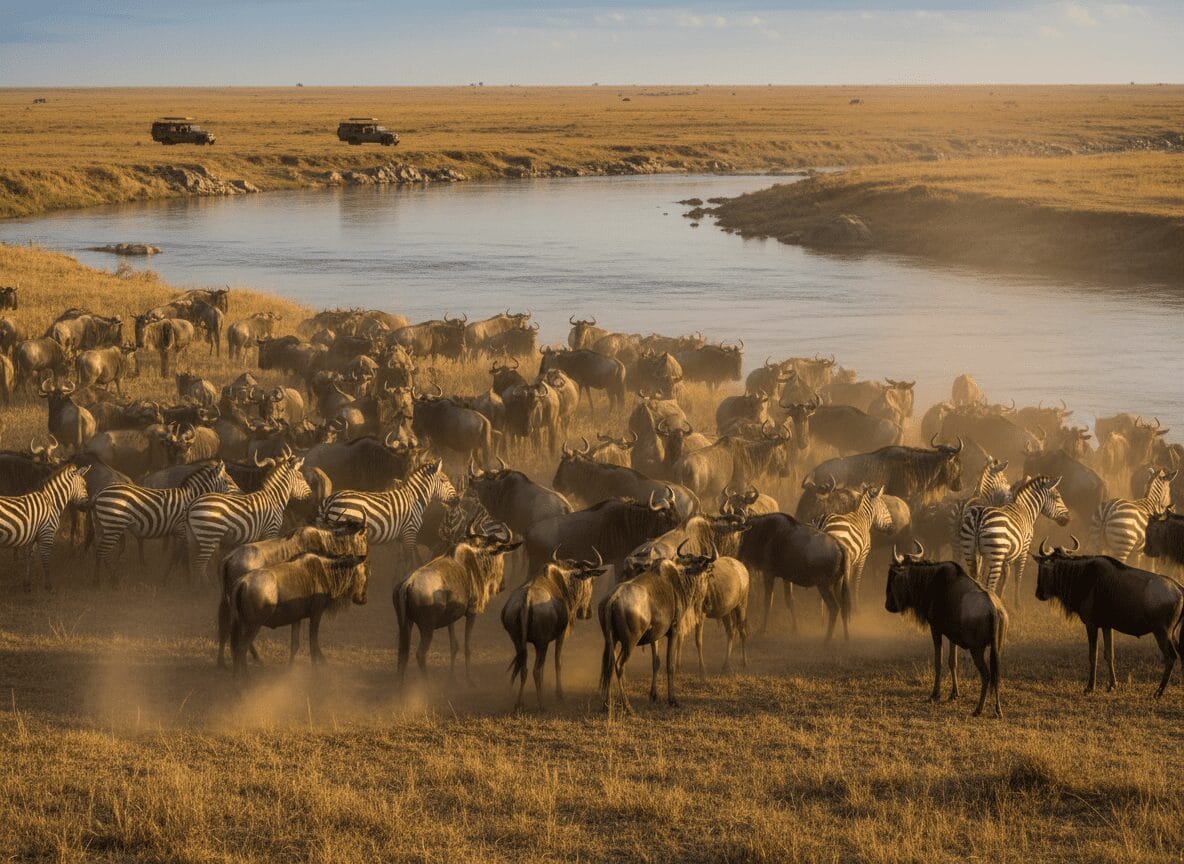
October in the Masai Mara sits at the tail end of the migration season. The main wildebeest and zebra herds begin moving south to Tanzania during October as the short rains approach, but significant numbers often remain in the northern Mara and the conservancies through mid-October.
October wildlife in the Masai Mara:
- Final Mara River crossings of the season may still occur in early October
- Large resident wildlife populations remain: lions, leopards, cheetahs, elephants, buffalo
- Predator activity is very high – prey animals are numerous and the landscape is still open
- Zebra herds are among the last to move south, lingering into October
- Excellent game drive conditions on dry, firm roads
October weather:
The masai mara short rains october are a defining feature of the month’s second half. Short afternoon thunderstorms typically arrive from mid-October. These are usually intense but brief – an hour of heavy rain followed by clear skies – rather than prolonged downpours. Roads remain driveable. The landscape begins greening.
Is masai mara good in october?
Yes. The combination of residual migration animals, excellent resident wildlife, and the beginning of green season transformation makes October one of the Masai Mara’s underrated months. Visitor numbers fall from August-September peak, pricing drops, and you often find yourself at crossings and sightings with fewer vehicles.
Masai Mara November – What to Expect
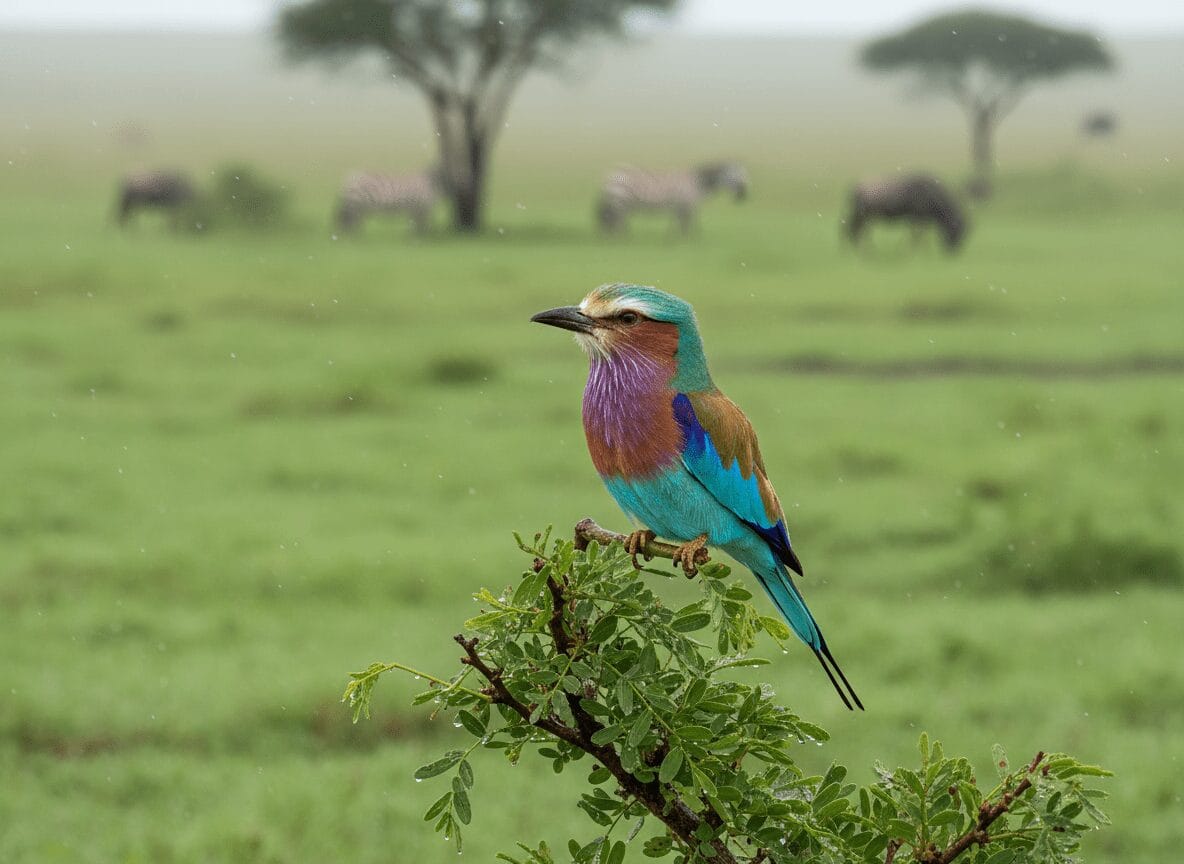
November in the Masai Mara is definitively post-migration. The wildebeest herds have returned to Tanzania. The landscape has changed from golden savannah to vivid green. The short rains are underway.
November wildlife in the Masai Mara:
- No wildebeest migration herds – they are in the Serengeti’s southern plains
- Resident wildlife is abundant and active: lions, leopards, cheetahs, elephants
- Newborn prey animals following the short rains trigger intense predator activity
- Birdwatching peaks – migratory birds arrive, breeding plumage is displayed
- Buffalo herds are large and frequently encountered
- Hippo activity on the Mara River is excellent
November weather:
The masai mara short rains november are in full effect. Afternoon and evening rains are frequent but generally short-lived. Mornings are typically clear and cool. The landscape is at its most vivid green. Rain events are rarely prolonged enough to prevent game drives – most days still allow two full drives.
Is masai mara good in november?
Yes – for the right traveller. No migration, but excellent resident wildlife, very low crowd levels, the Masai Mara at its most dramatically beautiful, and the lowest accommodation rates of the non-rainy season. November is a genuine value month that safari veterans often rate highly.
Masai Mara October vs November – Direct Comparison
| Factor | October | November |
| Migration herds | Departing (early Oct may have crossings) | Gone |
| Resident wildlife | Excellent | Excellent |
| Predator activity | Very high | High (triggered by newborns) |
| Short rains | Beginning mid-October | In progress |
| Road conditions | Good to excellent | Good (rains are brief) |
| Grass height | Short to medium (browning then greening) | Tall and green |
| Wildlife visibility | Very good | Good (longer grass) |
| Crowd levels | Falling from peak | Low |
| Accommodation cost | Shoulder (below peak) | Low season rates |
| Birdwatching | Improving | Excellent (migrants present) |
| Photography | Good golden-to-green transition | Dramatic green landscapes |
Masai Mara Post Migration Wildlife – What Drives Both Months
The masai mara post migration wildlife story is one that deserves more recognition. Once the wildebeest herds move south, the Masai Mara reverts to its year-round resident character – which is already exceptional by any global standard.
The lion prides that have been well-fed from migration prey remain in peak condition. Cheetah families are active on the open plains. Elephant herds move freely without the disruption of vehicle concentrations at crossing points. The pace of safari slows to a more intimate rhythm.
For travellers who specifically want to understand what the Masai Mara is beyond the migration spectacle, October and November are the months where you discover the answer: extraordinary.
October vs November Masai Mara – Who Each Month Suits
Choose October if:
- You want to catch the last possible migration activity (early October may still have crossings)
- Big cat sightings in open, short-grass terrain are the priority
- You want to experience the transition into green season with the landscape changing around you
- Moderate pricing with good wildlife conditions is the right balance
Choose November if:
- Budget is an important factor – November rates are among the year’s lowest
- You prefer empty game drive tracks and intimate wildlife encounters
- Birdwatching is a significant interest
- The dramatic green Masai Mara landscape appeals more than the golden savannah look
- You are a returning visitor who has done the peak season and wants a different experience
Ready to Plan Your Kenya Safari? Talk to Trunktrails Safaris
Trunktrails Safaris designs tailor-made tours and safaris for every traveller and every budget. From green-season adventures to private luxury camps, our tours and safaris are built by a Nairobi-based team that speaks to you directly, not through a call centre. Most WhatsApp enquiries about our Kenya tours and safaris get a reply from Trunktrails Safaris within the hour.
WhatsApp: +254 113 208888
Email: info@trunktrailssafaris.com
Website: https://trunktrailssafaris.com
TRA Licensed | Native Kenyan Owned | Conservation First | 24/7 Support