
Masai Mara Food: A Complete Guide to Safari Dining, Bush Meals and Local Cuisine 🍽️
Safari Camp Dining: The Foundation of Masai Mara Food
The base of your Masai Mara food experience is your camp or lodge dining room. Safari camp dining in the Masai Mara has evolved dramatically over the past decade: moving from functional to genuinely excellent across the mid-range to luxury spectrum. Food in masai mara safari camps is prepared by resident camp chefs using locally sourced produce, and the standard is significantly higher than most first-time Kenya safari travellers expect.At a well-run Masai Mara camp, your three daily meals are prepared by a resident camp chef using a combination of:- Locally sourced fresh produce from markets in Narok, Bomet, and nearby Maasai community gardens
- Camp kitchen staples (bread, pastries, preserved goods for remote locations)
- International ingredients flown or driven in for luxury properties
Food in Masai Mara: Bush Breakfast and What to Expect
 If you only read one section of this food guide, read this one.A bush breakfast in the Masai Mara is not a meal: it is a safari ceremony. Food in masai mara kenya starts here: after a 3-to-4-hour morning game drive, your guide stops the vehicle at a scenic point: a riverbank, a kopje, an open pan with the full sweep of the Masai Mara visible. The camp’s field team has driven ahead and set up a table with a white tablecloth, china cups, a gas burner, and all the ingredients of a proper breakfast.You step out of the game drive vehicle. A blue heron calls from the river. The morning sun is still low and golden. Your camp chef grills eggs on a portable flame while someone pours your coffee.This is the Masai Mara safari dining experience that travellers describe first when they return home.Champagne bush breakfasts: where sparkling wine or prosecco joins the spread: are standard after balloon flights and are offered as upgrades at many luxury camps for special occasions. Trunktrails Safaris includes champagne bush breakfasts for honeymooning guests as a standard booking addition in our packages. ✨
Bush Dinner in Masai Mara: Dining Under the Stars
Bush dinners are masai mara food at its most theatrical. The camp team selects a spot away from the main dining area: an open area with a firepit, lantern-lit tables, and the dark Masai Mara night overhead. No tent walls, no electric light. Just stars, fire, and food. Safari dining in masai mara does not get more memorable than this.Bush dinner menus typically feature:- A fire-grilled meat main: lamb, beef, or game meat (sometimes ostrich or eland at speciality camps)
- Traditional Kenyan accompaniments: ugali, sukuma wiki (kale), kachumbari (tomato and onion salsa)
- Freshly baked camp bread or chapati
- Roasted vegetables and salads
- A dessert: often a Kenya-fruit based pudding or chocolate mousse at higher-end camps
Masai Mara Safari Food: The Picnic Lunch Experience
Long game drives: particularly full-day drives into the Masai Mara National Reserve: include a picnic lunch in the bush. This is masai mara safari food taken to its most portable and practical form. What do you eat on a masai mara safari when you are hours from camp? This is the answer.Picnic lunches in the Masai Mara typically include:- Sandwiches or wraps (fresh fillings, sometimes with local Kenyan chicken or roasted vegetables)
- Whole fruit, energy bars, and nuts
- A flask of cold water, juice, or lemonade
- A hot flask of Kenyan chai or coffee
- Sometimes a small dessert item
What to Eat in Masai Mara: Maasai Food and Local Cuisine
 Most Masai Mara safari food guides skip this section. That is a mistake.What food is served in masai mara by the Maasai themselves is not what you find in safari camp dining rooms. The Maasai are pastoralists: their traditional diet centres on cattle products and is one of the most distinctive in East Africa:Traditional Maasai food:
- Milk: fresh, fermented (into a product similar to yoghurt), and sometimes mixed with cattle blood in ceremonial contexts. Fermented milk stored in gourds is a Maasai staple.
- Meat: primarily goat and beef, typically eaten during special ceremonies rather than daily. Boiled or roasted.
- Ugali: maize meal porridge adopted from Bantu Kenyan food traditions. Now a Maasai community staple alongside traditional foods.
- Chai: Maasai chai is strong black tea with milk and sugar, often with ginger. The Maasai version is spiced and sweet.
Safari Food in Masai Mara Kenya: Local Kenyan Cuisine Beyond the Camp
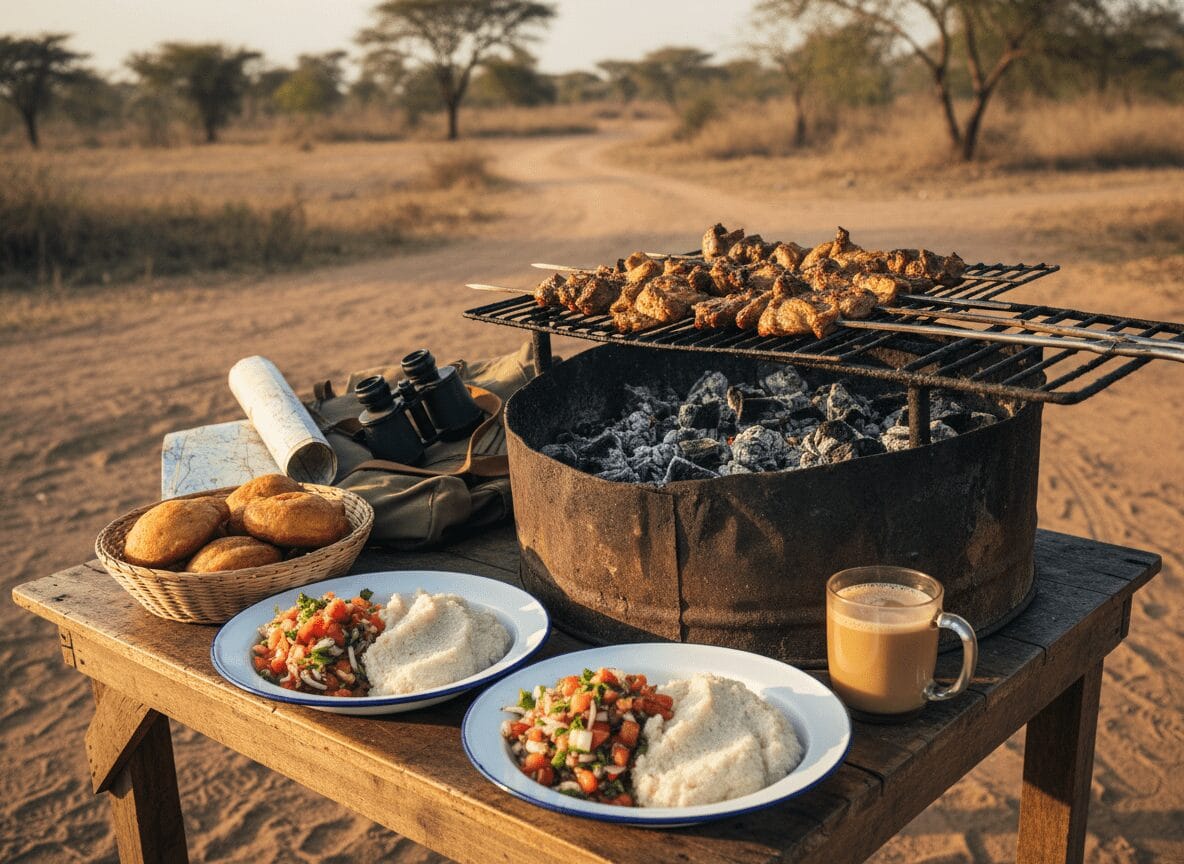
Outside the Masai Mara National Reserve boundary, in the towns of Narok, Sekenani, and the trading centres along the main approach roads, local Kenyan food offers a completely different masai mara food dimension. Food on safari kenya that you will find at roadside stops is honest, flavourful, and deeply cultural.Local Kenyan cuisine staples:- Nyama choma: Kenya’s national meat dish. Slow-roasted goat or beef, served with ugali and kachumbari. The unofficial food of every celebration, roadside stop, and local gathering.
- Ugali and sukuma wiki: maize meal with braised kale in tomato and onion sauce. Simple, satisfying, and deeply Kenyan.
- Mandazi: deep-fried dough similar to a doughnut. A breakfast staple at local tea houses.
- Githeri: boiled maize and beans, seasoned and filling. A Kenyan home-cooking classic.
- Chapati: Kenyan flatbread, softer and richer than Indian chapati. Served with soups, stews, or on its own.
Sundowners: The Social Side of Masai Mara Safari Dining
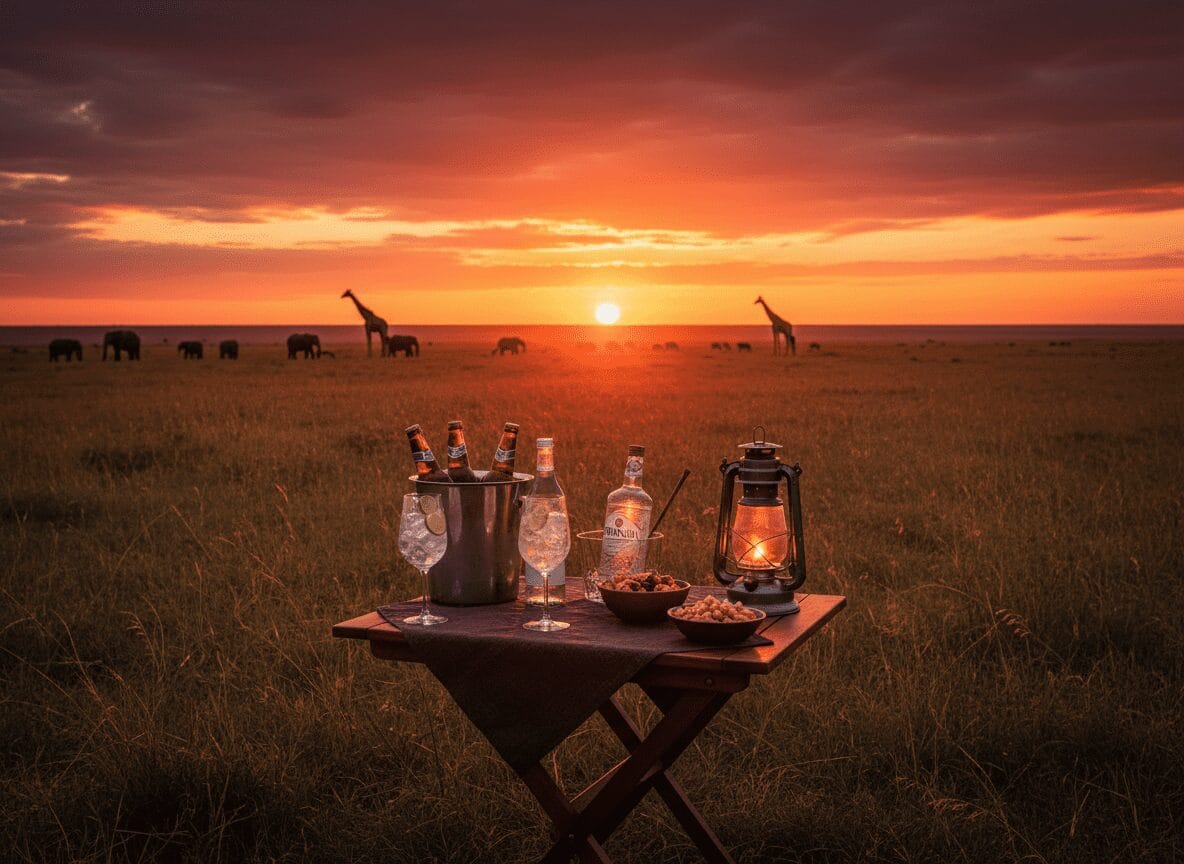
A sundowner is not a meal: it is a ritual. As the late afternoon game drive winds down, your guide finds a scenic vantage point with the right orientation. The camp team sets up a folding table, a cooler, and glasses. You watch the Masai Mara sunset over the savannah with a cold Tusker beer, a gin and tonic, or a non-alcoholic ginger juice in hand.Sundowners are served by most Masai Mara camps as a daily addition to the game drive schedule. The quality of the sundowner location: and the thoughtfulness of the snacks served alongside drinks: varies from camp to camp.Trunktrails Safaris plans Kenya safari itineraries that maximise sundowner locations: Mara River viewpoints, escarpment edges, and seasonal salt pans that catch the light perfectly between 17:30 and 18:30.The Trunktrails Advantage: Food That Matches Your Safari
At Trunktrails Safaris, we brief every camp on our guests’ dietary requirements, cultural food preferences, and special occasions before arrival. Our tours and safaris team has relationships with camp kitchen managers, not just reservations desks: because we know that good Masai Mara food is a significant part of a great Kenya safari experience.We flag dietary accommodations (vegan, halal, gluten-free, nut allergy), arrange champagne bush breakfasts for honeymoon couples, build bush dinners into multi-night packages, and plan picnic lunch stops on full-day game drives that use camps known for their field lunch quality.Your Masai Mara safari should feed you well: literally and figuratively.Plan your Masai Mara food experience with Trunktrails Safaris: Book Your Safari Every booking with Trunktrails Safaris contributes 5% to wildlife conservation in the Masai Mara ecosystem: so the landscape you eat breakfast in front of stays wild and protected.Mara safari dining at a glance
| Board basis | Full board is standard on safari packages: breakfast, lunch, dinner and drive snacks |
| Signature formats | Bush breakfasts on the plains, sundowners at golden hour and family-style camp dinners |
| Dietary needs | Vegetarian, vegan, halal and gluten-free are handled well with advance notice at nearly all camps |
| Drinking water | Bottled or filtered water is provided in vehicles and tents |
| Kitchen and camp tips | Usually via a communal tip box, around USD 5 to 10 per guest per day, separate from guide tips |
Meals in the Mara follow the rhythm of the drives: a dawn coffee before wheels roll, a full bush breakfast unpacked on the savannah mid-morning, and dinners that range from silver-service tents to a shared table by the fire. Camps bake their own bread daily and most source vegetables from Rift Valley farms, so freshness genuinely is not the compromise people expect in the bush. Trunktrails Safaris flags dietary requirements at booking so the kitchens, which cook to order in small numbers, prepare properly rather than improvising.
Dining on a Mara Safari: What to Expect
Most Mara camps run full board, and the dining itself becomes part of the experience, from bush breakfasts on the plains to candlelit dinners under canvas.
| Setting | What it is | Typically |
|---|---|---|
| Camp dining | Full board at the lodge | Included in the rate |
| Bush breakfast | Meal out on a drive | Included or small extra |
| Sundowners | Drinks at golden hour | Often included |
| Dietary needs | Cater with notice | Tell the camp ahead |
Flag any dietary requirements when you book; remote camps stock to order, so advance notice is what guarantees they can cater for you.