
Maasai Culture in the Masai Mara: A Complete Guide for Safari Travellers
Maasai culture masai mara can look simple on a brochure. On the ground, the real difference comes from timing, guiding, and whether the experience suits the traveller you actually are. Done well, it adds real depth to a safari. Done badly, it feels like a box ticked for the sake of it.
This is where Trunktrails Safaris helps quietly. We are Nairobi-based and Kenyan-owned. Our guides know when a specialist activity genuinely adds something memorable and when it is mostly marketing language. That judgment keeps the trip feeling right rather than overloaded.
Here is how Trunktrails Safaris breaks down the choice for travellers.
The Maasai People of the Masai Mara: Who They Are
The Maasai are a Nilotic ethnic group whose ancestral homeland stretches across southern Kenya and northern Tanzania. The masai tribe masai mara section of this territory: the Mara triangle and its surrounding community lands: represents one of the most important areas of Maasai settlement in Kenya today.
The Maasai people number approximately one million in Kenya, with an estimated two million total across Kenya and Tanzania combined. They are semi-nomadic pastoralists, meaning their traditional economy and identity are built around cattle herding rather than agriculture. Maasai cattle are not simply livestock: they are the measure of wealth, the substance of bride price, the offering in spiritual ceremony, and the thread that connects a Maasai man to his ancestors.
What distinguishes the maasai tribe kenya from many other East African ethnic groups is the degree to which maasai culture and traditions have persisted into the twenty-first century. In a region where urbanisation and globalisation have transformed most communities beyond recognition, many Maasai communities: particularly those living on the community land surrounding the Masai Mara National Reserve: continue to practise the core elements of their ancestral way of life. Maasai warriors still undergo initiation rites. Maasai elders still govern community decisions. Maasai women still bead the jewellery whose patterns carry meaning. And the Maasai language, Maa, remains the first language of most community members in the Mara region.
Maasai Culture in Kenya: History and Origins
Maasai culture kenya has a history stretching back at least 500 years in East Africa, with oral traditions suggesting a longer presence in the Nile Valley region before the southward migration that brought Maasai people to the Rift Valley and the Mara ecosystem.
The Maasai arrived in the area around the Masai Mara between the fifteenth and eighteenth centuries, gradually displacing earlier farming communities and establishing dominance over the territory through a combination of raiding, cattle herding, and a warrior culture that was genuinely formidable by the standards of its era. By the nineteenth century, Maasai people controlled most of the East African Rift Valley corridor, from Lake Turkana in the north to the Tanzanian highlands in the south.
The colonial era brought serious disruption. British colonial agreements in the early twentieth century restricted Maasai movement and displaced communities from prime grazing land, including areas within what would become the Masai Mara National Reserve. These tensions: between Maasai land use and formal conservation: remain an active and complex political reality in the Mara region today.
Understanding this history matters for kenya safari maasai cultural encounters. When you visit a maasai village masai mara, you are meeting people who are navigating a genuinely complicated present: committed to their maasai traditions, managing their land, and engaged in ongoing negotiations with the tourism industry, the Kenyan government, and conservation organisations over who controls the land and who benefits from it. Maasai culture masai mara is not a museum exhibit. It is a living, evolving culture with real stakes.
Maasai Traditions and Customs You Will Witness on Safari
Maasai traditions are organised around a structured age-grade system: a series of life stages that every Maasai male passes through, each with specific rights, responsibilities, and ceremonies attached. Understanding this system makes everything you observe in a masai mara cultural experience immediately more comprehensible.
The first grade is that of junior warriors, boys between approximately fourteen and eighteen years old who have undergone circumcision and entered the warrior phase. Junior warriors live together in a separate camp, wear their hair long and dyed with ochre, and are forbidden from drinking alcohol or eating food that women have seen. They train in tracking, cattle herding, and the physical skills expected of maasai warriors.
Senior warriors are men in their late teens to late twenties who have progressed through the warrior grades and are permitted to eat meat, marry, and begin accumulating maasai cattle. Senior maasai warriors are the most visually striking members of the community: tall, lean, carrying long spears and short stabbing blades called simi, draped in the iconic red shuka cloth.
Junior elders are men in their thirties who have completed the warrior phase and taken on community responsibility: participating in livestock decisions, resolving disputes, and beginning the management of community resources. Senior elders hold the highest authority in maasai customs and community governance, overseeing land management, dispute resolution, and the timing of ceremonies.
This age-grade progression defines every aspect of maasai customs you will encounter on safari: from who is allowed to speak at a gathering, to who performs which role in a ceremony, to who you approach when you want to discuss land access or a maasai community visit.
The Maasai Boma: Inside a Traditional Village in the Masai Mara
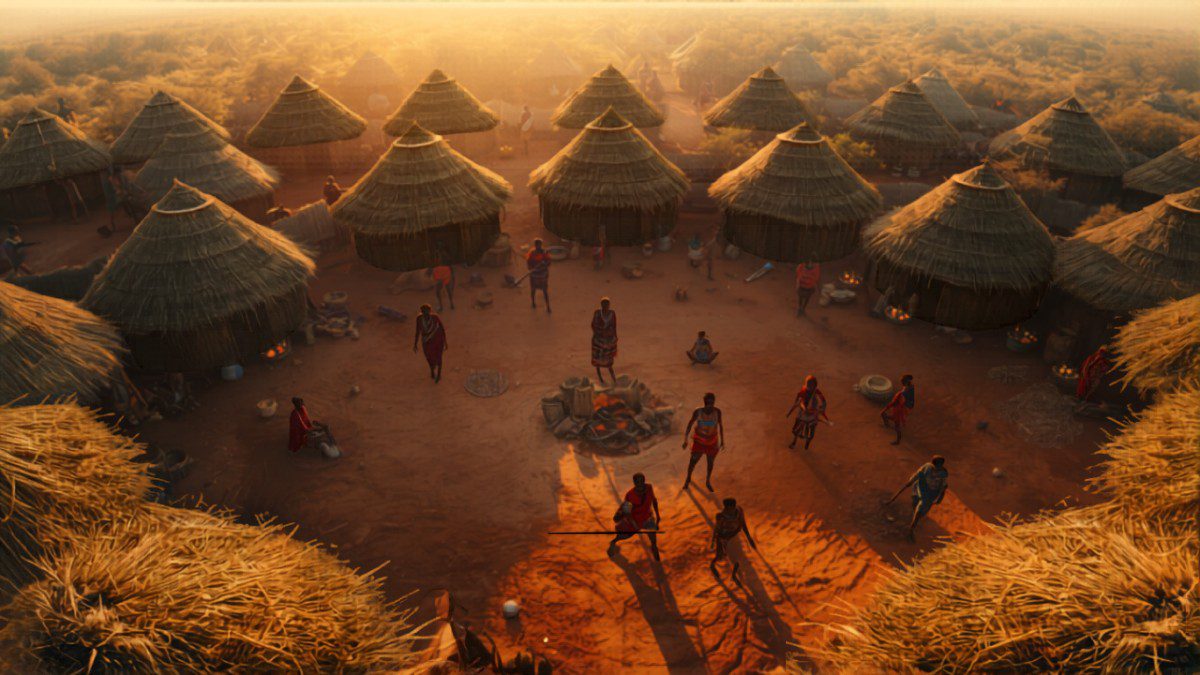
The maasai boma masai mara is the basic unit of Maasai settlement: a circular compound of low houses built by women from a mixture of maasai cattle dung, mud, sticks, and grass, surrounded by a thornbush fence called enkiama that keeps cattle inside and predators outside at night.
A standard boma in the Mara region houses an extended family unit: a husband, his wives (each with their own house), their children, and the family cattle, goats, and sheep that are penned inside the enkiama overnight. The architecture is deliberately impermanent: a boma can be dismantled and relocated in a matter of days when grazing requires the community to move, though many bomas in the Masai Mara area are now semi-permanent given the restriction on movement imposed by land agreements and conservancy boundaries.
Inside the maasai village masai mara, the day begins before dawn. The cattle are driven out to graze at first light under the care of young boys and junior warriors. Women milk the cows, prepare food: typically maize porridge (ugali) or a fermented milk drink served in a calabash gourd: and carry out the work of maintaining the boma and caring for small children. Older women bead jewellery, dry herbs, and manage the household economy.
When Trunktrails Safaris organises a maasai community visit for our guests, we ensure you are visiting a genuine living boma: not a purpose-built tourist facility: and that the visit is structured around genuine exchange rather than performance. We work with community liaison officers to arrange visits that benefit the household directly and that reflect the rhythms of actual community life.
Maasai Dress and Adornment: The Shuka and Beadwork
The visual language of maasai dress is one of the most immediately recognisable in East Africa: and one of the most layered in meaning. What looks to a visitor like colourful decoration is actually a sophisticated system of communication about age, status, marital state, and identity.
The most iconic element of maasai dress is the shuka: a large cloth wrap, traditionally red but increasingly available in red-and-blue checks or other combinations: draped over the body in a style that varies subtly by region and community. The red shuka of the masai tribe masai mara is now so globally associated with Maasai identity that it has become a symbol of Kenya itself in international marketing. Maasai warriors drape the shuka across one shoulder during active periods; elders wear it more fully wrapped.
Maasai beadwork is the domain primarily of women, and it is extraordinarily skilled craft work. Maasai women create elaborate necklaces, earrings, bracelets, and head ornaments using seed beads in precise colour combinations that communicate marital status, clan affiliation, and the aesthetic tradition of the wearer’s community. Red represents bravery and blood; white represents purity and health; blue represents the sky and God (Enkai); green represents the land and sustenance. The beadwork of the masai mara maasai women you encounter on safari is not decorative craft for sale: it is a living language.
For visitors on a kenya safari maasai cultural encounter, being offered a beaded bracelet or necklace from a Maasai woman is one of the most direct forms of cultural exchange available. Items bought directly from community members support individual Maasai women’s income and the continued practice of the craft tradition.
The Maasai Jump: Adumu and What It Means
The adumu: the famous Maasai jumping dance: is probably the single cultural element most international visitors associate with masai mara maasai culture. Young Maasai warriors stand in a circle, take turns jumping as high as possible from a standing position with no run-up, and chant or sing while doing so.
Adumu is a competitive display among young warriors: a demonstration of physical power, stamina, and grace that has direct social meaning within the age-grade system. The ability to jump high, land clean, and maintain the chant without losing breath is a genuine marker of warrior fitness and status. Adumu is performed during ceremonies, at celebrations, and at gatherings where young maasai moran want to impress eligible women.
When you see adumu performed during a masai mara cultural experience, you are seeing either an actual ceremonial performance: in which case you are a privileged guest at something real: or a demonstration arranged specifically for visitors, in which case the skill is still genuine even if the occasion is managed. Trunktrails Safaris works to ensure our tours and safaris guests encounter adumu in its natural context wherever possible, timing community visits around ceremonies and celebrations when they occur.
Maasai Warriors in the Masai Mara Today
Maasai warriors in the Masai Mara today occupy a genuinely complex position. Their traditional role: herding maasai cattle, protecting the community from predators including lions, and defending territory: has been transformed by wildlife conservation law, tourism, and the cash economy. Killing a lion, which was historically the definitive warrior achievement in maasai culture, is now illegal under Kenyan law and increasingly discouraged even within Maasai communities as lion populations have declined.
The response of many maasai moran to this shift has been pragmatic and interesting. Programmes like Lion Guardians: a community-based conservation initiative operating across the Mara ecosystem: have recruited maasai warriors as paid community wildlife monitors. Rather than killing lions, former warriors track them, give them Maasai names, manage human-wildlife conflict, and serve as the early warning network that protects both livestock and lions. This transition has significantly reduced lion killing in participating maasai community kenya areas.
Maasai warriors also increasingly work as safari guides, tracker-guides, and community liaison officers for conservancies and camps in the Masai Mara region. Some of the finest wildlife trackers operating in the Olare Motorogi and Mara North conservancies are former warriors whose knowledge of animal movement comes directly from years spent protecting maasai cattle from predators: knowledge no formal guide training course replicates. Trunktrails Safaris employs Maasai tracker-guides on multiple safari itineraries, and the quality of game drive experience they deliver consistently exceeds that of non-Maasai guides at the same experience level. For more detail, read our Mara Plains Camp Olare Motorogi Conservancy Maasai Mara.
Maasai and Wildlife: Conservation Partners in the Masai Mara
The relationship between maasai culture and wildlife conservation in the Masai Mara is one of the most important and least understood dimensions of kenya safari maasai engagement. The Masai Mara ecosystem: including the national reserve and the surrounding community conservancies: exists in its current state of extraordinary wildlife abundance largely because maasai community kenya landowners agreed to manage their land in ways that support wildlife movement rather than farming or development.
The maasai conservancy system is the mechanism that makes this possible. Conservancies like Olare Motorogi, Naboisho, Mara North, Ol Kinyei, and Olderkesi are formed when Maasai landowners lease their grazing land to conservation organisations in exchange for regular payments, employment, and community development benefits. This arrangement keeps wildlife corridors open, prevents fencing of the land, and funds community schools and clinics. The maasai conservation model is now studied internationally as a replicable framework for large-scale wildlife preservation.
Without continued Maasai engagement: and without the economic benefits that tourism and conservancy lease payments deliver: the community land surrounding the Masai Mara National Reserve would likely be converted to smallholder agriculture within a generation. The wildlife you see on every Trunktrails Safaris game drive exists partly because masai mara maasai communities continue to find conservation more economically viable than farming. That is a fragile balance, and supporting ethical cultural tourism kenya directly sustains the conditions that maintain it.
Cultural Visits to Maasai Communities: What to Expect
A maasai community visit masai mara arranged through a responsible operator like Trunktrails Safaris includes several elements, structured to be genuinely informative rather than performative.
You will be welcomed by a community liaison or elder who explains the protocol for the visit: what you may photograph, where you may go, and how the visit is structured. You will tour the interior of the boma, see the house construction, and may be invited inside a home. You will be shown maasai cattle management practices and may watch morning or evening milking. You will likely see or participate in fire-making using traditional drill-and-board methods. You will be invited to observe or participate in the adumu jumping dance alongside the young maasai moran. And you will have the opportunity to buy directly from Maasai women who bring maasai beadwork, jewellery, and other crafts.
What a responsible maasai community kenya visit does not include: bargaining aggressively on craft prices (the prices asked are fair and support the household directly), photographing ceremonies or individuals without permission, entering areas or buildings indicated as private, or treating community members as props for social media content.
Our tours and safaris team briefs every guest thoroughly before community visits and accompanies all groups with a Trunktrails Safaris guide who ensures the visit protocol is respected. We contribute a fixed community fee per guest directly to the boma household: not to a third-party operator: and we maintain long-term relationships with the specific communities we visit.
Maasai Culture in the Mara: Key Facts
The Mara is named for the Maasai, the semi-nomadic pastoralists whose community land surrounds the reserve and forms the conservancies.
| Detail | Info |
|---|---|
| Who | Maasai, semi-nomadic cattle herders |
| Village visit | Often ~$20 to $30 per person |
| Conservancies | Maasai-owned land leased for wildlife |
| Etiquette | Ask before photographing people |
Staying in a conservancy channels fees directly to Maasai landowners, making your trip part of the model that keeps this land wild rather than fenced or farmed.
Further reading
Ready to Plan Your Kenya Safari? Talk to Trunktrails Safaris
Trunktrails Safaris designs tailor-made tours and safaris for every traveller and every budget. From green-season adventures to private luxury camps, our tours and safaris are built by a Nairobi-based team that speaks to you directly, not through a call centre. Most WhatsApp enquiries about our Kenya tours and safaris get a reply from Trunktrails Safaris within the hour.
📞 WhatsApp: +254 113 208888 📧 Email: info@trunktrailssafaris.com 🌍 Website: https://trunktrailssafaris.com
✅ | Native Kenyan Owned | Conservation First | 24/7 Support
SUPPORTING IMAGE 1:
SUPPORTING IMAGE 2:
–>