Conservation Volunteer Safari Kenya: How to Give Back to Wildlife on Your 2026 Safari
You’ve been on game drives. You’ve watched lions hunt at dawn and elephants cross dry riverbeds at dusk. Now you want more. You want to be part of the story, not just a witness to it. Africa conservation volunteer programs in Kenya offer exactly that: the chance to contribute real work to ecosystems that need your hands, your time, and your care. 🌍
Kenya is home to 59 national parks and reserves, and behind every one of them is a network of conservancies, field researchers, and community rangers doing the unglamorous, essential work of keeping wildlife alive. A conservation volunteer safari in Kenya slots you into that network. You show up as a participant, not a tourist.
Trunktrails Safaris builds custom itineraries that weave volunteer shifts into genuine wildlife safaris. You get both: the incomparable game viewing Kenya is famous for, and the deeper satisfaction of knowing you left something behind.
Why Kenya Is the Best Place for a Conservation Safari
Kenya carries a disproportionate share of Africa’s conservation burden. Four of Africa’s most endangered large mammals live here. The country shares an ecosystem corridor with Tanzania that supports the largest land migration on earth. And it has been running community-based conservation models since the 1990s, which means the infrastructure for volunteer safari africa participation is mature and genuinely effective.
What sets Kenya apart from other volunteer destinations is the density of accessible programs. You can monitor black rhinos at Ol Pejeta in the morning and visit a Maasai conservancy anti-poaching debrief in the afternoon. Programs range from one week to three months. Whether you’re a student, a working professional taking a career break, or a retired scientist with field experience, there is a kenya wildlife volunteer 2026 pathway that fits.
The Kenyan Wildlife Service (KWS) works directly with licensed operators and conservancies to coordinate volunteer access. Trunktrails Safaris holds direct relationships with KWS and several conservancies, which means you don’t navigate the paperwork maze alone.
AWF’s 2026 Young Conservation Heroes: The Scholarship Changing Tsavo
The African Wildlife Foundation runs one of the most ambitious youth conservation programs in Africa. The AWF Young Conservation Heroes Scholarship for 2026 focuses on the Tsavo ecosystem, one of Kenya’s most critical and most pressured wildlife corridors.
Applications are currently open. The scholarship offers funded placements for young Africans aged 18-30 who want to build careers in wildlife management, community conservation, or field research. Selected participants work alongside experienced rangers and scientists inside Tsavo’s buffer zones, contributing to real monitoring data.
For international volunteers who want to support rather than compete for these scholarships, the best approach is to fund your own placement through an accredited partner and contribute to the same Tsavo conservation volunteer ecosystem. Trunktrails can connect you with programme coordinators directly.
This is AWF young conservation heroes work at its most concrete: local youth trained, international supporters funding field capacity, and the Tsavo corridor measurably stronger.
Types of Conservation Volunteering Available on a Kenya Safari
Not all volunteer programs ask the same thing of you. Here is a breakdown of the main categories available through a conservation volunteer safari kenya itinerary:
| Program Type | Duration | Focus Area | Best For |
|---|---|---|---|
| Wildlife Monitoring | 1-2 weeks | Tsavo, Amboseli, Masai Mara | Data collectors, photographers |
| Elephant Field Assistant | 2-4 weeks | Amboseli Trust / DSWT | Wildlife enthusiasts, biology students |
| Rhino Tracking | 1-3 weeks | Ol Pejeta, Lewa | Conservation researchers |
| Anti-Poaching Patrol Support | 1-2 weeks | Amboseli-Tsavo corridor | Active, physically fit volunteers |
| Habitat Restoration | 2-4 weeks | Diani coast, Arabuko-Sokoke | Botanists, ecologists |
| Community Conservation | 1-6 weeks | Maasai Mara conservancies | Community development volunteers |
| Research Assistant | 1-3 months | Multiple sites | Graduate researchers, long-term volunteers |
Costs for self-funded programs run from $800 to $2,500 per week, all-inclusive of accommodation, meals, and field equipment. Some scholarship routes are available. Trunktrails Safaris can advise on which programs accept short-term volunteers and which require prior field experience.
Elephant Conservation: Volunteering With the Giants of Amboseli and Tsavo 🐘
Volunteer elephant conservation kenya work happens at two of the most respected institutions on the continent.
The Amboseli Trust for Elephants runs a long-term research project that has been documenting individual elephants since 1972. Field assistant roles support researchers with behavioral observation, GPS data collection, and population record updates. Volunteers work in the shadow of Kilimanjaro, often within meters of habituated elephant families that ignore human presence entirely.
The David Sheldrick Wildlife Trust in Nairobi and its Tsavo field units operate the world’s most successful elephant orphan rehabilitation program. Volunteer roles include feeding shifts for orphaned calves, habitat monitoring, and participation in soft-release procedures as young elephants are reintroduced to wild herds.
Both programs connect to the broader volunteer safari africa experience. Mornings at a feeding pen watching a six-month-old calf compete for its bottle. Afternoons tracking a matriarch herd across open grassland. This is conservation work with an emotional weight that no game drive replicates.
Trunktrails Safaris builds combined itineraries: two or three conservation days integrated with game viewing in Amboseli and Tsavo, so you see both the rehabilitation end and the wild-population end of the same story.
Rhino Recovery: How Volunteers Support Kenya’s Black Rhino Population
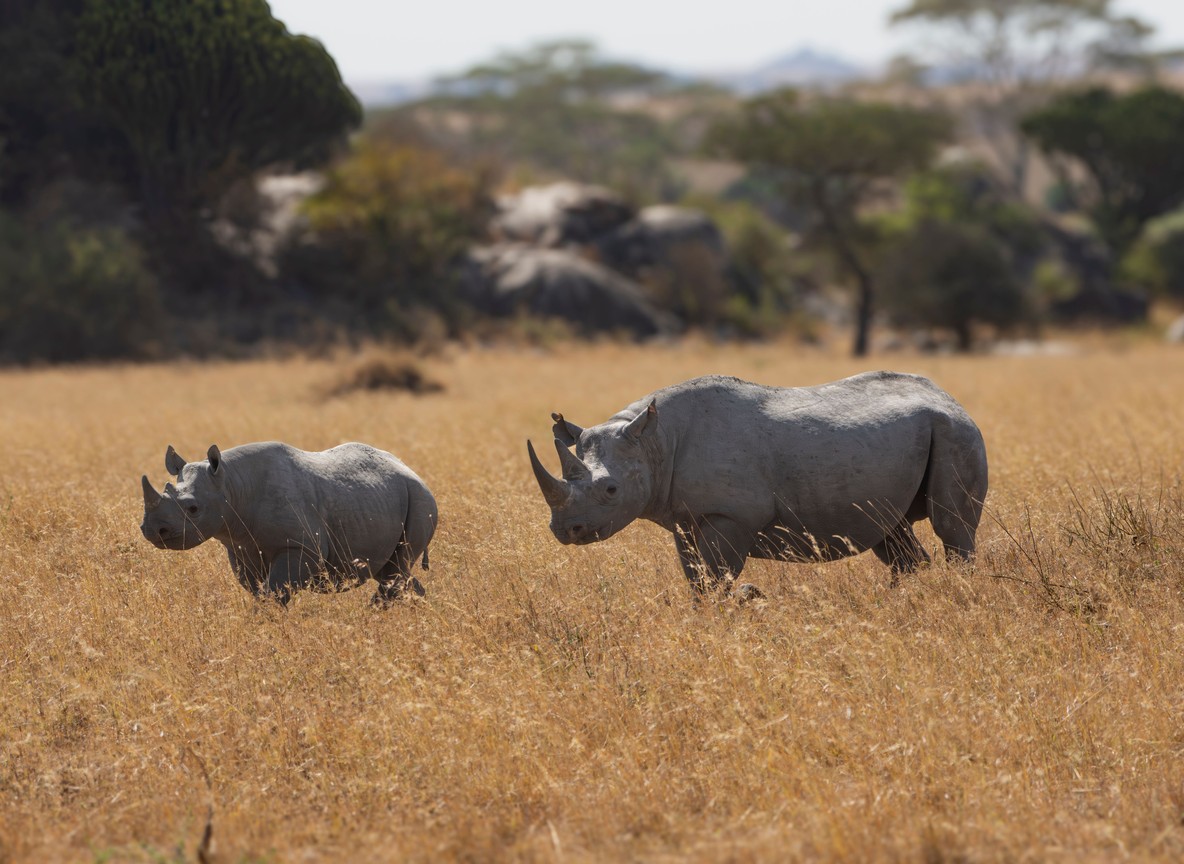
Kenya holds roughly 900 of the world’s remaining black rhinos, representing about 11% of the global population. Keeping that population stable requires constant monitoring, anti-poaching intelligence, and habitat management. Volunteers play a direct supporting role.
Ol Pejeta Conservancy partners with the Sheldrick Wildlife Trust on rhino monitoring programs. Volunteers assist rangers with GPS tracking, individual identification from horn notches and body markings, and night observation shifts. The work is methodical. It demands patience. And the data you collect feeds into population viability models used by the IUCN.
Lewa Wildlife Conservancy runs black rhino tracking programs in the semi-arid north. The ecosystem here is different from Amboseli: drier, more remote, with a wider operating radius per patrol. Lewa also focuses on community engagement with Samburu pastoralists, so conservation safari kenya work at Lewa crosses into community programming as well.
Community Conservation: Working With Maasai and Local Wildlife Guardians
The most sustainable conservation model in Kenya is the one built around community benefit. When wildlife is worth more alive to local communities than dead, poaching loses its economic logic.
The Mara Naboisho and Ol Kinyei conservancies in the Masai Mara employ Maasai landowners as scouts and rangers. Volunteer support roles include anti-poaching patrol assistance, community education workshops, and data entry for the Northern Rangelands Trust’s monitoring systems.
The Big Life Foundation operates across the Amboseli-Tsavo ecosystem and accepts short-term field volunteers for anti-poaching patrol support and camera-trap data review. Their model directly employs over 400 rangers drawn from local Maasai, Kamba, and Taita communities.
On the coast, Colobus Conservation near Diani works on Angolan colobus monkey habitat restoration in coastal forest. If your interests run to primates and forest ecology rather than savanna megafauna, this is a strong alternative for tours and safaris that include coastal Kenya.
Working alongside Maasai rangers on a night patrol is unlike any other safari experience. You understand the landscape differently. You understand the stakes differently.
Planning Your Conservation Volunteer Safari With Trunktrails
Combining genuine volunteer work with world-class game viewing takes planning. Programs have intake dates, physical requirements, and minimum commitment periods. The best kenya safari give back wildlife experiences are the ones where your contribution is real, not ceremonial.
Here is how Trunktrails Safaris approaches a combined itinerary:
- Identify your interest area. Elephants, rhinos, community conservation, coastal habitat — your focus shapes the geography.
- Set your timeline. One week minimum for any meaningful volunteer contribution. Two to three weeks allows program days plus full wildlife tours and safaris in the same ecosystem.
- Match program to experience level. Some placements welcome first-timers. Others require prior field experience or specific qualifications.
- Build the surrounding safari. Conservation days paired with game drives in Amboseli, Tsavo East, or the Masai Mara give you the full picture of the ecosystem you’re working in.
- Confirm logistics. Accommodation at or near volunteer sites, transport between programs and game viewing areas, and coordination with program coordinators — this is where having a TRA-licensed, Kenya-native operator matters.
Trunktrails Safaris charges no programme placement fees on top of the conservation organisations’ own costs. What you pay the organisation goes to the organisation.
The Trunktrails Advantage
Trunktrails Safaris is a native Kenyan-owned operator. That matters for conservation volunteer work in ways that aren’t obvious from a brochure.
Our direct relationships with KWS, the Big Life Foundation, Amboseli Trust for Elephants, and multiple Mara conservancies mean we can secure placements that aren’t listed on international volunteer aggregator sites. We know the programme coordinators personally. We know which intakes have space and which are full a year in advance.
We build tailor-made tours and safaris for all budgets. A volunteer safari doesn’t have to be expensive accommodation at a luxury lodge. We work with tented camps and community-run banda options that put your budget closer to the conservation organisations that need it.
24/7 direct operator support means that if a programme shifts dates, if weather closes a field site, or if you need to be repositioned mid-trip, you call us directly. No agency intermediary. No hold queue.
We are TRA licensed and operate under Kenya Tourism Regulatory Authority standards. And 5% of every Trunktrails Safaris booking goes to wildlife conservation in the ecosystems our guests visit.
If you’re serious about africa conservation volunteer work in Kenya, you want a local operator who is already embedded in those conservation networks. That is what we offer. 🦁
Ready to Make Your 2026 Safari Count?
Applications for the AWF Young Conservation Heroes are open now. Elephant orphan feeding shifts in Tsavo fill months in advance. Anti-poaching patrol slots with Big Life close fast during peak season.
The wildlife tours and safaris that leave the deepest mark are the ones where you contributed something real. Tell us your dates, your interest area, and your experience level. We’ll build the itinerary around a programme that actually needs you.
WhatsApp: +254 113 208888 Email: info@trunktrailssafaris.com Website: https://trunktrailssafaris.com TRA Licensed | Native Kenyan Operator | 5% to Conservation
Word count: 1,672
Image credits: Photo by Keegan Checks on Pexels; Photo by Nadia Vasil’eva on Pexels; Photo by David Paul on Pexels; Photo by Magda Ehlers on Pexels; Photo by Umar Andrabi on Pexels