
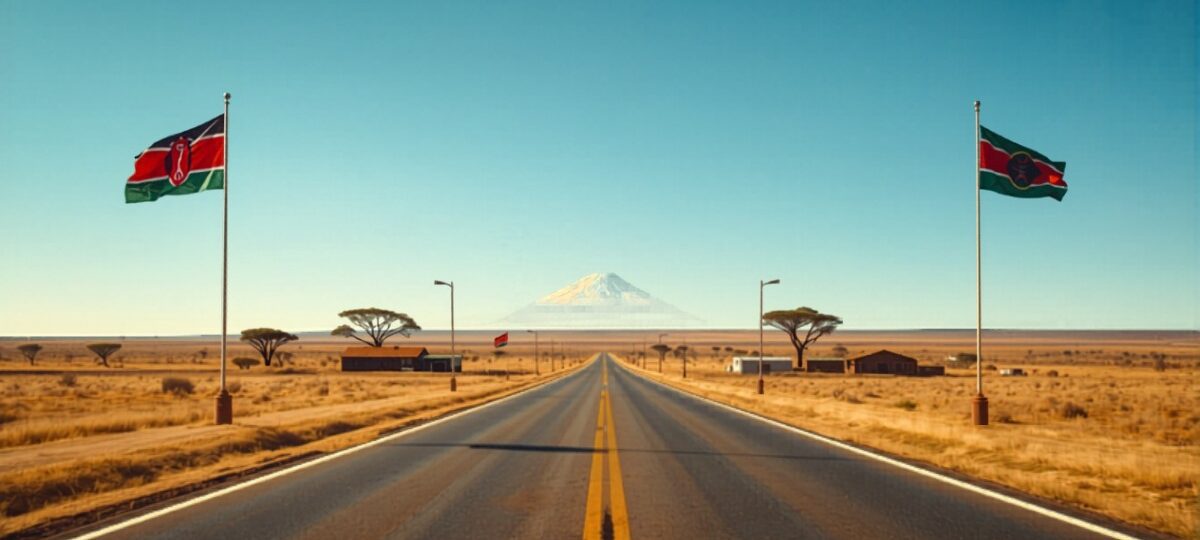
Amboseli From Namanga Route Guide
This Amboseli from Namanga route guide covers a route that is less common than the classic Nairobi-Emali approach but still important in the right itinerary. Most travellers do not need to use the Namanga side. But for some route shapes, especially those influenced by southern Kenya positioning or border-side planning, it can be useful.
At Trunktrails Safaris, we treat the Namanga route as a situational option, not the default answer. That is exactly why it deserves its own guide.
The Short Answer
Use the Namanga route when:
- your itinerary shape naturally favors the southern side
- you have a specific lodge or route logic that makes it efficient
- you are not simply looking for the standard Nairobi road answer
Do not choose it just because it sounds different. For most first-time Nairobi-based Amboseli tours and safaris, the classic route remains simpler.
Why the Namanga Route Is Different
The Namanga side matters because it changes the logic of how you approach Amboseli.
Instead of following the most familiar road pattern from Nairobi, you are usually working with a more specific route intention. That might be:
- a lodge-side fit
- a broader southern Kenya travel structure
- a border-influenced planning choice
This is why the route is interesting. It is not random. It is strategic when used correctly.
Who This Route Suits Best
The Namanga route usually suits:
- repeat safari travellers
- guests with a custom road plan
- travellers whose accommodation or onward movement makes southern access sensible
It is less ideal for:
- most first-time Nairobi road safaris
- travellers who want the cleanest, most standard overland answer
- guests who need the simplest possible logistics
At Trunktrails Safaris, we only use it when the wider itinerary clearly justifies it.
Namanga Route vs the Classic Nairobi Approach
Compared with the classic road approach, the Namanga route is usually:
- more specialized
- less obviously efficient for a standard Nairobi start
- more dependent on the wider itinerary context
That does not make it worse. It just means it is not the baseline route for most people.
If the trip is simply Nairobi to Amboseli and back, the Namanga side usually needs a strong reason to beat the standard answer.
When the Namanga Route Can Be Smart
It can be smart when:
- the trip is already aligned to that side of the region
- the guest wants a less standard access pattern for a custom safari
- the road plan is part of a larger movement strategy
This is one of those cases where context matters more than route popularity.
First-Time Travellers vs Repeat Travellers
For first-time travellers, the Namanga route is often less attractive because it introduces more planning nuance than necessary.
For repeat travellers, it can be appealing because:
- they may already know the classic access logic
- they may want a different route feel
- they may be combining areas in a less standard way
Trunktrails Safaris generally uses the Namanga route more confidently for travellers who already understand Kenya road-safari structure.
Accommodation Fit
Route choice should never be separated from where you are sleeping.
The Namanga side only becomes a strong answer if:
- the lodge position supports it
- the onward route supports it
- the total transfer pattern becomes more efficient overall
If none of those conditions apply, the route is probably not the best one.
This is why Trunktrails Safaris chooses route after itinerary design, not before.
Cost and Practical Value
The Namanga route is not automatically a value route or a premium route. Its value comes from fit.
It is worthwhile when it:
- reduces unnecessary backtracking
- supports a better route flow
- matches the actual trip design
It is poor value when:
- it adds complexity without saving time
- it exists only because it sounds interesting
That is the right way to evaluate it.
Families and Simple Itineraries
For families or guests who want very simple tours and safaris, this is usually not the first route to recommend.
Why:
- route clarity matters more with children
- fewer moving parts usually means less stress
- standard road logic often wins for ease
The Namanga side is better reserved for itineraries that genuinely benefit from it.
How Many Nights Should You Pair With This Route?
Because this is not usually the most minimal approach, it works best when the Amboseli stay itself is meaningful.
That usually means:
- 2 nights minimum
- 3 nights if the trip is custom and meant to feel more relaxed
Using a more specialized road approach for a very short one-night safari often makes less sense than using the classic default route.
Quick Decision Guide
| Question | If Yes | If No |
|---|---|---|
| Is your itinerary already aligned to the Namanga side? | Consider this route | Use the classic route |
| Is this a first standard Nairobi safari? | Usually avoid | More flexibility |
| Does lodge position support it? | Stronger option | Weaker option |
| Are you building a custom route? | Can work well | Probably unnecessary |
The Namanga Route to Amboseli: Key Facts
The Namanga route follows the Nairobi-Arusha road to the Tanzania border town of Namanga, then cuts east to Meshanani Gate over a long gravel stretch.
| Detail | Info |
|---|---|
| Total distance | ~240 km |
| Drive time | ~4 to 5 hrs |
| Road | 165 km tarmac to Namanga, then ~75 km murram |
| Entry gate | Meshanani (north-west) |
| Caution | Gravel section deteriorates after rain |
It is the more scenic border approach, but the murram stretch slows the trip and can be rough in the rains, when the Emali route becomes the safer bet.
The Trunktrails View
At Trunktrails Safaris, the Namanga route is not our default Amboseli access answer. It is a tailored route for the right itinerary.
The planning rule is simple:
- use Namanga when the wider route truly supports it
- avoid it when the trip is just a straightforward Nairobi-Amboseli safari
That is the cleanest way to respect what the route is actually good at.
Further reading
Ready to Plan Your Kenya Safari? Talk to Trunktrails Safaris
Trunktrails Safaris designs tailor-made tours and safaris for every traveller and every budget. If you are considering the Namanga side for Amboseli access, we can tell you quickly whether it truly improves the route or just adds complexity.
WhatsApp: +254 113 208888 Email: info@trunktrailssafaris.com Website: https://trunktrailssafaris.com