Amboseli Elephant Research Project Guide
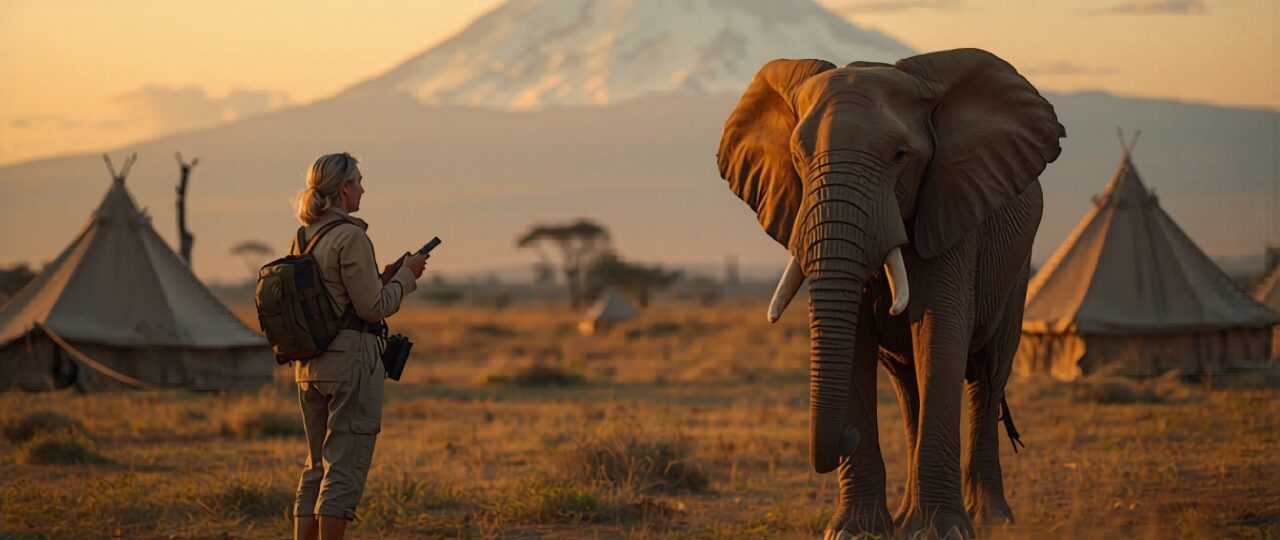
Amboseli Elephant Research Project guide matters because Amboseli’s elephants are famous for more than safari visibility. They are famous because they belong to one of the most important wildlife research stories in Africa. When you watch elephants in Amboseli, you are not only seeing a large mammal in a beautiful landscape. You are looking at one of the most studied wild elephant populations on earth.
Amboseli.org describes the Amboseli Elephant Research Project (AERP) as the world’s longest continuous study of wild elephants. It says the project was founded in 1972 by Dr. Cynthia Moss and has individually identified and tracked over 3,000 elephants, with the broader conservation material putting the number at over 3,900 across multiple generations. The project has also followed more than 60 matriarchal families over decades.
That means the park’s elephants are globally important not only because they are visible, but because they are known.
The Short Answer
The Amboseli Elephant Research Project matters because it has helped scientists understand:
- elephant family structure
- communication
- reproduction
- migration and corridors
- the social effects of poaching and drought
For safari travellers, that gives Amboseli unusual depth. The elephants are not anonymous. They are part of a documented long-term family story.
Why Amboseli Was Chosen for Elephant Research
The project began in Amboseli for a very practical reason: visibility.
Amboseli’s open terrain and relatively easy elephant observation made it one of the best places in Africa to follow wild elephants without invasive methods.
That visibility allowed researchers to:
- identify individual elephants by ears, tusks, and body shape
- observe family structure over long periods
- build life histories across generations
This is one reason Amboseli remains so important. The park is not only good for safari guests. It is also exceptionally good for science.
Who Founded the Project-
AERP was founded in 1972 by Dr. Cynthia Moss, one of the best-known elephant researchers in the world.
Over time, the work grew into a globally respected conservation and research program linked to the Amboseli Trust for Elephants and other collaborating institutions.
That history matters because AERP is not a recent branding exercise. It is one of the deepest long-term wildlife datasets ever built for African elephants.
What Does the Project Actually Study-
The research is far broader than simply counting elephants.
AERP has documented:
- births and deaths
- family genealogies
- matriarchal leadership
- male dispersal
- reproductive cycles
- communication and social behavior
- movement across migration corridors
This is what makes the project so valuable. It connects the visible daily life of elephants to much larger questions about survival, memory, and conservation.
Why Elephant Families Matter So Much
One of AERP’s most important contributions is showing how deeply elephant society depends on family structure.
Research in Amboseli helped clarify that:
- females live in matriarch-led families
- older matriarchs store ecological knowledge
- calves and juveniles learn socially within the family group
- disruption from poaching can damage not only numbers, but social stability
For travellers, this means a family herd in Amboseli is not just a pretty sighting. It is a visible expression of a long-studied social world.
What Did the Research Change Globally-
AERP helped change how the world sees elephants.
Major contributions include:
- proving the complexity of elephant societies
- documenting emotional intelligence and mourning behavior
- strengthening arguments against ivory trade and poaching
- helping conservationists understand the importance of corridors and coexistence
In short, Amboseli research helped move elephants in public understanding from giant animals to deeply social beings.
How Does This Affect a Safari Today-
For Trunktrails Safaris, the research story changes the quality of the safari because it adds meaning.
Instead of seeing:
- “just elephants”
guests can understand:
- why matriarchs matter
- why calves stay close
- why older bulls disperse differently
- why corridors beyond the park are essential
That makes Amboseli especially good for thoughtful tours and safaris, not only photo-driven ones.
The Link to Conservation Corridors
AERP has also helped explain why Amboseli cannot be protected as only a fenced park.
The research and ecosystem sources stress the importance of corridors linking Amboseli to:
- Tsavo
- Chyulu Hills
- Kilimanjaro Forest
- wider community lands
That matters because elephants move across a much larger landscape than the park itself. Research is one of the main reasons corridor protection became such a central conservation issue here.
Why Safari Travellers Should Care
Some guests assume research is only for scientists. In Amboseli, it matters to travellers because:
- it explains why the elephant sightings are so special
- it deepens the ethical and conservation value of the trip
- it helps travellers choose operators and lodges that respect the ecosystem
A research-aware safari is often a better safari because it turns observation into understanding.
Is Amboseli Still the Best Place to Learn About Elephant Behavior-
It is certainly one of the best.
Why:
- the elephants are visible
- the family histories are unusually well known
- the research tradition is continuous and globally respected
That makes Amboseli a rare place where tourism, science, and conservation reinforce each other.
Best Type of Safari for Research-Minded Guests
The strongest trips for guests who care about elephant science usually include:
- at least two nights
- slow observation of family groups
- a guide who understands elephant behavior well
- interest in the wider ecosystem, not only in the mountain backdrop
This is one reason Trunktrails Safaris often recommends Amboseli to naturalists, photographers, conservation-minded families, and repeat safari guests.
Common Mistake Travellers Make
The biggest mistake is treating research as trivia instead of part of what makes the park globally important.
In Amboseli, the science is not separate from the safari. It is one of the reasons the safari means more.
Quick Amboseli Elephant Research Project Guide
| Topic | Why It Matters |
|---|---|
| Founded in 1972 | Longest continuous wild-elephant study |
| 3,000+ to 3,900+ elephants identified | Extraordinary long-term dataset |
| 60+ families followed | Deep social and genealogical insight |
| Corridor research | Links safari viewing to wider conservation |
| Cynthia Moss and ATE | Central names in elephant science |
The Amboseli Elephant Research Project: Key Facts
Amboseli hosts the longest-running study of wild elephants on earth, which is a big reason the park’s elephants are so relaxed around vehicles.
| Fact | Detail |
|---|---|
| Founded | 1972, by Cynthia Moss |
| Run by | Amboseli Trust for Elephants |
| Status | Longest continuous wild elephant study |
| Elephants known | ~1,900 individuals across generations |
Decades of gentle, research-led observation have habituated these families, which is why Amboseli delivers such close, calm encounters with its famous big tuskers.
The Trunktrails View
At Trunktrails Safaris, we see AERP as one of the reasons Amboseli rises above a simple scenery park. The project gives the elephants identity, continuity, and meaning that very few wildlife destinations can match.
That is why research-minded travellers, naturalists, and conservation-aware guests often come away from Amboseli feeling that they saw more than wildlife. They saw a living archive.
Final Decision Rule
If you want a safari where elephant viewing is backed by world-class science and real conservation importance, Amboseli should be high on your shortlist.
If you only want anonymous sightings, the park is still good. But if you want meaning behind the sightings, Amboseli is exceptional.
Further reading
Ready to Plan Your Kenya Safari- Talk to Trunktrails Safaris
Trunktrails Safaris designs tailor-made tours and safaris for every traveller and every budget. If you want an Amboseli safari with stronger conservation and elephant-behavior context, we can shape the trip around the part of the park that makes it scientifically as well as visually remarkable.
WhatsApp: +254 113 208888 Email: info@trunktrailssafaris.com Website: https://trunktrailssafaris.com