
Best Time to See the Wildebeest Migration in Kenya: Month-by-Month Guide 2026 📸
Every month someone contacts us with the same question: “Are we going at the right time?”
The honest answer is that there is no wrong time to visit the Masai Mara. The Big Five are resident year-round. But if the wildebeest migration is the reason you are coming :if you specifically want to stand at the edge of the Mara River and watch the spectacle that has made this ecosystem famous: then timing is everything.
When is the wildebeest migration at its most dramatic? When do the river crossings happen? What is different about the Masai Mara in September versus January? Which month gives you the best chance of witnessing a crossing without paying August peak prices?
This complete guide answers all of it :month by month, with honest assessments for each window, 2026-specific notes, and the practical advice our guides at Trunktrails Safaris give every guest who asks that question.
Understanding the Migration Calendar
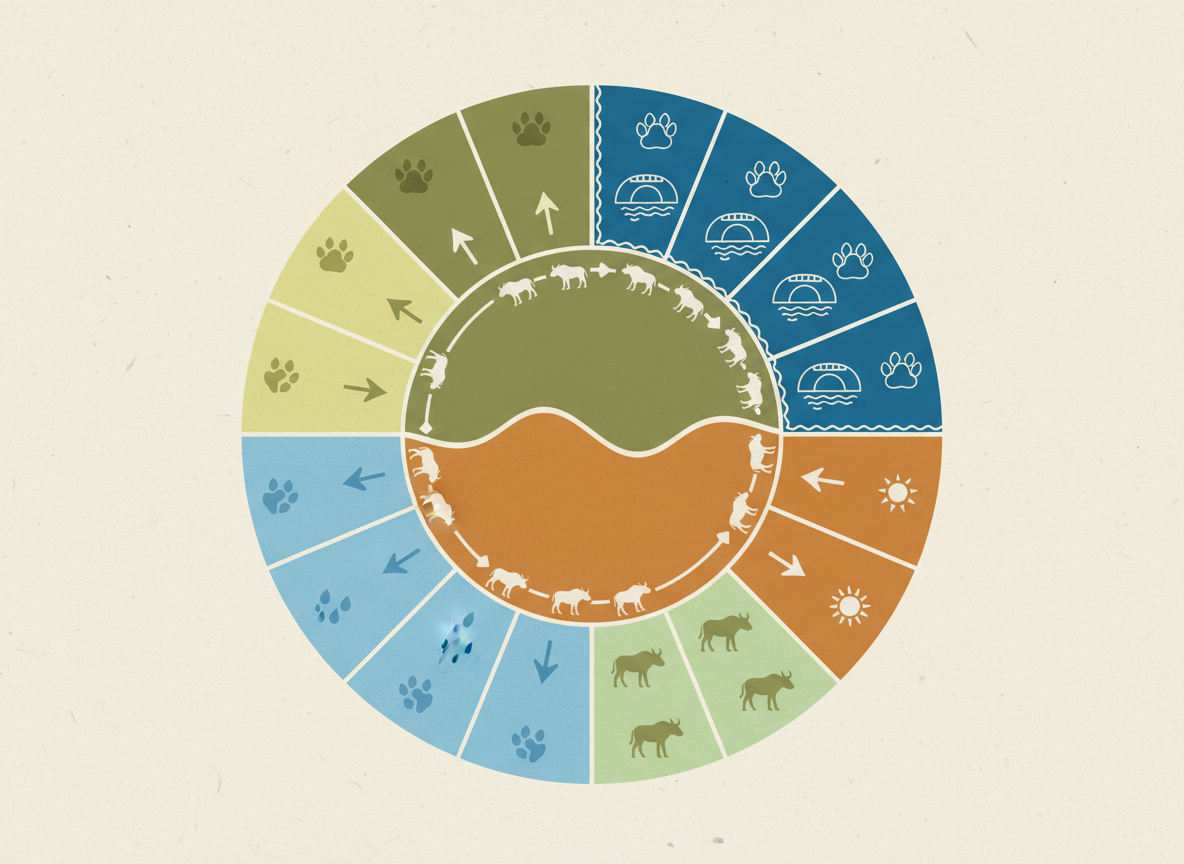
Before the month-by-month breakdown, one essential context point: the great migration is circular and continuous. The wildebeest do not stop for a season and restart. They move year-round, following the rains and the fresh grass they produce, in a clockwise loop across the Serengeti-Mara ecosystem.
The wildebeest migration route takes them:
- January–March: Calving in southern Serengeti (Tanzania) — the herds are stationary for calving season
- April–May: Moving northward through central Serengeti as the long rains begin
- June: Reaching the northern Serengeti, beginning to approach Kenya
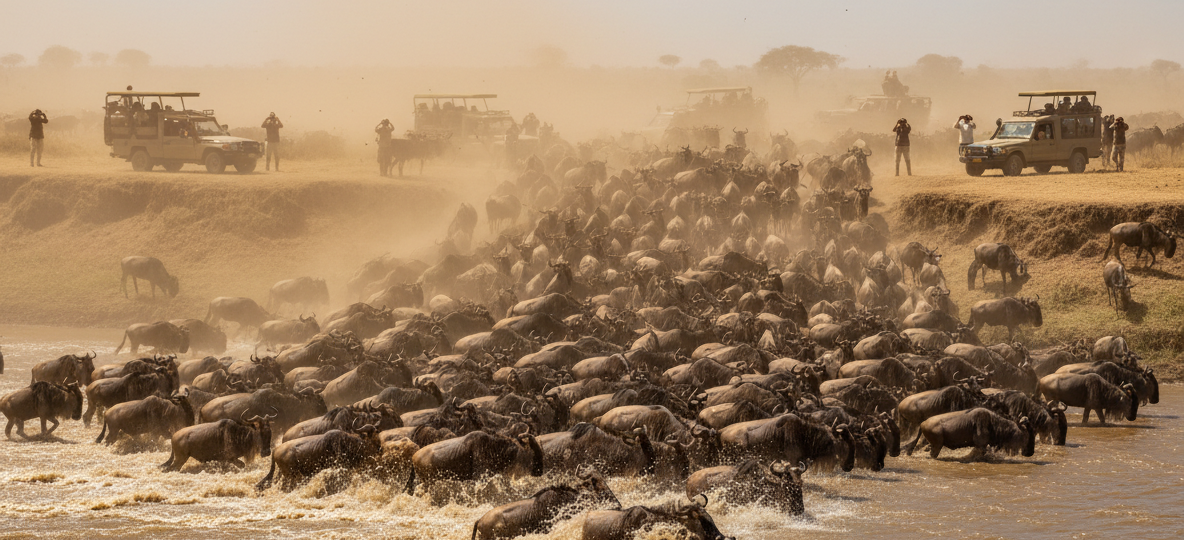
- July–October: In Kenya’s Masai Mara — the river crossings window
- November–December: Returning south as the short rains bring fresh grass in Tanzania
The masai mara migration season :July to October :is the Kenya window. Everything in this guide focuses on that period, plus notes on the shoulder months for guests with different priorities or budgets.
Month-by-Month Guide: When Is the Great Migration in Kenya?
January — Calving Season in Tanzania
Where are the wildebeest? Southern Serengeti and Ndutu plains, Tanzania.
In the Masai Mara: Resident wildlife only — no migration herds.
January in the Masai Mara is what locals call the green season. The grass is lush and tall after the short rains, visibility is slightly lower, but the Mara’s resident Big Five are active and the landscape is extraordinary. Bird life peaks. Fewer tourists means lower prices and exclusivity.
Should you visit for the migration? No. But if the Mara itself is your destination rather than specifically the migration, January offers excellent value.
Masai Mara in January rating for migration: ⭐☆☆☆☆
Masai Mara in January rating for overall wildlife: ⭐⭐⭐☆☆
February — Calving Continues
Where are the wildebeest? Southern Serengeti, Tanzania — peak calving.
In the Masai Mara: No migration herds.
February is peak calving in Tanzania — approximately 500,000 wildebeest calves are born within a six-week window. If calving season interests you, this is the Tanzania window. In Kenya, the Mara is quiet for migration purposes.
Masai Mara in February rating for migration: ⭐☆☆☆☆
March — Northward Movement Begins
Where are the wildebeest? Central Serengeti, beginning to move north.
In the Masai Mara: Anticipation builds — no herds yet.
The long rains begin. Herds start their northward movement through the Serengeti. Not yet in Kenya.
April & May — The Long Rains
Where are the wildebeest? Moving through central to northern Serengeti.
In the Masai Mara: Wet season — green, beautiful, quietest period.
The long rains bring the lowest visitor numbers of the year and significantly reduced prices at most camps. Game viewing is still strong — lions are hunting, elephants are moving to water. Some budget and mid-range camps close for maintenance. A small number of premium camps remain open and offer exceptional value.
Best for: Budget-conscious travellers who prioritise exclusivity over migration.
June — The Build-Up 🌍
Where are the wildebeest? Northern Serengeti and beginning to cross into Kenya.
In the Masai Mara: Early arrivals. The tension begins.
June is the transitional month. The rains ease. The grass dries. And the first scout herds begin crossing the Kenya border. By late June, large numbers are in the northern Mara ecosystem — primarily in the conservancies north of the reserve.
River crossings in June: Possible from mid-June onwards, though not guaranteed.
Crowds: Building but not yet at peak.
Pricing: Ramping up toward peak season rates.
Masai Mara in June rating for migration: ⭐⭐⭐☆☆ (rising)
July — Migration Arrives in Full ⭐⭐⭐⭐⭐
Where are the wildebeest? Masai Mara — large herds crossing the Mara River.
In the Masai Mara: The main event begins.
July is when the great migration kenya experience truly starts. The herds arrive in enormous numbers — sometimes covering the Mara plains as far as you can see. Multiple Mara River crossing points become active. Predators follow the herds. The drama is extraordinary.
River crossings in July: Regular activity at multiple crossing points.
Weather: Dry season — clear skies, excellent light, cool mornings.
Crowds: High but not yet at peak August levels.
Booking requirement: 6–9 months in advance for conservancy camps.
Best for: First-time migration visitors wanting the full experience at slightly lower prices than August.
Masai Mara migration rating for July: ⭐⭐⭐⭐⭐
August — Peak Migration Season ⭐⭐⭐⭐⭐
Where are the wildebeest? Maximum concentration in the Masai Mara.
In the Masai Mara: The highest-intensity migration window of the year.
August is peak migration month. The largest concentrations of wildebeest are in Kenya. Crossings happen multiple times daily at some crossing points. Predator activity following the herds is at its highest. The drama is relentless — even when you are not at a crossing, the Mara in August is saturated with wildlife.
The catch: August is also peak tourist season. Inside the national reserve, vehicle concentration at crossings can be high. This is exactly why Trunktrails Safaris positions migration guests in the community conservancies — you get the same herds, the same crossings, and a fraction of the vehicles.
River crossings in August: Most reliable window of the year.
Weather: Dry, clear, warm days and cool nights.
Pricing: Highest of the year — 20–35% above shoulder season rates.
Booking requirement: 9–12 months in advance. Do not wait.
Best for: Guests who want maximum migration density and are prepared to book early and budget for peak rates.
Masai Mara migration rating for August: ⭐⭐⭐⭐⭐
September — The Sweet Spot 🌅
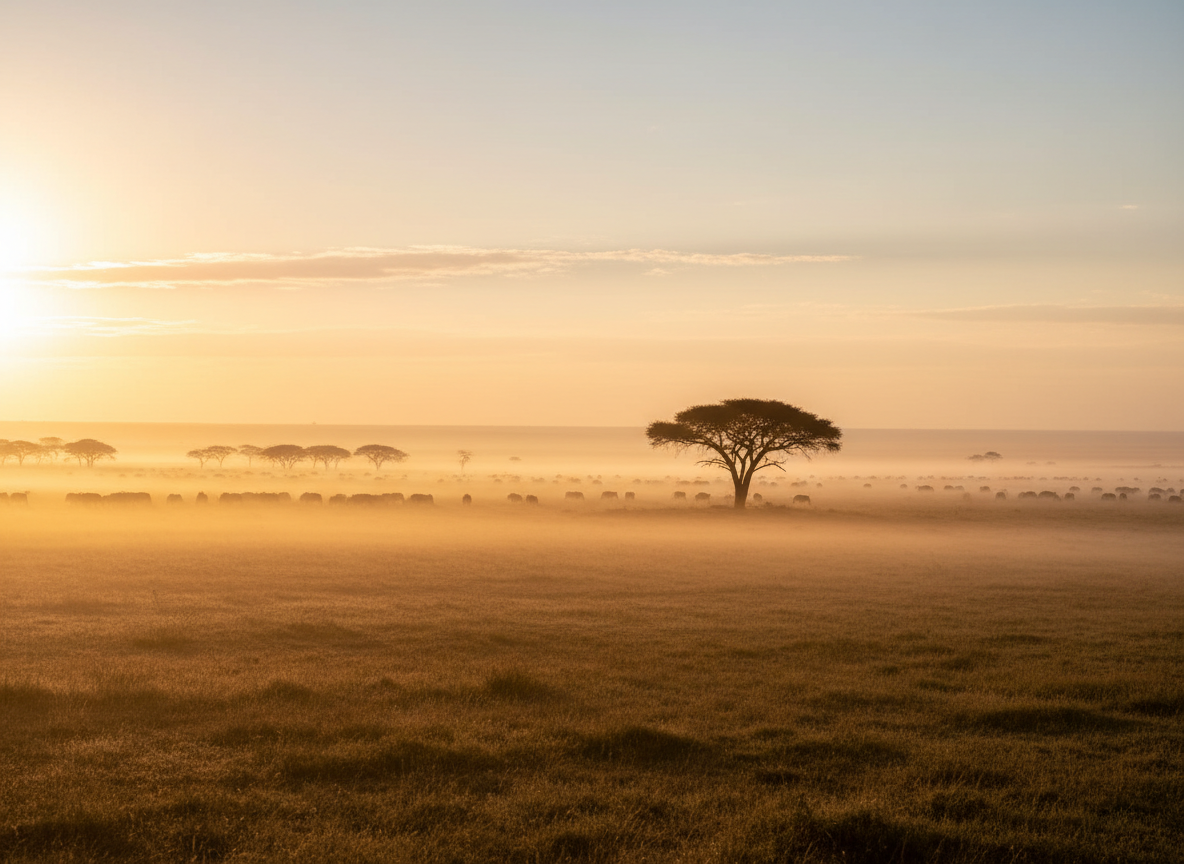
Where are the wildebeest? Large herds still in the Mara, beginning gradual southward drift.
In the Masai Mara: Peak experience with shoulder season calm.
Our guides consistently rate September as the single best month for a wildebeest migration safari in Kenya — and here is why:
- The herds are still in the Mara in large numbers
- River crossings are still happening at multiple points
- The peak August crowds have thinned noticeably
- September has the best light of any migration month — golden, crisp, extraordinary for photography
- Prices ease 10–20% from August peaks
- Conservancy camps are slightly easier to book
Kenya migration season in September delivers everything August offers with a slightly more intimate atmosphere. If you can only travel during one migration month and flexibility allows, September is the answer.
River crossings in September: Active through mid-September; decreasing frequency from late September.
Booking requirement: 6–9 months in advance.
Best for: Photographers, returning safari guests, anyone who wants the best month without August prices.
Masai Mara migration rating for September: ⭐⭐⭐⭐⭐
October — The Return Journey
Where are the wildebeest? Beginning to move south as short rains approach.
In the Masai Mara: Tapering migration, but still significant.
Early October continues the migration experience — herds are still present, crossings still occur, though with decreasing frequency. By mid-October, numbers in the Mara are noticeably lower. By late October, the short rains begin and most herds have crossed back south into Tanzania.
Best for: Budget-conscious guests for whom late September and early October is the only option.
Masai Mara migration rating for early October: ⭐⭐⭐⭐☆
Masai Mara migration rating for late October: ⭐⭐⭐☆☆
November & December — Short Rains and Renewal
Where are the wildebeest? Back in Tanzania, moving south.
In the Masai Mara: No migration herds. Wet season begins.
November and December are again the green season. Excellent for birding, beautiful scenery, low prices. Not a migration window.
Wildebeest Migration Dates 2026
The wildebeest migration 2026 will follow the same broad pattern as every year — governed by rainfall, not a fixed calendar. Based on historical patterns and current climate data:
| Period | What to Expect |
| **Late January – March 2026** | Calving in southern Serengeti, Tanzania |
| **April – May 2026** | Northward movement through central Serengeti |
| **Mid-June 2026** | First herds crossing into Kenya |
| **July 2026** | Full migration in Masai Mara — crossings begin |
| **August 2026** | Peak crossing season — maximum herd density |
| **September 2026** | Continued crossings — our recommended window |
| **October 2026** | Gradual southward return |
Important note for 2026: Climate variability can shift these windows by 2–4 weeks in either direction. East African rainfall patterns in 2025 will influence 2026 migration timing. Trunktrails Safaris monitors migration movement updates in real time and will advise all booked guests on current conditions as their travel date approaches.
When to Go to Masai Mara: The Decision Matrix
| Priority | Best Month(s) |
| **See a river crossing** | July, August, September |
| **Best photography light** | September |
| **Largest herd numbers** | August |
| **Fewer vehicles at crossings** | September, early July |
| **Best value (migration)** | September, early July |
| **Budget travel (non-migration)** | January, April, May |
| **Family with school-age children** | July, August (school holidays) |
| **Honeymoon / romantic** | September (light, exclusivity) |
| **First-time Kenya safari** | July or September |
The Trunktrails Advantage
Trunktrails Safaris is a native Kenyan-owned operator with guides who track migration movement updates throughout the year. We do not simply book you a camp and wish you luck. We monitor herd positions, liaise with our conservancy partners, and advise every guest on real-time conditions before and during their trip.
Our Kenya safari tours and safaris are built around your timing, your budget, and your priorities :not around fixed package dates. If the herds are running two weeks early or late, we adjust.
We offer:
- Tailor-made migration safari itineraries for every budget
- Conservancy camp access for exclusive, low-vehicle migration viewing
- Real-time migration tracking updates for all booked guests
- 5% of every Trunktrails Safaris booking to Mara wildlife and community conservation
- KATO certified | TRA licensed ✨
Frequently Asked Questions
Can you predict the exact date when wildebeest crossings will happen?
No — and anyone who tells you otherwise is overpromising. The crossings are driven by animal behaviour, not a fixed schedule. What experienced guides can do is read the signs — herd stacking, animal restlessness, time of day — and position you at the right crossing point at the right time. Our guides have a strong track record of placing guests at crossings.
Is there a wildebeest migration tracker I can follow?
Several online resources track general herd positions, including the Mara Conservancy’s social media and specialist safari tracker sites. Trunktrails Safaris supplements these with real-time ground intelligence from our guides and conservancy partners. All booked guests receive regular updates in the weeks before travel.
What is the best time to see the great migration in Tanzania vs. Kenya?
Tanzania’s Serengeti is the best destination for calving season (January-March) and the early northward movement. Kenya’s Masai Mara is the best destination for the Mara River crossings (July-October). For a single trip focused on the crossing, Kenya is the answer.
How many wildebeest cross the Mara River?
The total annual crossing population is approximately 1.5 million wildebeest. Not all of them cross at the same point or on the same day. Individual crossings involve hundreds to tens of thousands of animals. The largest single crossing events can involve 50,000+ animals and last several hours.
Start Planning Your 2026 Migration Safari
The best migration camps in the Masai Mara conservancies are already booking for July and August 2026. September is filling fast.
Book your wildebeest migration safari through Trunktrails Safaris and we will handle every detail — timing, camp selection, conservancy positioning, and real-time migration tracking throughout your trip.
📞 WhatsApp: +254 113 208888
📧 Email: info@trunktrailssafaris.com
🌍 Website: https://trunktrailssafaris.com
✅ KATO Member | TRA Licensed