
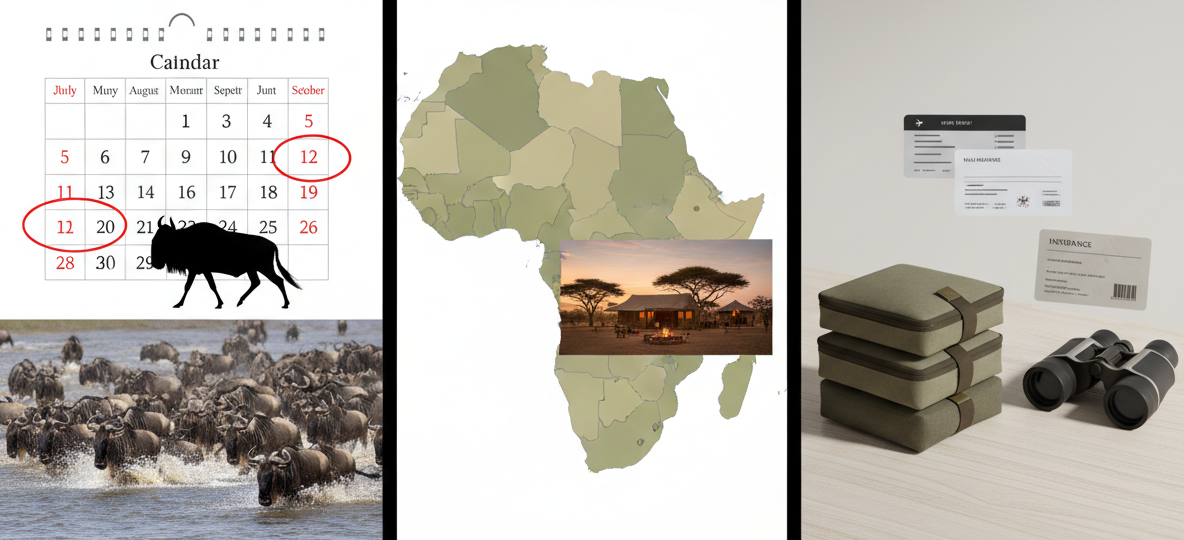
Kenya Migration Safari Planning Checklist
A strong migration safari starts months before the vehicle leaves camp.
Good kenya migration safari planning is not complicated, but it must be done in the right order. Dates come first. Camp location comes second. Flights, packing, insurance and health preparation follow. If you book the wrong dates or the wrong camp zone, a perfect packing list will not fix the safari.
Use this checklist to prepare for the Masai Mara migration season. Trunktrails Safaris uses the same practical logic when building migration tours and safaris for first-time visitors, families, honeymooners and photographers.
1. Choose the Right Migration Window
The Kenya migration window normally runs from July to October, with strongest river crossing demand from mid-July through September. The exact movement changes each year because rainfall and grass conditions shift.
Planning guide:
| Month | Best For |
| July | Early crossings, first-time guests |
| August | Peak drama, highest demand |
| September | Good value, strong light, fewer vehicles |
| October | Late movement, warmer weather |
If crossings are your main goal, plan at least 3 nights in the Mara. Four nights is better. A 2-night trip gives little room for timing changes.
2. Book the Camp Before Flights
Camp space is the hard part. Flights can often be arranged after accommodation is held, but the best migration camps sell out early.
For kenya safari planning migration trips:
- Book July and August 9-12 months ahead
- Book September 6-9 months ahead
- Confirm whether your camp is reserve-based or conservancy-based
- Ask how far the camp is from common crossing areas
- Check whether a private vehicle is available
Trunktrails Safaris confirms camp logic before pushing payment. We want the location to match your dates, not just your budget.
3. Decide Fly-In vs Drive-In
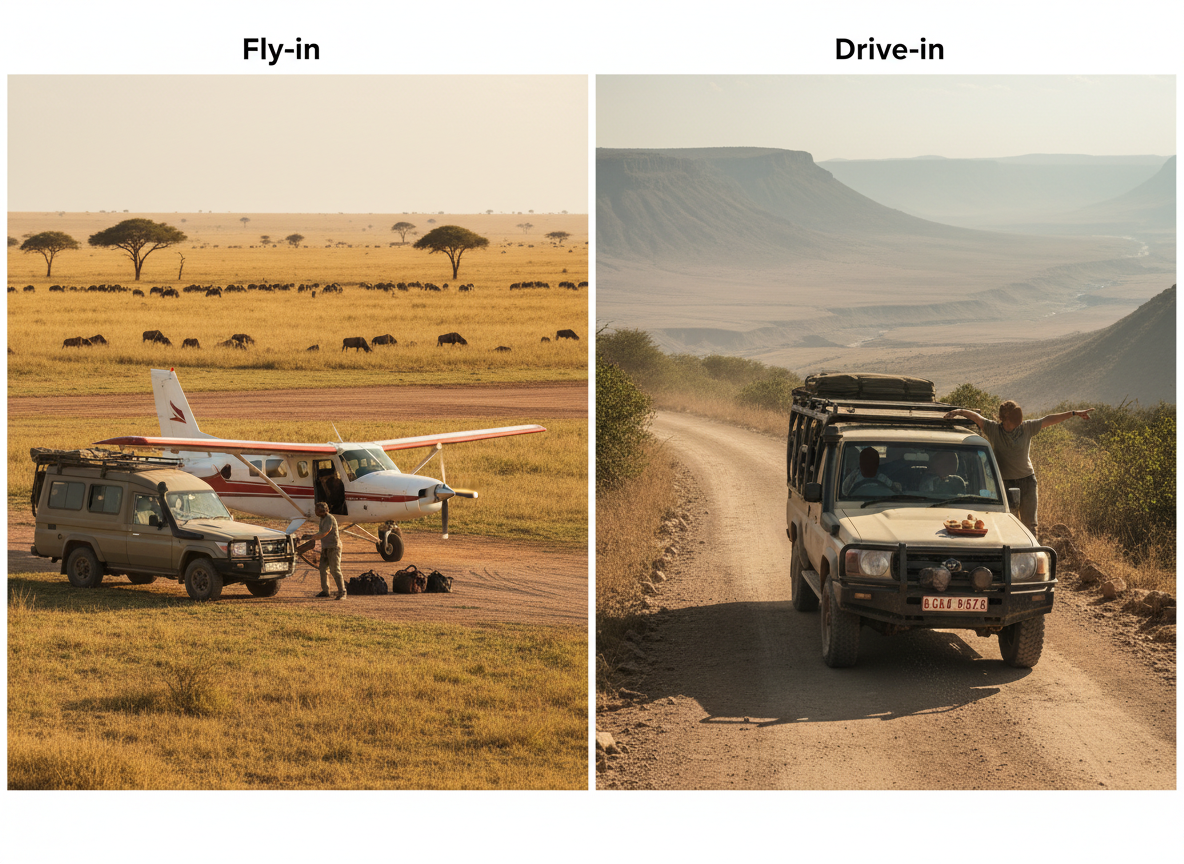
A fly-in safari from Nairobi to the Mara saves time and reduces fatigue. A drive-in safari lowers cost and gives you more of the Kenyan landscape.
| Transfer Style | Best For | Watch-Out |
| Fly-in | Short trips, luxury guests, photographers | Higher cost |
| Drive-in | Budget trips, longer itineraries | 5-6 hour road transfer |
| Mixed | Value and comfort balance | Needs careful timing |
For a 3-day migration trip, flying is often worth it. For a 5-day trip, road transfer can work well if the budget needs control.
4. Confirm Kenya Visa and Passport Rules
For any Kenya visa safari plan, confirm current entry requirements before travel. Kenya uses electronic travel authorization processes that can change. Your passport should usually have at least six months of validity and blank pages.
Before departure:
- Check current Kenya entry requirements
- Apply early through official channels
- Keep digital and printed copies
- Check transit visa needs if connecting through another country
- Match passport names exactly with flight bookings
Do not leave this until the final week.
5. Buy Travel Insurance
Travel insurance Kenya safari planning matters because migration trips involve remote camps, light aircraft, road transfers and high-value bookings.
Your policy should cover:
- Medical emergency care
- Emergency evacuation
- Trip cancellation
- Lost baggage
- Flight disruption
- Safari activities
- Camera equipment if relevant
Ask the insurer specifically about safari travel and light aircraft transfers.
6. Pack for Cold Mornings and Dusty Days
The migration safari packing list is practical, not fashionable. July to September mornings can be cold, then the day warms quickly.
Pack:
- Neutral shirts and trousers
- Warm fleece or light jacket
- Comfortable closed shoes
- Hat and sunglasses
- Sunscreen and lip balm
- Binoculars
- Camera and spare batteries
- Dust cover for electronics
- Small day bag
- Personal medication
- Reusable water bottle
Avoid bright white clothing because it shows dust quickly. Avoid strong perfume because it can attract insects.
7. Prepare for Long Game Drives
Migration days can be long. You may leave before sunrise and return late, especially if herds begin moving near the river.
Bring patience. Bring layers. Bring snacks if you need regular food. Tell your guide about back issues, motion sickness or children who need breaks.
Good tours and safaris adjust pace without losing the wildlife goal.
8. Ask These Questions Before Paying
Before confirming your safari, ask:
- Are park and conservancy fees included?
- Which camp is being used?
- How far is it from crossing zones?
- Is the vehicle private or shared?
- Are domestic flights included?
- What happens if herds are in another section?
- Is the operator KATO or TRA registered?
- Who supports me during the trip?
Trunktrails Safaris answers these directly. No vague package language.
9. Plan Money, Tips and Connectivity
Carry some cash for tips, small purchases and community visits, even if the main safari is prepaid. Camps may accept cards, but remote areas can have network delays. Your operator should explain what is included and what is paid locally.
Tip planning is personal, but many travellers prefer to separate guide tips from camp staff tips. Put cash in envelopes before the final morning so the departure does not feel rushed.
Connectivity in the Mara varies by camp and location. Some camps have Wi-Fi in common areas. Others keep the experience intentionally quiet. If you must work, say so before booking. If you want to disconnect, choose a camp that supports that rhythm.
10. Prepare for Health and Comfort
Speak with a travel clinic before your safari, especially if you are combining Kenya with other countries. Bring personal medication in your hand luggage, not checked bags. Pack basic stomach medicine, pain relief, antihistamines and any prescriptions you need.
The Mara can be dusty in migration season. If you have allergies or asthma, carry what you need and tell your guide. Long game drives are easier when small comfort issues are handled early.
Trunktrails Safaris sends practical reminders before travel so guests are not guessing at the last minute. That is one reason our Kenya migration tours and safaris feel calmer on the ground.
The Trunktrails Planning Advantage
Trunktrails Safaris builds Kenya migration tours and safaris around real field conditions. We help with timing, camp choice, transfer style, packing advice, insurance reminders and honest expectations.
You get direct support before and during travel. If your flight changes, camp timing shifts, or the herds move, you are not dealing with a distant booking platform. You are dealing with a Kenya-based team.
Start Planning the Right Way
Send your dates, group size and budget to Trunktrails Safaris. We will help you turn the checklist into a practical migration safari plan.
WhatsApp: +254 113 208888
Email: info@trunktrailssafaris.com
Website: https://trunktrailssafaris.com
KATO Member | TRA Licensed