
Maasai Women: Roles, Marriage, Beadwork, and a Changing World ✨
She built the house you’re standing in.
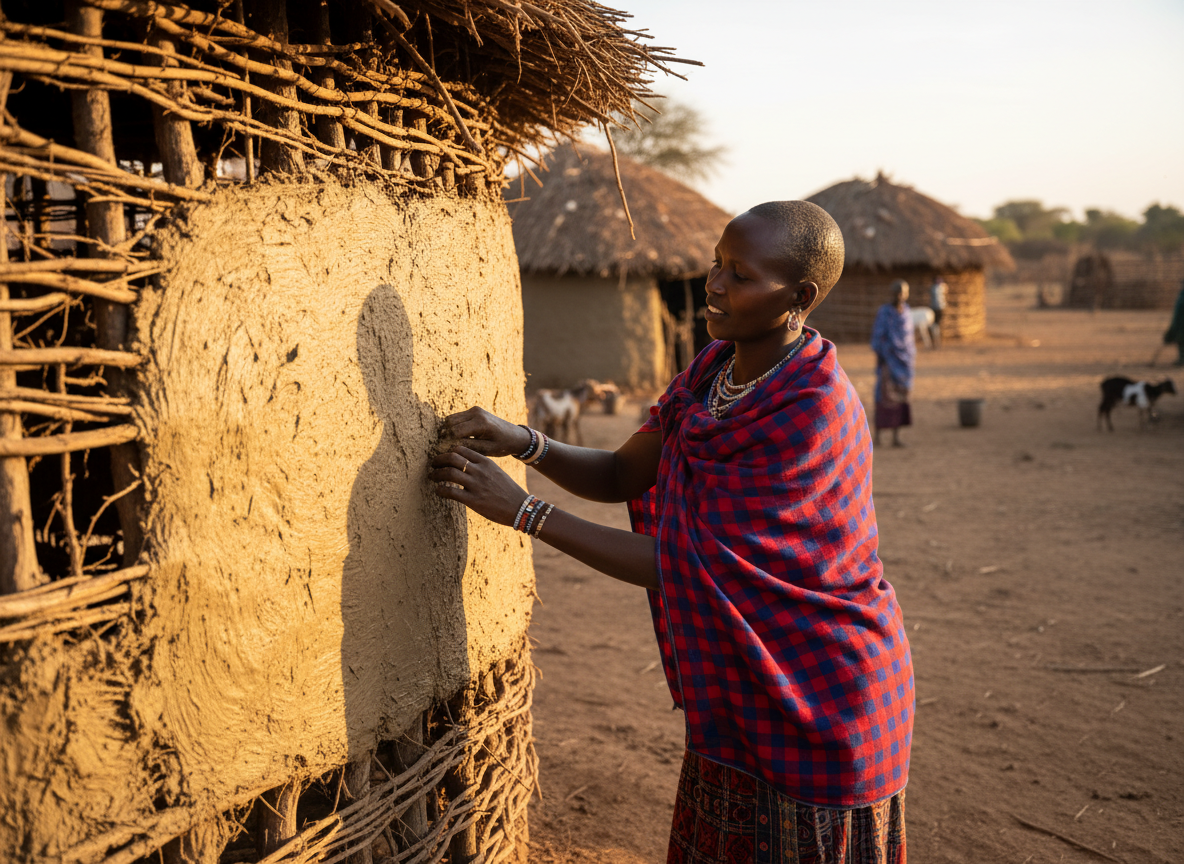
Not metaphorically. Literally. The woman who hands you a calabash of milk, whose elaborate beaded necklaces you are trying not to stare at, whose earrings brush her shoulders — she built this house. From the ground up. With her own hands. And when it is no longer needed, she will build another one.
Maasai women occupy a role in their society that is more complex, more skilled, and more economically central than the images on a postcard suggest. They are builders, craftswomen, mothers, farmers, and — increasingly — entrepreneurs, educators, and advocates. Understanding maasai women requires setting aside the assumption that a traditional culture means a simple one.
The Role of Women in Maasai Society
The role of women in maasai society is deeply practical and deeply symbolic at the same time.
Building and Owning the Home
The most concrete expression of women’s status in Maasai culture is property. Maasai women build the inkajijik : the houses inside the homestead. They construct the wooden frame, plaster the walls with a mixture of mud, cattle dung, ash, and urine, and create the internal layout. The house belongs to the woman who builds it. In a separation, the man leaves; the woman stays in her house.
This is not a symbolic ownership. It is legal within the community’s customary law. A Maasai woman’s house is hers.
Managing the Homestead
Women manage the daily operations of the homestead (enkang). This includes:
- Milking the cattle and goats every morning and evening
- Cooking all meals for the household
- Collecting water from natural sources, often several kilometres away
- Caring for children and elderly family members
- Cultivating small plots of vegetables where water and land allow
- Managing the household’s food supplies and barter economy
The physical demands of this daily labour are significant. Women in many Maasai communities walk 5–15 kilometres a day simply managing household logistics.
Beadwork as Economic Work
Maasai women beadwork is not a hobby. It is a skilled craft with genuine economic value. Women spend hours each day on beadwork :necklaces, earrings, bracelets, and decorative items — both for their own adornment and for sale.
In communities near wildlife tourism corridors, beadwork sales represent a significant household income stream. Trunktrails Safaris village visits are structured so that visitors can buy directly from the women who made the pieces :ensuring that money reaches the artisan rather than a curio shop intermediary.
Maasai Marriage: Structure, Ceremony, and Meaning
Maasai women marriage traditions are among the most discussed aspects of the culture :and among the most often misunderstood.
Arranged Marriage
Traditional Maasai marriages are arranged by families. A girl’s father and the prospective husband’s family negotiate the marriage, which involves a bride price (lobola) paid in cattle, goats, and sometimes honey beer. The bride price is not a “purchase” :it is a formal recognition of the value of the woman leaving one community to join another, and it creates binding obligations between the two families.
Polygamy
Maasai women traditionally marry into polygamous households. A senior man may have multiple wives, each with her own house within the shared homestead (enkang). Co-wives are called enaboyok — and while the relationship can be competitive, it is also frequently a source of support. Women within the same household share childcare, domestic labour, and social companionship.
Age Gap in Marriage
Traditional Maasai marriage involves significant age gaps — girls often marry men who are 15–25 years older. The reasoning within the culture is economic: a man must have accumulated sufficient cattle to pay bride price and establish a homestead before marriage. This typically takes until his 30s or 40s, by which time girls in the community are reaching marriageable age (traditionally at puberty, though legal minimum ages are increasingly enforced in both Kenya and Tanzania).
This practice is one of the most contested aspects of Maasai tradition in contemporary rights discussions.
The Wedding Ceremony
Maasai women marriage ceremonies last several days and involve singing, dancing, feasting, and animal slaughter. The bride is adorned in her most elaborate beadwork — pieces accumulated over her entire childhood, created by her mother, grandmothers, and aunties. She leaves her birth community wearing those pieces — a visual library of every relationship that shaped her.
Maasai Female Circumcision
Maasai female circumcision (female genital mutilation/cutting, or FGM/C) has been a deeply sensitive subject in discussions of maasai women rights. The practice has historically been a rite of passage marking a girl’s transition to womanhood and marriageability.
Both Kenya and Tanzania have passed laws against the practice. Community-led programmes, often driven by Maasai women themselves, have made significant progress in reducing rates in many communities — particularly where alternative coming-of-age ceremonies have been developed that confer the same social transition without the physical procedure.
The change is uneven. Rates vary significantly between communities, between more remote and more accessible areas, and between more traditional and more education-exposed families. The shift is ongoing — and critically, it is increasingly led from within communities rather than being imposed from outside.
Maasai Women and Education
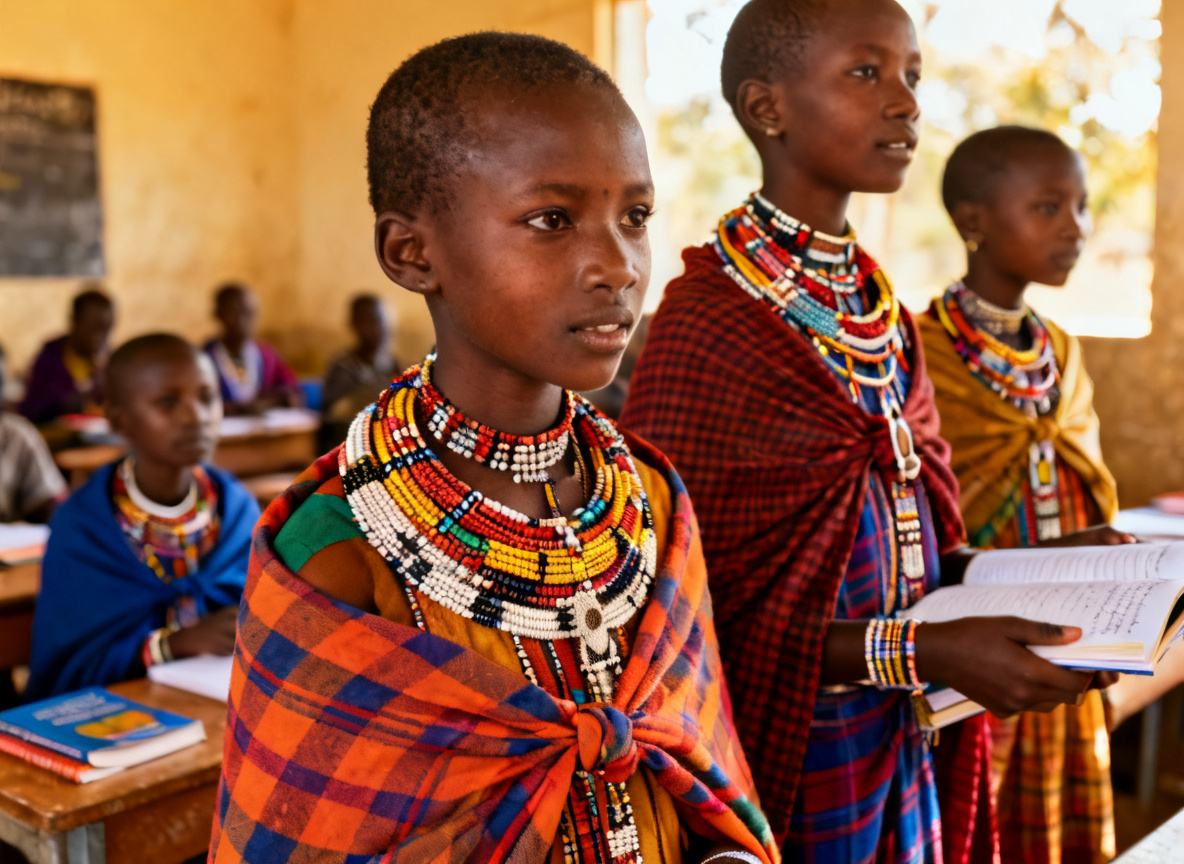
Maasai women education access has improved significantly over the past two decades, but challenges remain.
Historically, girls in Maasai communities were much less likely than boys to complete primary school — early marriage, domestic responsibilities, and cultural norms about girls’ education combined to pull girls out of formal schooling early.
This is changing. Government programmes, NGO-supported scholarships, and shifting community attitudes have substantially increased girls’ secondary school completion rates in many Maasai areas. Several Maasai women have gone on to university education and professional careers.
The connection between maasai women education and reduced FGM rates, delayed marriage age, and increased household income is well-documented. Education is the most effective lever for women’s empowerment in Maasai communities — a fact increasingly recognised within the communities themselves.
Maasai Women’s Empowerment Today
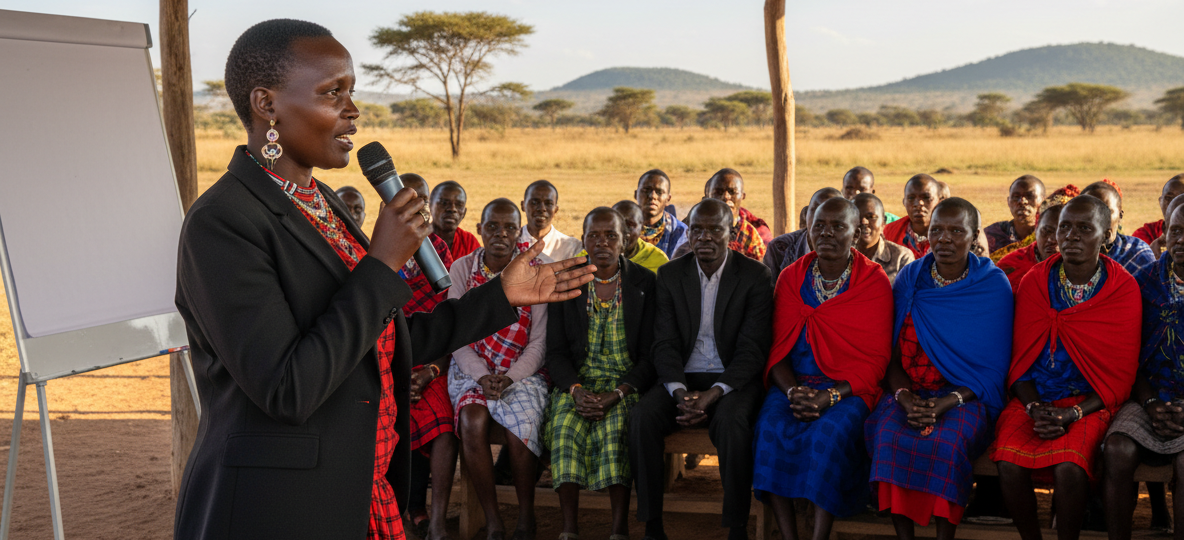
Maasai women empowerment is not simply a development story imposed from outside. It is an internal conversation happening within communities — between women of different generations, between women and men, between those who have stayed and those who have left and returned.
Some significant current developments:
Women-led craft cooperatives: Groups of Maasai women have formed cooperatives to sell beadwork, bypassing middlemen and accessing international fair trade markets directly. The income from these cooperatives has funded children’s education, water projects, and healthcare costs.
Women in community governance: Several Maasai community conservancies now have women’s representatives on their governance boards — a significant shift in a culture with traditionally male-dominated decision-making structures.
Women as wildlife guides and rangers: A small but growing number of Maasai women are entering the safari and conservation workforce as guides, rangers, and hospitality workers. This shift provides income, skills, and visibility that reinforces the broader empowerment trajectory.
Advocacy organisations: Maasai women-led organisations are active in land rights advocacy, fighting the land alienation that displaces communities from ancestral territories and leaves women — who are often not included in formal land title processes — particularly vulnerable.
At Trunktrails Safaris, we actively work with women-led craft enterprises in the communities we visit, and we ensure that the women you meet on our tours and safaris are fairly compensated for their time, knowledge, and craftsmanship. ✨
What Visitors Should Know About Maasai Women
When you visit a Maasai village on tours and safaris through the Mara, keep these things in mind:
- The women you meet are not performers. They are mothers, craftswomen, and community members who have chosen to welcome you into their home. Treat them accordingly.
- Ask before photographing. Many Maasai women enjoy being photographed and will invite it. Others prefer privacy. Always ask — “Suwa?” in Maa.
- Buy the beadwork. It is the highest-impact, most direct way to support Maasai women’s economic independence. Every piece you buy from a village craft sale goes directly to the maker’s household.
- Ask questions. Maasai women are extraordinarily knowledgeable — about cattle, plants, weather patterns, children’s health, and community dynamics. The conversations that happen when visitors ask genuine questions are some of the most memorable of any safari.
The Trunktrails Advantage
Trunktrails Safaris is a native Kenyan-owned safari operator with genuine relationships in Maasai communities where women’s leadership is growing. Our guides provide cultural context that moves beyond stereotypes and helps visitors understand the full, complex reality of maasai women lives — past and present.
Our tours and safaris offer:
- Maasai village experiences where female artisans and community members are front and centre
- Guides who speak Maa and can facilitate genuine conversations
- Direct craft purchasing that goes to women’s household incomes
- 5% of every Trunktrails Safaris booking to wildlife and community conservation
- KATO certified | TRA licensed 🌍
Conclusion
Maasai women are the builders, the craftswomen, the keepers of tradition, and — increasingly — the architects of change. They have held Maasai communities together through cattle plague, colonial displacement, and rapid modernisation. They are doing it now through beadwork cooperatives, school committees, and advocacy organisations.
The woman handing you the calabash has a story that will take the whole day to tell. You only need to ask.
Plan Your Cultural Kenya Safari
Experience Maasai culture — and meet the women who shape it — on a safari with Trunktrails Safaris.
📞 WhatsApp: +254 113 208888
📧 Email: info@trunktrailssafaris.com
🌍 Website: https://trunktrailssafaris.com
✅ KATO Member | TRA Licensed