
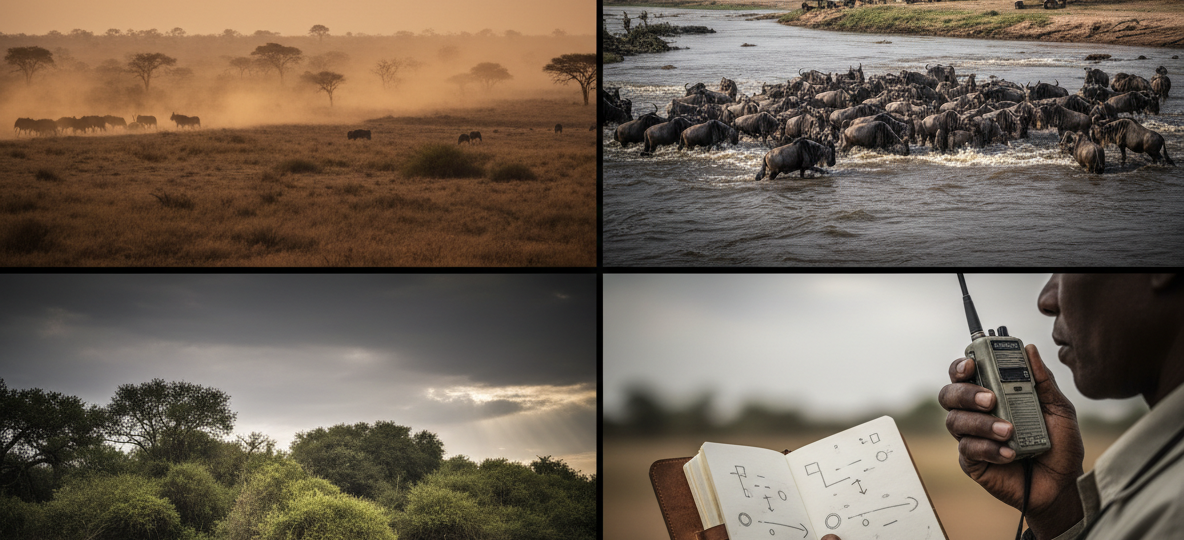
Wildebeest Migration Tracker Kenya: How to Read Live Updates
Everyone wants to know where the herds are today.
A wildebeest migration tracker Kenya search usually comes from someone planning dates, checking whether the herds have entered the Mara, or hoping to time a last-minute safari. Live updates are useful, but they can also mislead if you read them as a guarantee.
This guide explains how migration trackers work, what they can tell you, what they cannot promise, and how Trunktrails Safaris combines online updates with guide-verified ground information for migration tours and safaris.
What Is a Migration Tracker?
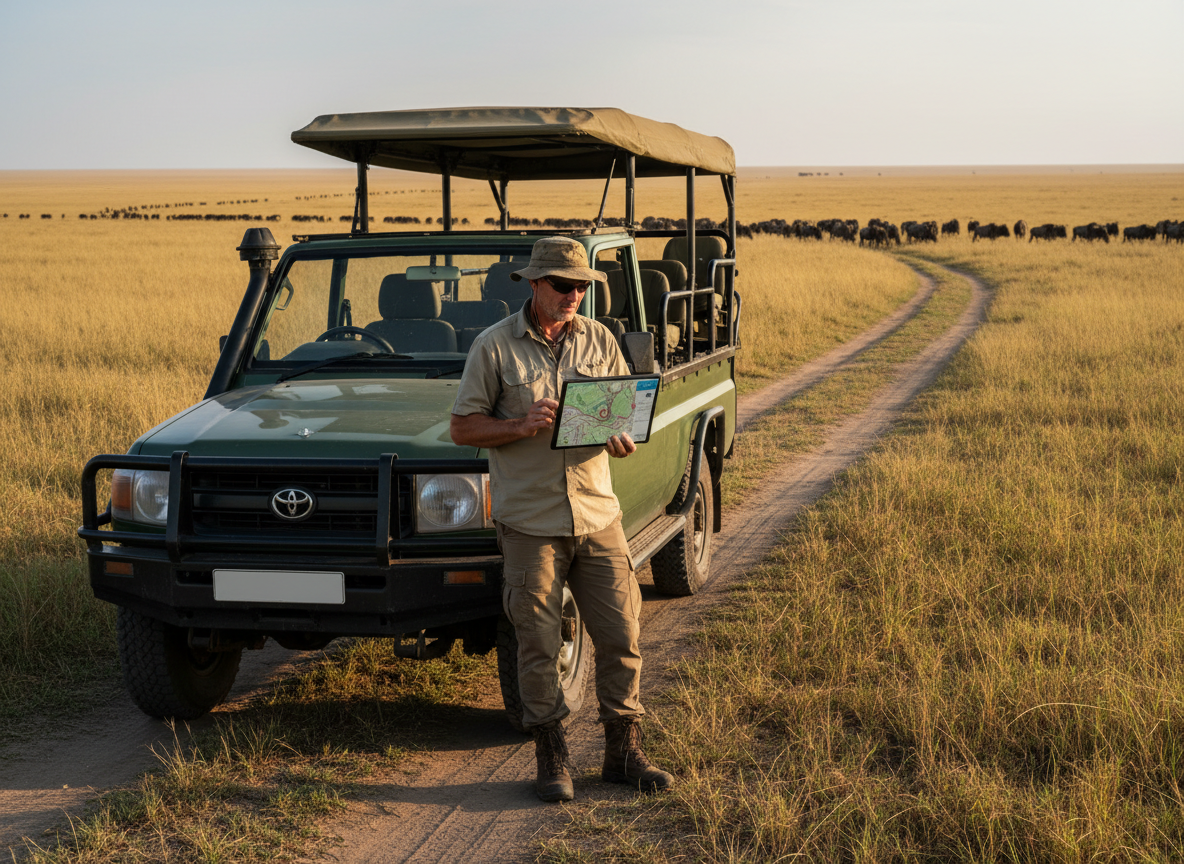
A migration tracker is any source that reports recent herd movement across the Serengeti-Mara ecosystem. It may use guide reports, lodge updates, photos, maps, social media, guest sightings or conservation partner information.
Common tracker-style signals include:
- Herds seen near the Sand River
- Crossings reported at the Mara River
- Large columns moving toward the northern Serengeti
- Animals gathering near the Mara Triangle
- Late-season movement back south
The phrase wildebeest migration live Kenya sounds exact, but the migration is not a dot on a delivery app. Herds spread across huge areas. Different groups move at different speeds.
Why Trackers Are Helpful
A good migration tracker Kenya resource helps with broad planning.
It can tell you:
- Whether the herds are generally in Tanzania or Kenya
- Whether river crossings have started
- Which zones are active this week
- Whether movement is early or late
- Whether recent rain has shifted the pattern
This helps travellers choose between July, August, September and October. It also helps booked guests understand what to expect before arrival.
What Trackers Cannot Guarantee
Trackers cannot promise:
- A crossing on your safari dates
- A specific river point
- A specific time of day
- That all herds are in one place
- That yesterday’s sighting will repeat today
- That your camp has easy access to the reported location
The current migration location Kenya may be accurate in a general sense, but not precise enough for daily vehicle strategy. The Mara is large, roads vary, rules differ by reserve and conservancy, and animals can shift overnight.
How Guides Verify Herd Movement
Experienced guides do not depend only on online posts. They combine:
- Morning field reports
- Radio updates
- Camp-to-camp communication
- Fresh tracks and dust lines
- Predator movement
- Weather patterns
- Herd behaviour near riverbanks
Trunktrails Safaris uses guide reports and conservancy partner information to interpret wildebeest migration update signals. If a tracker says “herds near the river,” we ask which bank, which crossing zone, which access road, and whether animals are moving or resting.
That is the difference between information and usable safari planning.
Where Are the Wildebeest Now?
The answer changes daily. During a normal cycle:
| Period | Broad Herd Area |
| January-March | Southern Serengeti and Ndutu calving areas |
| April-May | Central and western Serengeti movement |
| June | Western and northern Serengeti build-up |
| July-October | Northern Serengeti and Masai Mara |
| November-December | Movement back south after short rains |
If you ask where are the wildebeest now in July or August, the answer may still be “some in Tanzania, some in Kenya.” The migration is not one herd. It is many moving columns.
How to Use a Tracker Before Booking
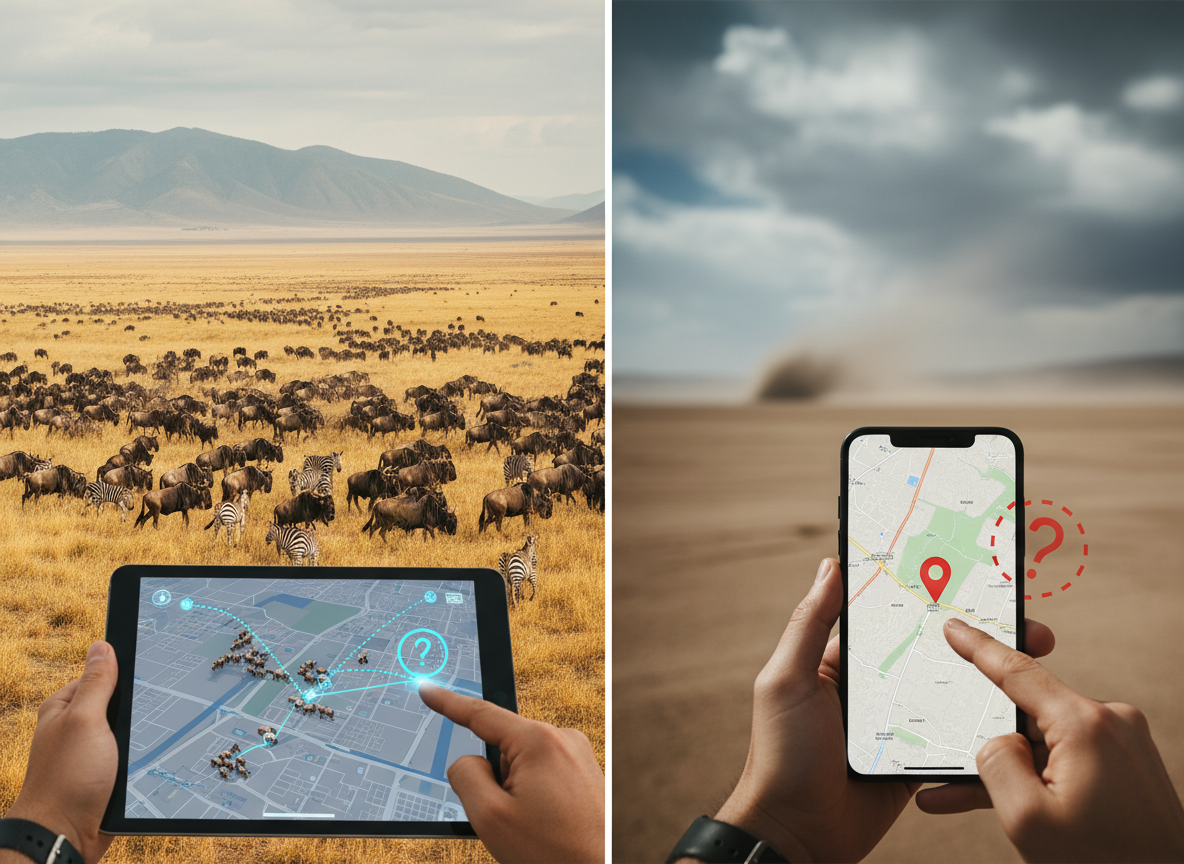
Use trackers for timing, not panic.
Before booking:
- Compare current movement to normal seasonal timing
- Check whether crossings have begun in Kenya
- Ask an operator how your dates match the latest reports
- Avoid changing plans based on one social media post
- Book enough nights to allow movement variation
A great migration tracker is helpful when paired with expert interpretation. Alone, it can make travellers overreact.
How Trunktrails Safaris Uses Tracker Data
For booked guests, Trunktrails Safaris checks movement in the weeks before travel. We look at whether herds are early, late, concentrated or widely spread.
Then we use that information to shape:
- Departure times
- River crossing focus
- Camp-to-crossing drive strategy
- Packed breakfast or lunch decisions
- Whether to prioritise reserve or conservancy zones
- Photographer positioning
Our Kenya migration tours and safaris are not static. If field conditions shift, the plan shifts.
Should You Book Last Minute Based on a Tracker?
Sometimes. If you are flexible, already in Kenya, and good camps have space, a strong live update can make a last-minute trip worthwhile.
But last-minute booking during August can be difficult. The herds may be active, but the best camps and vehicles may already be full.
Best approach:
- Use tracker updates to confirm season strength
- Let Trunktrails Safaris check camp space
- Prioritise access over famous camp names
- Stay at least 3 nights
- Accept that a late booking may cost more
How Often Should You Check Updates?
Before booking, weekly checks are enough. The migration does not need daily tracking months before you travel. Once your safari is within two or three weeks, more frequent updates become useful because they help your guide and operator read the season.
During the safari, guests should let the guide manage the information flow. Too many social media posts can create confusion. One camp may report herds near a crossing point while another section of the Mara is quiet. Both can be true.
The best pattern is simple: use public updates for broad awareness, then trust your guide for daily decisions. Trunktrails Safaris filters information so guests are not distracted by every rumour.
What to Add to a Live Blog Update
If the website team updates this page during migration season, keep each update short and dated. A useful update should say where movement is broadly active, what kind of sightings are being reported, and what type of traveller should act now.
Example update structure:
- Date of update
- General herd area
- Recent crossing activity
- Best travel window
- Camp availability note
- CTA to request a current quote
This turns a simple tracker page into a lead-generation page for migration tours and safaris.
Create a Live-Update Page in WordPress
This blog can become a useful SEO page if updated weekly during July-October. Add a short dated section at the top:
Migration Update: [Date]
Then include:
- Broad herd location
- Recent crossing reports
- Best current zones
- Booking advice
- Link to migration safari package page
This keeps the page fresh for mara migration update searches and gives visitors a reason to contact the team.
Ask for a Current Migration Update
Want to know if your travel dates match current herd movement? Message Trunktrails Safaris and ask for the latest migration update before booking.
WhatsApp: +254 113 208888
Email: info@trunktrailssafaris.com
Website: https://trunktrailssafaris.com
KATO Member | TRA Licensed