
Amboseli Road Conditions Guide
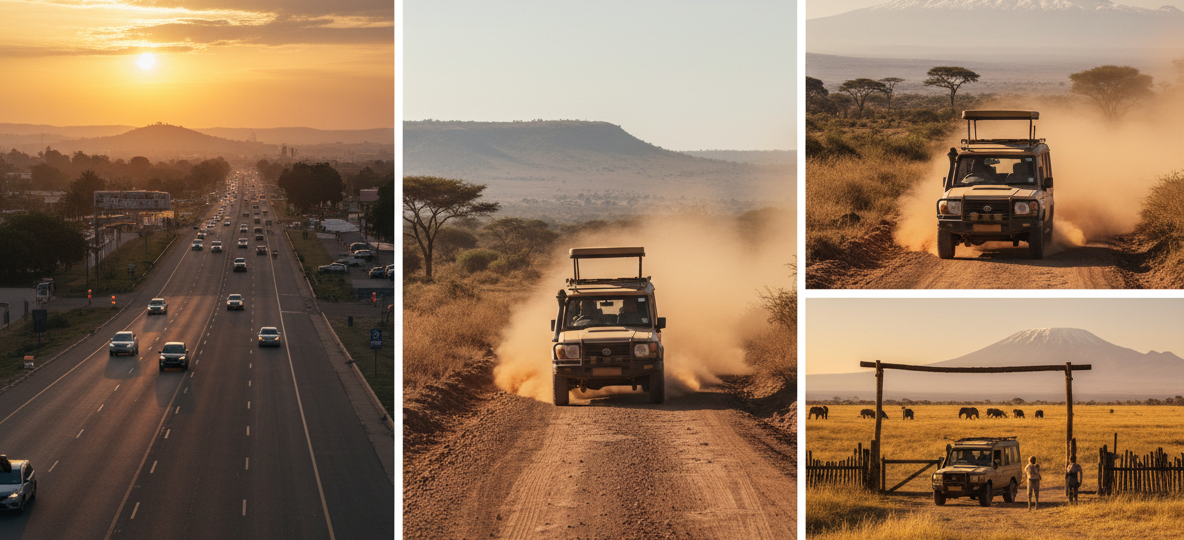
An Amboseli road conditions guide matters because many travellers hear that the park is easy to reach from Nairobi and stop there. That is only partly true. The route is generally straightforward, but the driving experience changes once you move from the main paved highway onto the final approach roads and gate access sections.
Amboseli.org’s transport guidance says the main drive from Nairobi is mostly paved, especially via the Emali route, while the final sections near the gates can be rough and dusty, especially after rain. The planning pages also advise guests to avoid driving at night and note that a 4×4 is recommended, particularly in rainy periods. Those are the core facts travellers should build around.
At Trunktrails Safaris, we treat Amboseli road access as manageable, but never something to underestimate.
The Short Answer
The Nairobi to Amboseli road is usually:
- mostly tarmac on the main route
- slower and rougher near the final gate sections
- dustier in the dry season
- more unpredictable in rainy months
That means road access is generally practical, but your vehicle choice and departure timing still matter.
Main Route from Nairobi
The common road route is:
- Nairobi
- Emali
- Loitokitok or Kimana side approach
- Amboseli gate access
Amboseli.org places the drive at roughly 4 to 5 hours, with longer timing if traffic, stops, or weather slow you down.
This is why many road-based tours and safaris into Amboseli are very workable for short itineraries. The distance is not extreme. The issue is usually condition and timing, not raw mileage.
What the Paved Sections Are Like
The main highway legs are usually the easiest part of the trip. That is where travellers often feel overconfident because the first part of the drive can seem simpler than expected.
The paved sections are still not “fast road” in the way some visitors assume. You still need to account for:
- traffic leaving Nairobi
- slower vehicles
- speed bumps
- local settlements and livestock
Even the easier road sections need patience.
What Changes Near the Park
The final approach roads near Amboseli matter most because this is where the drive stops feeling ordinary and starts feeling safari-specific.
Here you are more likely to encounter:
- dust
- washboard sections
- rough patches
- slower gate approach
- muddier surfaces after rain
That is why a traveller can fairly say “the road is mostly good” and still be unprepared for the last part.
Dry-Season Road Conditions
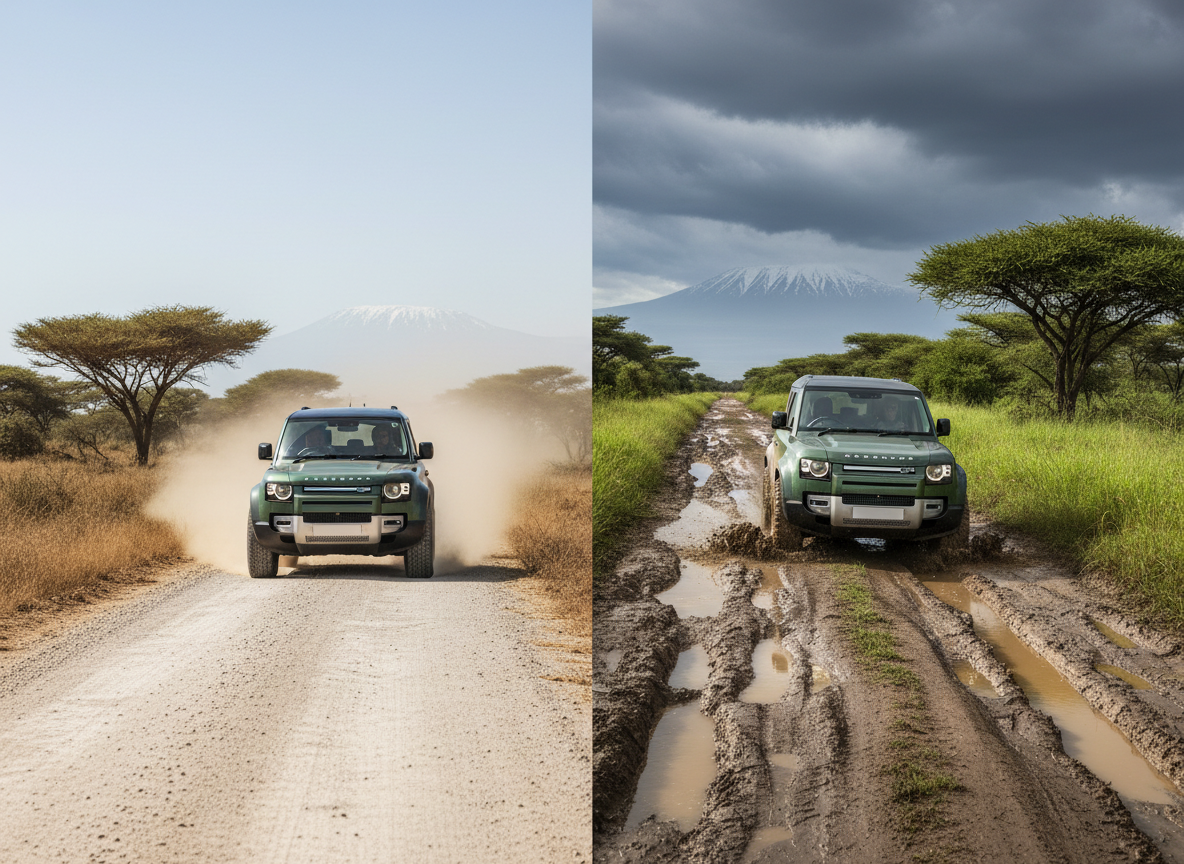
In the dry months, roads are usually easier from a traction standpoint. The trade-off is dust.
Expect:
- better general passability
- less mud risk
- easier timing
- dusty final sections
For many travellers, this is the easiest season for road tours and safaris. It also aligns with the months that are strongest for first-time guests and photography.
Rainy-Season Road Conditions
Rain changes the road conversation quickly.
The same Amboseli planning sources warn that some roads become rougher or more difficult in wetter periods. That means:
- muddy approach stretches
- slower gate access
- more need for 4×4
- greater risk of underestimating the drive time
Road travel is still possible in many cases, but wet-season driving is less forgiving. This is where guided tours and safaris or stronger vehicles become much more useful.
Is a 4×4 Necessary:
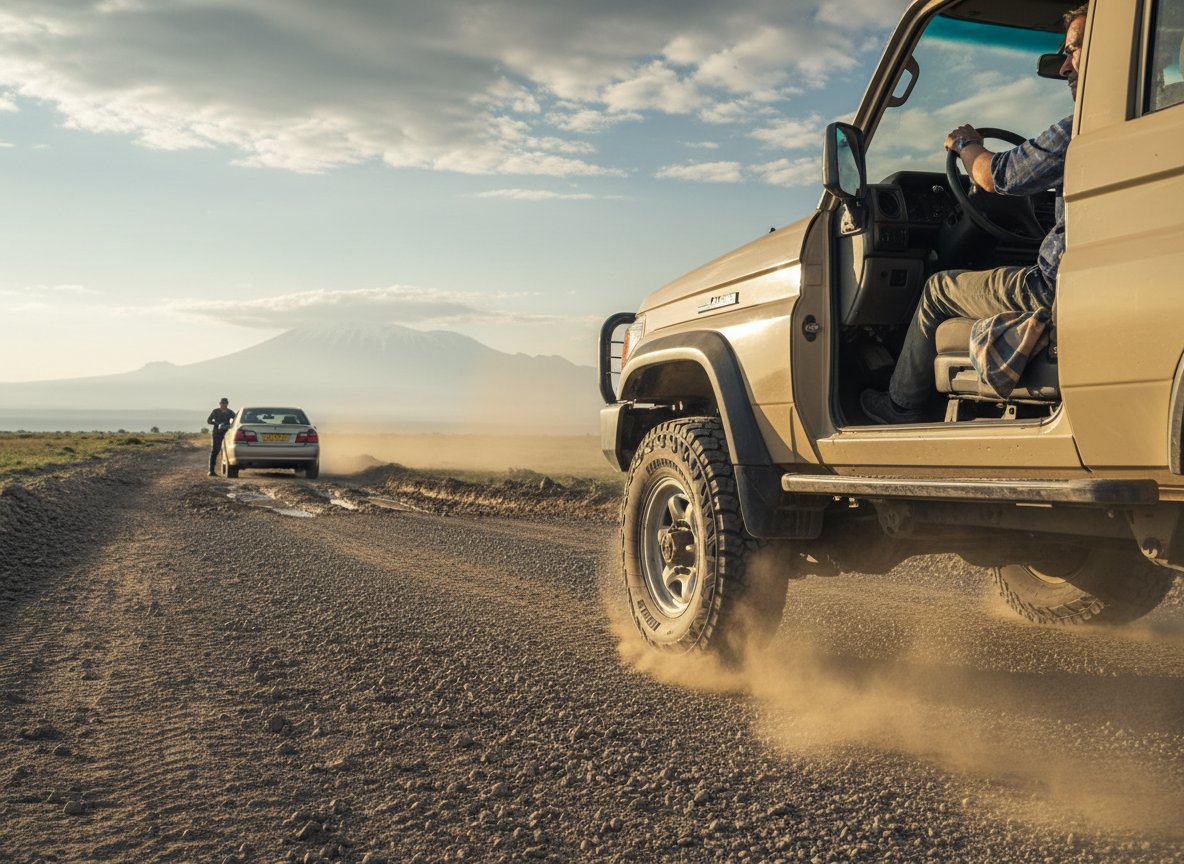
The answer depends on season, but the safe practical answer is yes if conditions are uncertain.
Amboseli.org specifically recommends a 4×4 for rainy season and self-drive use, especially when dealing with rougher or more remote sections. Even when a standard vehicle can physically make parts of the trip in dry weather, a 4×4 gives:
- more confidence
- better ride quality
- more margin for error
That matters if you are not deeply experienced in East African road conditions.
Daylight Timing Matters
One of the most useful planning tips in the current sources is to avoid driving at night and to aim for arrival before dark.
That is important because late arrival raises risks around:
- rough final approach sections
- missing gate timing
- reduced visibility for livestock and road hazards
- fatigued driving
For Trunktrails Safaris, this is standard logic on all road-based tours and safaris into Amboseli.
Road Conditions for Self-Drive Travellers
If you are self-driving, you need to think beyond “Can I get there: ”
You also need to consider:
- tyre condition
- fuel planning
- offline maps
- water and recovery basics
- your own tolerance for rough surfaces
Amboseli.org explicitly advises carrying extra water, fuel, and tyre-repair support for self-drive. That is a sign that the park is accessible, but not casual.
Road Conditions for Guided Safaris
Guided road safaris reduce most of the practical burden because the operator is already handling:
- route choice
- departure time
- driver familiarity
- reaction to seasonal variation
This is one reason guided tours and safaris often feel easier than the distance alone would suggest. The challenge has been absorbed by the operator.
Which Gate Approach Feels Easiest:
The easiest gate depends on where you are coming from and where you are staying. Current access guidance highlights:
- Kimana Gate for the common Nairobi route
- Meshanani Gate for Namanga or Magadi side access
- Airstrip Gate for fly-in arrivals
There is no single “best” road in isolation. The right road is the one matched to your lodge and route.
Should Families Worry About the Drive:
Families do not need to fear road access, but they should plan it properly.
That means:
- early departure
- realistic stop planning
- comfortable vehicle choice
- not pushing too hard after dark
Families on road tours and safaris usually handle Amboseli well when the vehicle and timing are right.
Fuel, Stops, and Realistic Buffer Time
One of the easiest mistakes on a road safari is acting as if the drive time is fixed. It is not. The current access guidance recommends fuelling in places such as Emali or Sultan Hamud because fuel options become more limited nearer Amboseli.
That means a sensible road plan should include:
- a full tank strategy
- one practical rest stop
- extra time for traffic leaving Nairobi
- enough margin to avoid rushing the gate approach
This is why Trunktrails Safaris builds road tours and safaris with buffer time instead of assuming the cleanest map estimate will hold on the day.
Final Decision Rule
Use this Amboseli road conditions guide in a simple way:
- expect good main-road access
- expect rougher final sections
- use a better vehicle if the season is uncertain
- leave early and avoid night driving
If you do those four things, the road to Amboseli is usually very manageable.
Ready to Plan Your Kenya Safari: Talk to Trunktrails Safaris
Trunktrails Safaris plans road tours and safaris into Amboseli around actual route conditions, not generic map timing. If you want clear advice on whether your travel month suits a road trip, we can guide you before you book.
WhatsApp: +254 113 208888
Email: info@trunktrailssafaris.com
Website: https://trunktrailssafaris.com
KATO Member | TRA Licensed