Amboseli Safari Packing List
An Amboseli safari packing list should be practical, not oversized. The park’s semi-arid conditions mean hot afternoons, cool early mornings, dust, strong sun, and occasional rain depending on season. That combination shapes what actually works in the field.
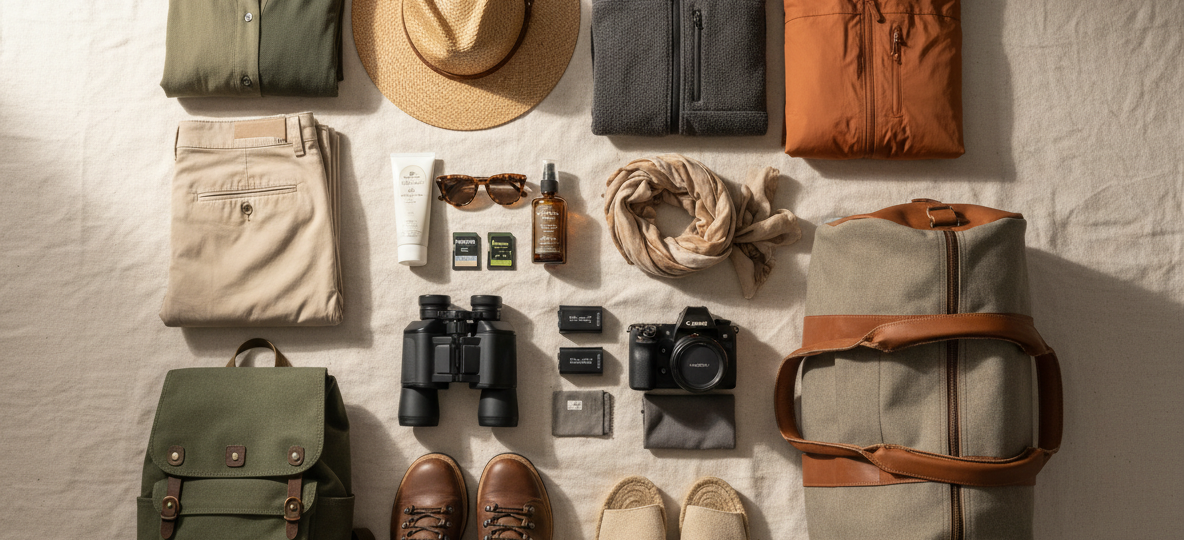
Amboseli.org’s current packing guide recommends breathable long sleeves, neutral colours, a warm outer layer for early drives, rain protection in wetter months, sturdy shoes, binoculars, camera gear, sunscreen, insect repellent, and soft luggage for road or fly-in safaris. That source also highlights a simple but important detail: Amboseli travellers should prepare for both heat and chill on the same trip day.
At Trunktrails Safaris, we use one rule for tours and safaris into Amboseli: pack for layers, dust, and light changes, not for fashion variety.
The Short Answer
Your Amboseli safari packing list should include:
- lightweight neutral clothing
- one warm layer for morning drives
- light rain protection in wet months
- hat and sunglasses
- sturdy walking shoes
- binoculars and camera gear
- insect repellent and sunscreen
- travel documents and medication
- soft-sided luggage if flying
If you cover those categories well, most Amboseli trips run smoothly.
Clothing Basics
The core clothing pieces are straightforward:
- 2 to 3 lightweight long-sleeved shirts
- 2 to 3 safari trousers or practical travel pants
- 2 to 3 short-sleeved shirts
- socks and underlayers for the full stay
- one warm fleece, hoodie, or light jacket
Neutral colours such as beige, khaki, olive, and grey work best. They stay practical on dusty drives and fit the safari environment better than bright colours.
Footwear
You do not need heavy expedition boots for a standard Amboseli safari.
What usually works best:
- one pair of comfortable closed shoes for travel and game drives
- one casual camp shoe or sandal
If your trip includes conservancy walks or more active ground time, stronger walking shoes help. For standard park tours and safaris, comfort matters more than technical weight.
Outer Layers Matter More Than People Expect
Amboseli days can start cool even when afternoons turn warm.
Bring:
- one fleece or warm mid-layer
- one light windproof or waterproof jacket
This becomes especially important in June to October mornings and on open vehicle drives. A traveller who packed only for daytime heat usually feels the mistake early.
Sun, Dust, and Dry-Air Essentials
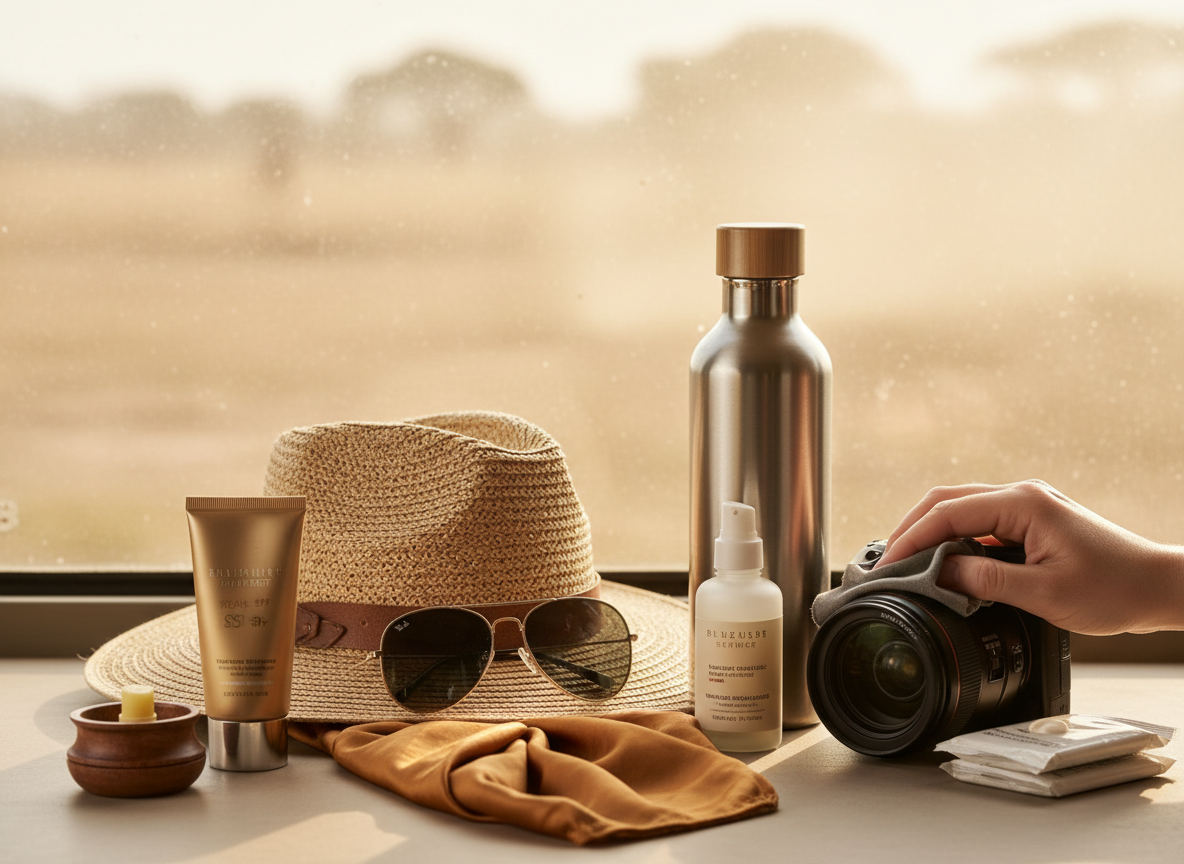
Amboseli’s light and dust conditions shape the next part of the list.
Carry:
- sunhat or wide-brim hat
- sunglasses
- sunscreen
- lip balm
- moisturizer
- buff or light scarf if you dislike dust
These items matter more than people think, especially in the dry season when long drives across dusty plains can leave you uncomfortable by mid-morning.
Insect and Health Basics
The packing guidance from Amboseli.org also points travellers toward basic personal-care protection.
Useful items include:
- insect repellent
- prescription medication
- pain relief tablets
- antihistamines if dust affects you
- rehydration salts or stomach support basics
- hand sanitizer and wipes
For tours and safaris, Trunktrails Safaris also recommends carrying any important medication in hand luggage rather than checked baggage.
Camera and Wildlife Gear
An Amboseli packing list is incomplete without wildlife-viewing equipment.
The practical kit is:
- binoculars
- camera body or phone with strong zoom support
- spare batteries
- spare memory cards
- power bank
- lens cloth for dust
Amboseli is one of the parks where a little camera preparation goes a long way because the open habitat, elephant herds, and mountain backdrop can make guests shoot far more images than they expected.
Daypack Setup
For daily game drives, keep a small daypack with:
- water bottle
- sunscreen
- hat
- camera or phone
- binoculars
- jacket
- wipes
- travel documents copy if needed
That keeps your main luggage clean while letting you adapt quickly as the day changes.
Rainy-Season Extras
If you are travelling in March to May or November to December, add:
- lightweight rain jacket or poncho
- waterproof bag cover or dry bag
- quick-dry clothing
- zip bags for electronics
- backup shoes or sandals
The point is not to prepare for constant rain. It is to stay functional during short downpours and muddy stretches.
Dry-Season Extras
If you are visiting in June to October or in the hotter January to February window, add:
- extra lip balm
- extra dust protection
- an additional light layer for dawn drives
- lens cleaning materials
Dry-season Amboseli often rewards good preparation because the best wildlife and Kilimanjaro moments happen early, when the air can feel cooler than guests expect.
Packing for Budget vs Lodge Safari
Your packing changes slightly depending on trip style.
For budget trips, carry a few more self-managed basics:
- extra water
- extra charging support
- a torch or headlamp
- simple snacks if your operator allows
For mid-range or lodge stays, you can usually rely more on property services, but the core field gear remains the same.
That is why tours and safaris into Amboseli do not require dramatically different suitcases across price bands. The difference is usually in convenience, not in the basic packing logic.
Packing for Fly-In Amboseli Safaris
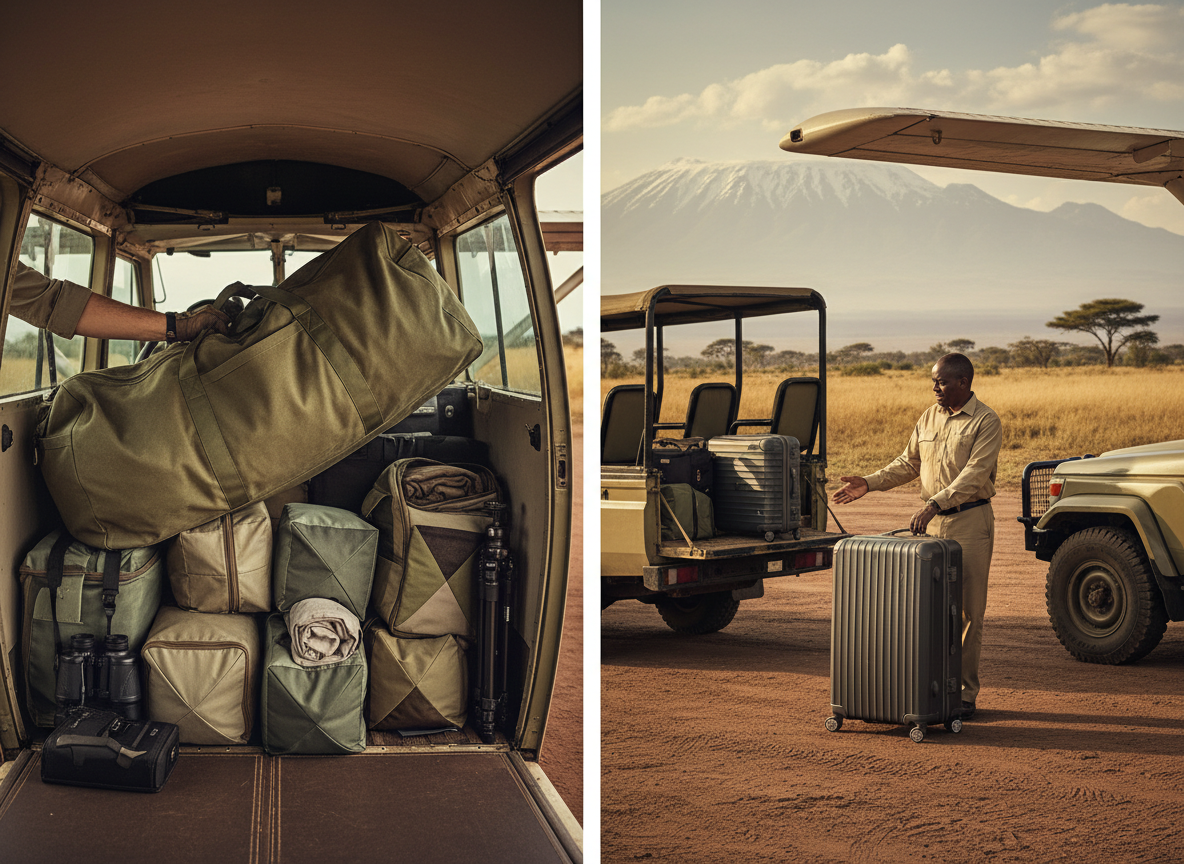
If your trip uses a light aircraft, soft luggage matters.
Amboseli.org’s planning guidance notes that soft-sided bags are often the better option for road or fly-in travel. Hard suitcases are awkward in small aircraft holds and safari vehicle loading spaces.
For fly-in travel, pack:
- a soft duffel
- minimal rigid gear
- compact camera setup if possible
- the essentials in a way that can be moved quickly
This is one of the easiest planning wins for Trunktrails Safaris guests because it avoids preventable transfer friction.
Documents and Money
Do not bury these items.
Keep easy access to:
- passport
- Kenya entry documentation as required
- travel insurance details
- payment card and some local cash
- lodge or operator confirmation details
For tours and safaris, document readiness matters just as much as clothing readiness.
What Not to Pack
Avoid:
- bright white outfits
- heavy fashion luggage
- too many shoes
- excess formalwear
- more electronics than you can realistically manage
The cleanest Amboseli packing strategy is compact and functional.
Packing for Families
For family tours and safaris, the smartest adjustment is not packing more of everything. It is packing faster-use versions of the basics.
That means:
- easy spare layers for children
- backup socks
- simple snacks if your operator allows them
- wipes and basic comfort items for long drive hours
Families usually do better with clothing systems that are easy to switch at dawn and after dusty afternoon returns than with oversized bags full of low-use extras.
Packing for Short 2-Night Trips
Short Amboseli trips tempt travellers to underpack. That is usually a mistake.
Even on a 2-night safari, you still need:
- one warm layer
- one light weatherproof layer
- proper shoes
- sun protection
- camera and charging basics
The bag can stay small, but the field logic should still be complete.
Final Decision Rule
Build your Amboseli safari packing list around five conditions:
- heat
- cool dawns
- dust
- possible rain
- frequent camera use
If your bag solves those five things, you are in good shape for the park.
Ready to Plan Your Kenya Safari: Talk to Trunktrails Safaris
Trunktrails Safaris designs tours and safaris that match each guest’s route, season, and travel style. If you want help turning a generic packing list into an Amboseli-specific one for your dates, we can guide you before departure.
WhatsApp: +254 113 208888
Email: info@trunktrailssafaris.com
Website: https://trunktrailssafaris.com
KATO Member | TRA Licensed