
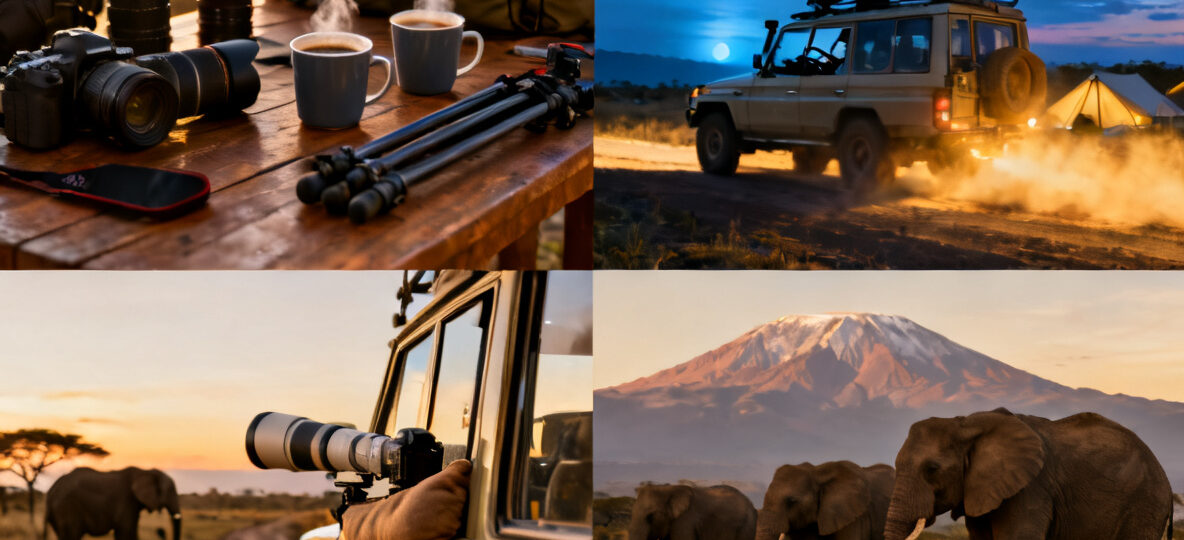
Best Month for Elephant Photography in Amboseli
Best month for elephant photography in Amboseli depends on what kind of elephant image you want. Some photographers want the driest, clearest version of Amboseli: open ground, predictable movement, and better mountain chances. Others want greener backgrounds, calves, softer light, and more atmosphere. The best month changes with the brief.
Amboseli.org’s season guide identifies June to October as the best overall dry-season period for wildlife visibility and photography, noting clearer Kilimanjaro mornings and concentrated wildlife around swamps. The same source describes January to March as particularly good for photographers who want greener backdrops and softer scenery, and points to November to April as especially strong for birding and greener-season interest.
So the real answer is not one month for everyone. It is one month for each photography style.
The Short Answer
If you want the most classic elephant photography, start with:
- July
- August
- September
If you want greener elephant photography with softer mood, look hard at:
- January
- February
If you want balance and value:
- June
- October
That is the fastest way to understand the calendar.
Why July and August Are So Popular
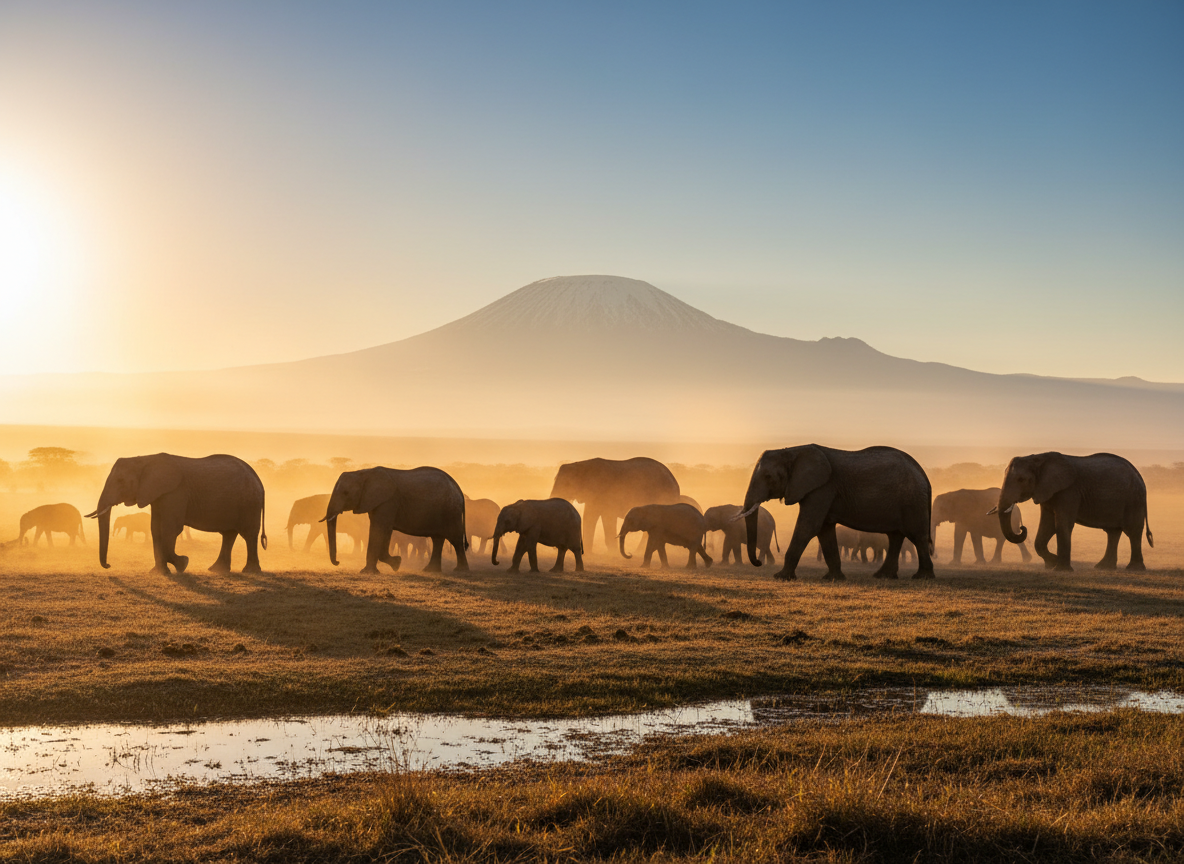
These months are strong because they combine:
- dry-season visibility
- easier road access
- more predictable elephant concentration near swamps
- clearer mountain chances in the early morning
Photographically, that means:
- cleaner compositions
- easier subject separation
- strong dust and low-angle light
- a higher chance of that classic elephant-and-Kilimanjaro look
This is why Trunktrails Safaris often recommends July or August to photographers who want the safest iconic answer.
Why September Is Still Excellent
September often keeps the same strong dry-season structure with a slightly calmer feel.
Why photographers like it:
- wildlife remains easy to read
- elephant viewing is still very strong
- the park can feel slightly less pressured than the loudest peak-season perception
For many photographers, September is one of the smartest months because it still behaves like a top-tier photo month without always feeling like the most obvious choice.
Why January and February Appeal to a Different Photographer
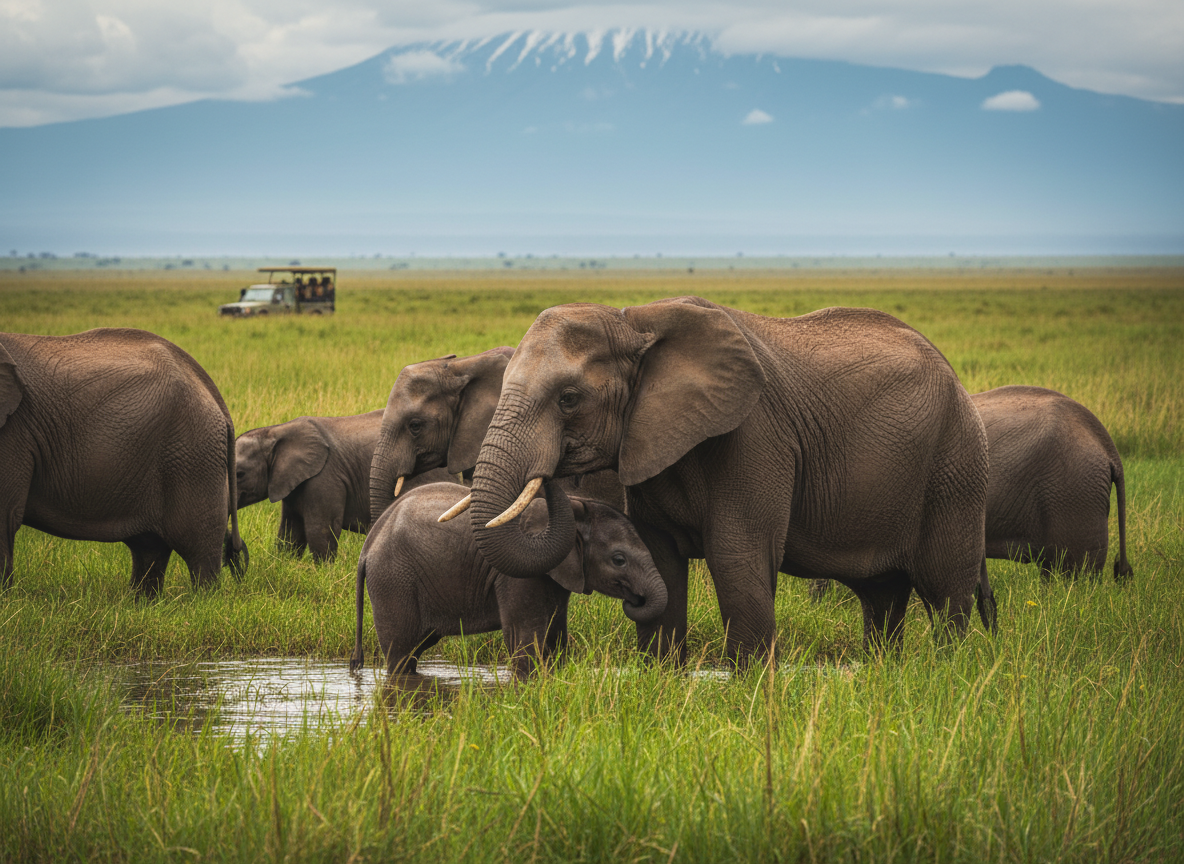
These months can be excellent if the goal is:
- greener backgrounds
- a fresher look
- softer atmosphere
- meaningful elephant family scenes in more vibrant surroundings
January and February are often better for photographers who want elegance and richness rather than maximum dry-season starkness.
That can mean:
- fewer dusty minimalist frames
- more color and life around the elephants
- slightly less predictable mountain clarity than the stronger dry-season months
June: The Practical Photo Month
June is a very good answer for photographers who want dry-season logic without the strongest peak-season pressure.
Why:
- the dry season is beginning to take shape
- elephant movement becomes easier to interpret
- the month can still feel slightly better on value than July or August
This is why Trunktrails Safaris often likes June for practical photographers who care as much about the whole trip design as the single most famous month.
October: Still Good, Slightly More Transitional
October can still be rewarding for elephant photography because:
- the park often remains dry-season readable
- large herds continue to use wetland zones
- the light can still be excellent
It is slightly more transitional than July or August, but that does not make it weak. It simply means the photo outcome depends a bit more on the exact feel of the season.
What About November to March
These months are often better if the photographer wants:
- greener scenery
- more mood
- calves and softer family scenes
- birdlife and broader ecological richness
They are often less reliable if the entire goal is:
- maximum mountain certainty
- driest-looking classic Amboseli
That is the tradeoff. You gain atmosphere and freshness, but you may give up some clean predictability.
Best Month for Elephant Calves and Family Mood
If the photographer cares about:
- young animals
- softer family scenes
- gentler visual energy
then the greener parts of the calendar become more attractive.
That is one reason January through March can be excellent for photographers who are not chasing only the dramatic dry-season postcard.
Best Month for Elephant Silhouettes and Dust
If the photographer wants:
- silhouettes
- golden haze
- dust texture
- dry-season cinematic feel
then the drier months tend to win, especially:
- July
- August
- September
These months often give the strongest version of the “classic Amboseli” look.
Best Month for Elephant Plus Kilimanjaro
If the shot must include a strong chance of mountain visibility, the best answer usually remains:
- June to October, with particular confidence in July to September
This matters because the mountain is still weather-dependent. Even in a strong month, photographers benefit from repeated dawns and a realistic trip length.
Best Itinerary for Elephant Photography
For most photographers, the strongest setup is:
- at least 2 nights
- ideally 3 nights
- early-morning game drives
- a stay with efficient access to key elephant areas
This matters more than trying to over-optimize a single month in isolation.
The park rewards repeated dawn attempts more than a rigid obsession with one date.
How Trip Length Changes the “Best Month” Question
This matters more than many photographers expect.
If the trip is only two nights, the safest months become more important because there is less room for weather variation.
If the trip is three nights or more, greener or more transitional months become easier to defend because:
- there are more dawns
- there is more room for one soft-weather session
- the photographer can pursue more than one style of image
That is why Trunktrails Safaris often matches month and stay length together rather than discussing timing in isolation.
Best Month for First-Time Wildlife Photographers
For a first Amboseli photo safari, the safest answer usually remains:
- July
- August
- September
These months reduce complexity and make it easier for the photographer to come home with a recognizably strong Amboseli portfolio.
So What Is the Best Month
If you want the most iconic, easiest answer:
- August
If you want the smartest practical answer:
- September or June
If you want the greener, softer answer:
- January or February
That is the clearest honest summary.
Quick Comparison: Best Month for Elephant Photography in Amboseli
| Photo Goal | Best Months |
| Classic dry-season elephant photos | July to September |
| Elephant plus Kilimanjaro | June to October |
| Greener backgrounds and softer mood | January to March |
| Best value-photography balance | June and September |
| Dust, silhouettes, and dry-season atmosphere | July to September |
The Trunktrails View
At Trunktrails Safaris, we usually start photographers with this question:
- do you want the classic Amboseli image-
- or do you want the richer, greener version of elephant photography-
That one answer usually decides the month much faster than a long season debate.
Final Decision Rule
Choose July to September for the most iconic elephant photography.
Choose January to February for greener, softer elephant imagery.
Choose June if you want one of the best practical compromises on the whole calendar.
Ready to Plan Your Kenya Safari- Talk to Trunktrails Safaris
Trunktrails Safaris designs tailor-made tours and safaris for every traveller and every budget. If you are planning an elephant photography safari in Amboseli, we can match the right month, lodge, and game-drive structure to the kind of elephant images you want to come home with.
WhatsApp: +254 113 208888
Email: info@trunktrailssafaris.com
Website: https://trunktrailssafaris.com
KATO Member | TRA Licensed