
The best time to visit Amboseli for elephants depends on what kind of elephant experience you want. If your priority is the easiest viewing, the answer leans dry season. If your priority is softer scenery, calves, and greener photography, the answer becomes more nuanced. Amboseli is one of Africa's great elephant landscapes. The long-running Amboseli elephant research tradition began in 1972, and the wider ecosystem remains one of the most important elephant strongholds in East Africa. Kenya Wildlife Service also describes Amboseli as a park defined by permanent swamps and wetland habitats, which is exactly why elephants remain such a dependable feature here through the year. The question is not whether you will see elephants. The question is when they are easiest to read, easiest to photograph, and most aligned to the trip you want. Best Overall Time: June to October If you want the simplest answer, the best time to visit Amboseli for elephants is usually June to October. Why this period leads: dry conditions make wildlife easier to spot elephants gather more predictably around swamps and water roads are more reliable Kilimanjaro visibility is often strongest in the early mornings The Amboseli seasonal guidance available online consistently points to June to October as the strongest overall safari period. It is especially good for elephant lovers because the park's dry-season structure channels wildlife into more readable patterns. January to February: Strong Alternative for Elephants January and February are also excellent. Why: they are part of the short dry-season rhythm visibility remains strong the landscape still has freshness from recent rain morning mountain views can be excellent For some travellers, January and February are actually more attractive than peak dry season because: the scenery looks a little richer the park can feel less pressured elephant photography can combine clear air with greener tones Trunktrails Safaris often recommends January or February to travellers who want elephants and Kilimanjaro but do not need the classic July-to-September window. March to May: Greener but Less Straightforward March to May is the long-rains period, and it changes the elephant experience. What stays strong: elephants remain a dependable part of the safari swamps still anchor movement green landscapes can make family-herd scenes look beautiful What becomes harder: roads can soften vegetation is thicker mountain visibility is less reliable This period is not bad for elephants. It is just less clean and less predictable than the main dry-season answer. November to December: Useful but More Variable November and December bring the short rains. This period can still work well for elephants because: Amboseli's swamps keep wildlife active green scenery returns the park often feels less crowded than dry-season peaks But it is a more variable answer than June to October or January to February. You trade certainty for atmosphere. Best Time for Elephant Photography in Amboseli If the question is specifically about photography, not just sightings, the answer gets sharper. Best Months for Classic Elephant Photography Usually: July August September January February Why these months stand out: clearer skies cleaner mountain-view potential shorter vegetation stronger chance of dust, separation, and shape in the landscape Best Time of Day Across most sourced Amboseli guidance, the best elephant photography window is: early morning late afternoon Early morning is especially important because: Kilimanjaro is most likely to be visible before cloud builds elephants often move beautifully in softer light the air can feel cleaner after overnight cooling or rain Best Time to See Elephant Families and Calves If you care less about hard-edged dry-season concentration and more about emotional family scenes, greener months can appeal. January to March often works well here because: the ecosystem is not yet deep into the long-rains challenge the landscape still feels softer and fresher calves and family-group interactions can be very rewarding This is why Trunktrails Safaris does not give one flat answer to every elephant traveller. The ideal month depends on whether you want clean viewing, classic photographs, or more intimate family-herd atmosphere. Best Places to Focus Your Elephant Game Drives Timing matters, but so does where you spend the drive. Sourced Amboseli elephant guidance consistently points to the swamp system as the core of the elephant experience. The most useful planning logic is simple: permanent swamps are the safest dry-season anchor open plains between swamp systems are often best for line-up photography Observation Hill helps you understand movement patterns rather than close-up encounters This matters because travellers often say "we want elephants" without realizing there are different elephant experiences: close family-herd views near water long file-line movement across the plains big bulls in dusty late-afternoon light At Trunktrails Safaris, we structure elephant-focused drives around those distinctions, not just around a vague hope of seeing the species. How Many Nights Do Elephant Lovers Need? If elephants are the central reason for choosing Amboseli, one night is usually too compressed and two nights is the functional minimum. Why: you want more than one dawn attempt for Kilimanjaro plus elephants weather can change fast even in good months elephant photography improves when you are not rushing every sighting For a pure elephant-first safari, Trunktrails Safaris usually prefers: 2 nights for a short but workable Amboseli focus 3 nights if photography matters or the trip is meant to feel relaxed That extra morning often makes the difference between "we saw elephants" and "we got the exact elephant moments we came for." Dry Season vs Green Season for Elephants Season What It Gives You Main Tradeoff June to October Easiest viewing, strong concentration, best all-round access Higher demand January to February Excellent views with greener tones Slightly less classic than peak dry season March to May Atmospheric green elephant scenes More weather and road variability November to December Good value and moodier scenery Less reliable mountain visibility So What Is the Best Month? If you want one direct answer: Best overall month for elephants: July or August Best alternative with greener feel: January or February Best value period if you accept more variability: November or March That ranking works because dry-season Amboseli makes elephants feel especially central to the landscape. They hold close to water, move visibly across open plains, and photograph beautifully against the mountain when the sky cooperates. The Trunktrails View At Trunktrails Safaris, we usually match elephant-focused Amboseli trips like this: first-time elephant lovers: July to September photographers wanting mountain plus elephants: January, February, July, August repeat safari travellers wanting mood and value: March or November Amboseli works year-round. The trick is choosing the version of elephant country you actually want. Ready to Plan Your Kenya Safari? Talk to Trunktrails Safaris Trunktrails Safaris designs tailor-made tours and safaris for every traveller and every budget. If your trip is built around elephants in Amboseli, we will match your dates to the right season, light, and pace. WhatsApp: +254 113 208888 Email: info@trunktrailssafaris.com Website: https://trunktrailssafaris.com KATO Member | TRA Licensed
Best Time to Visit Amboseli for Elephants in 2026

The best time to visit Amboseli for elephants depends on what kind of elephant experience you want. If your priority is the easiest viewing, the answer leans dry season. If your priority is softer scenery, calves, and greener photography, the answer becomes more nuanced.

Amboseli is one of Africa’s great elephant landscapes. The long-running Amboseli elephant research tradition began in 1972, and the wider ecosystem remains one of the most important elephant strongholds in East Africa. Kenya Wildlife Service also describes Amboseli as a park defined by permanent swamps and wetland habitats, which is exactly why elephants remain such a dependable feature here through the year.

The question is not whether you will see elephants. The question is when they are easiest to read, easiest to photograph, and most aligned to the trip you want.

Best Overall Time: June to October

If you want the simplest answer, the best time to visit Amboseli for elephants is usually June to October.

Why this period leads:

  • dry conditions make wildlife easier to spot
  • elephants gather more predictably around swamps and water
  • roads are more reliable
  • Kilimanjaro visibility is often strongest in the early mornings

The Amboseli seasonal guidance available online consistently points to June to October as the strongest overall safari period. It is especially good for elephant lovers because the park’s dry-season structure channels wildlife into more readable patterns.

January to February: Strong Alternative for Elephants

January to February: Strong Alternative for Elephants

January and February are also excellent.

Why:

  • they are part of the short dry-season rhythm
  • visibility remains strong
  • the landscape still has freshness from recent rain
  • morning mountain views can be excellent

For some travellers, January and February are actually more attractive than peak dry season because:

  • the scenery looks a little richer
  • the park can feel less pressured
  • elephant photography can combine clear air with greener tones

Trunktrails Safaris often recommends January or February to travellers who want elephants and Kilimanjaro but do not need the classic July-to-September window.

March to May: Greener but Less Straightforward

March to May: Greener but Less Straightforward

March to May is the long-rains period, and it changes the elephant experience.

What stays strong:

  • elephants remain a dependable part of the safari
  • swamps still anchor movement
  • green landscapes can make family-herd scenes look beautiful

What becomes harder:

  • roads can soften
  • vegetation is thicker
  • mountain visibility is less reliable

This period is not bad for elephants. It is just less clean and less predictable than the main dry-season answer.

November to December: Useful but More Variable


November and December bring the short rains.

This period can still work well for elephants because:

  • Amboseli’s swamps keep wildlife active
  • green scenery returns
  • the park often feels less crowded than dry-season peaks

But it is a more variable answer than June to October or January to February. You trade certainty for atmosphere.

Best Time for Elephant Photography in Amboseli


If the question is specifically about photography, not just sightings, the answer gets sharper.

Best Months for Classic Elephant Photography

Usually:

  • July
  • August
  • September
  • January
  • February

Why these months stand out:

  • clearer skies
  • cleaner mountain-view potential
  • shorter vegetation
  • stronger chance of dust, separation, and shape in the landscape

Best Time of Day

Across most sourced Amboseli guidance, the best elephant photography window is:

  • early morning
  • late afternoon

Early morning is especially important because:

  • Kilimanjaro is most likely to be visible before cloud builds
  • elephants often move beautifully in softer light
  • the air can feel cleaner after overnight cooling or rain

Best Time to See Elephant Families and Calves

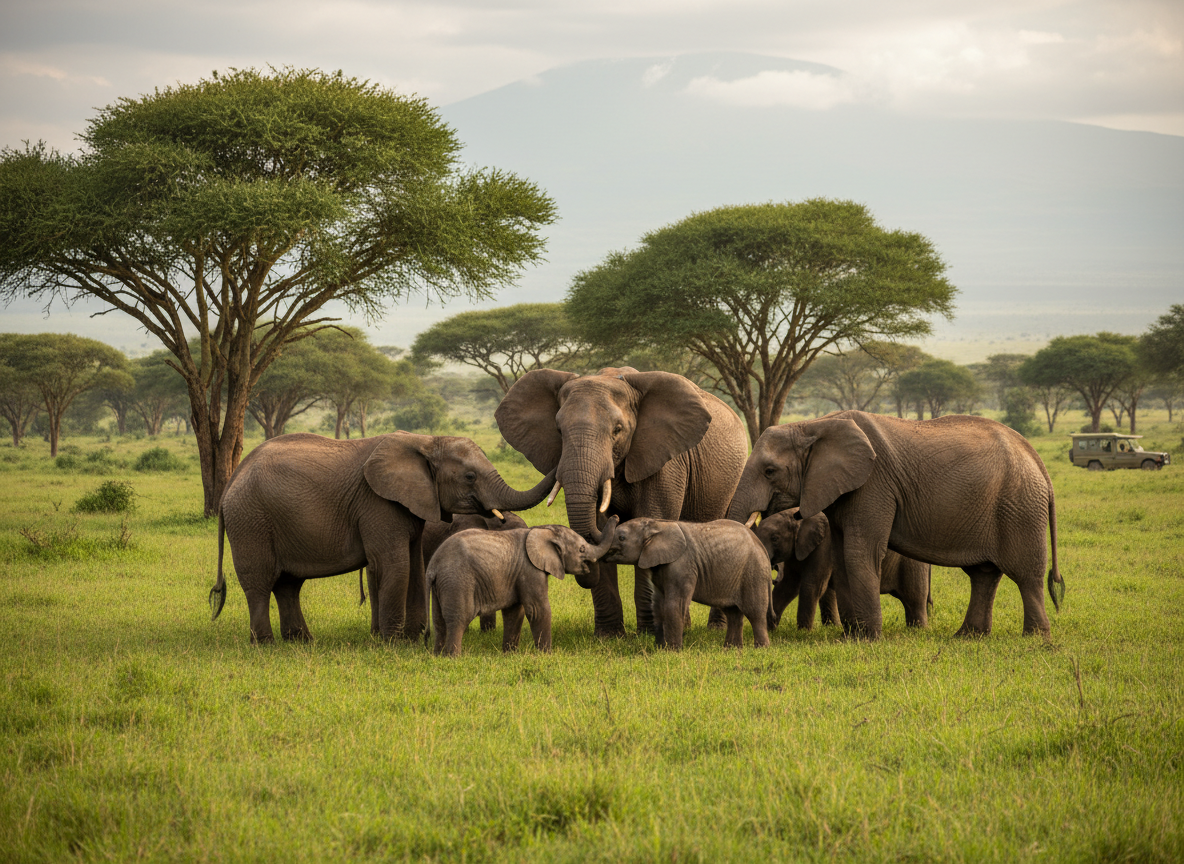
If you care less about hard-edged dry-season concentration and more about emotional family scenes, greener months can appeal.

January to March often works well here because:

  • the ecosystem is not yet deep into the long-rains challenge
  • the landscape still feels softer and fresher
  • calves and family-group interactions can be very rewarding

This is why Trunktrails Safaris does not give one flat answer to every elephant traveller. The ideal month depends on whether you want clean viewing, classic photographs, or more intimate family-herd atmosphere.

Best Places to Focus Your Elephant Game Drives

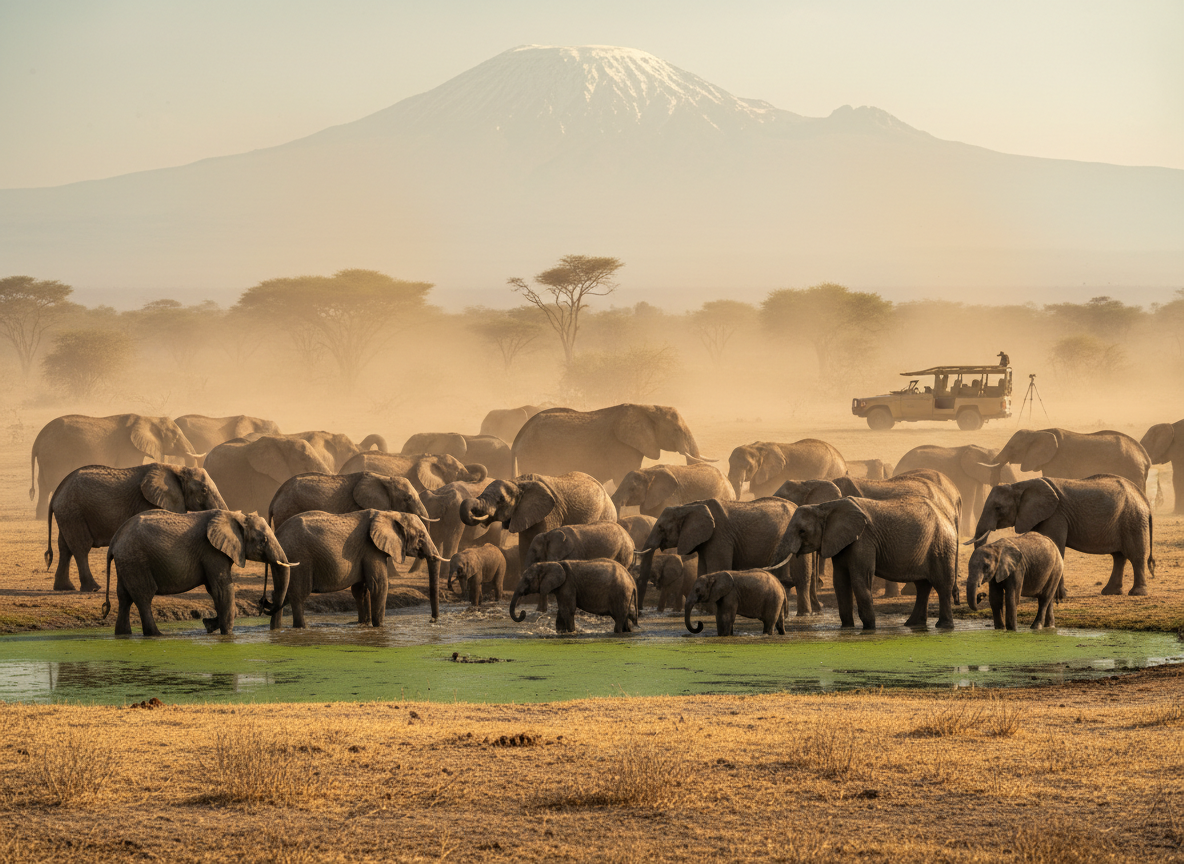
Timing matters, but so does where you spend the drive. Sourced Amboseli elephant guidance consistently points to the swamp system as the core of the elephant experience.

The most useful planning logic is simple:

  • permanent swamps are the safest dry-season anchor
  • open plains between swamp systems are often best for line-up photography
  • Observation Hill helps you understand movement patterns rather than close-up encounters

This matters because travellers often say “we want elephants” without realizing there are different elephant experiences:

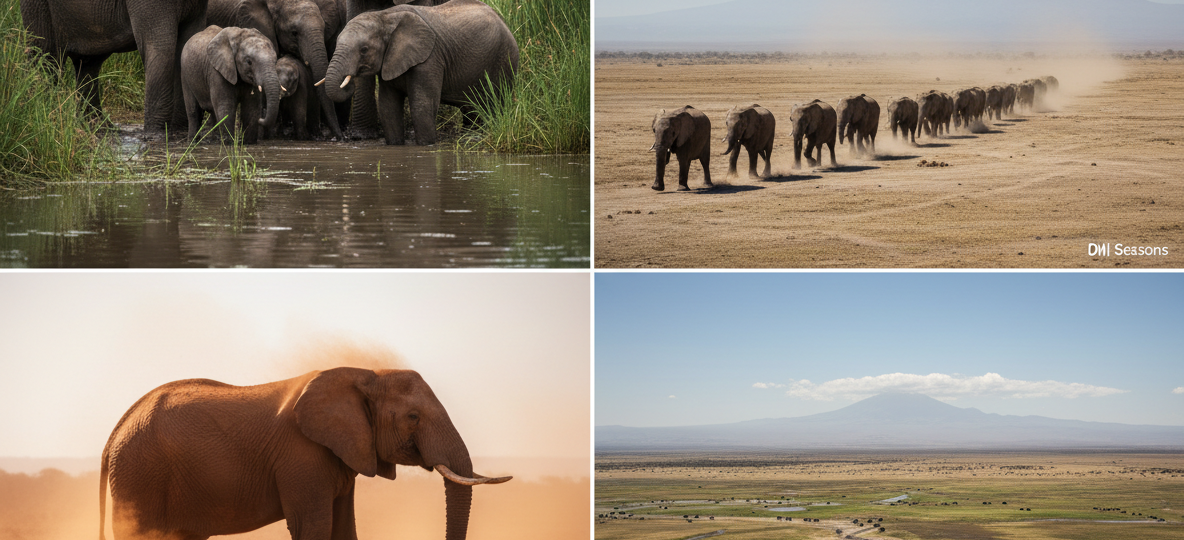
  • close family-herd views near water
  • long file-line movement across the plains
  • big bulls in dusty late-afternoon light

At Trunktrails Safaris, we structure elephant-focused drives around those distinctions, not just around a vague hope of seeing the species.

How Many Nights Do Elephant Lovers Need?

If elephants are the central reason for choosing Amboseli, one night is usually too compressed and two nights is the functional minimum.

Why:

  • you want more than one dawn attempt for Kilimanjaro plus elephants
  • weather can change fast even in good months
  • elephant photography improves when you are not rushing every sighting

For a pure elephant-first safari, Trunktrails Safaris usually prefers:

  • 2 nights for a short but workable Amboseli focus
  • 3 nights if photography matters or the trip is meant to feel relaxed

That extra morning often makes the difference between “we saw elephants” and “we got the exact elephant moments we came for.”

Dry Season vs Green Season for Elephants


Season What It Gives You Main Tradeoff
June to October Easiest viewing, strong concentration, best all-round access Higher demand
January to February Excellent views with greener tones Slightly less classic than peak dry season
March to May Atmospheric green elephant scenes More weather and road variability
November to December Good value and moodier scenery Less reliable mountain visibility


So What Is the Best Month?

If you want one direct answer:

  • Best overall month for elephants: July or August
  • Best alternative with greener feel: January or February
  • Best value period if you accept more variability: November or March

That ranking works because dry-season Amboseli makes elephants feel especially central to the landscape. They hold close to water, move visibly across open plains, and photograph beautifully against the mountain when the sky cooperates.

The Trunktrails View

At Trunktrails Safaris, we usually match elephant-focused Amboseli trips like this:

  • first-time elephant lovers: July to September
  • photographers wanting mountain plus elephants: January, February, July, August
  • repeat safari travellers wanting mood and value: March or November

Amboseli works year-round. The trick is choosing the version of elephant country you actually want.

Ready to Plan Your Kenya Safari? Talk to Trunktrails Safaris

Trunktrails Safaris designs tailor-made tours and safaris for every traveller and every budget. If your trip is built around elephants in Amboseli, we will match your dates to the right season, light, and pace.

WhatsApp: +254 113 208888

Email: info@trunktrailssafaris.com

Website: https://trunktrailssafaris.com

KATO Member | TRA Licensed

Leave a Reply

Your email address will not be published. Required fields are marked *

Login