

Dry Season vs Wet Season Wildlife Behaviour in the Masai Mara: A Safari Guide
Dry season and wet season wildlife masai mara can deliver two completely different safaris in the same destination. Light changes, grass height shifts, crowds move, and wildlife behavior follows the season. Pick the wrong window for your goal and the trip feels mismatched. That is the dry season vs wet season wildlife masai mara decision.
This is where Trunktrails Safaris adds real value. We are Nairobi-based and Kenyan-owned. We plan around migration windows, rain patterns, school-holiday pressure, and the practical feel of each month, not generic best-time lists. That gives clients dates that suit the experience they actually want.
Here is the honest dry season vs wet season wildlife masai mara comparison, the same one we use when shaping a client’s travel window.
Overview: Masai Mara Seasons
The Masai Mara has two main seasons:
Dry Season: June to October (long dry) and January to February (short dry). The long dry season coincides with the Great Migration arrival from Tanzania. Vegetation dries out, grass shortens, and water sources concentrate.
Wet Season: March to May (long rains) and November to December (short rains). Rainfall is most intense in April and early May. The Mara transforms into a lush, green landscape.
How Dry Season Changes Wildlife Behaviour
Water Dependence
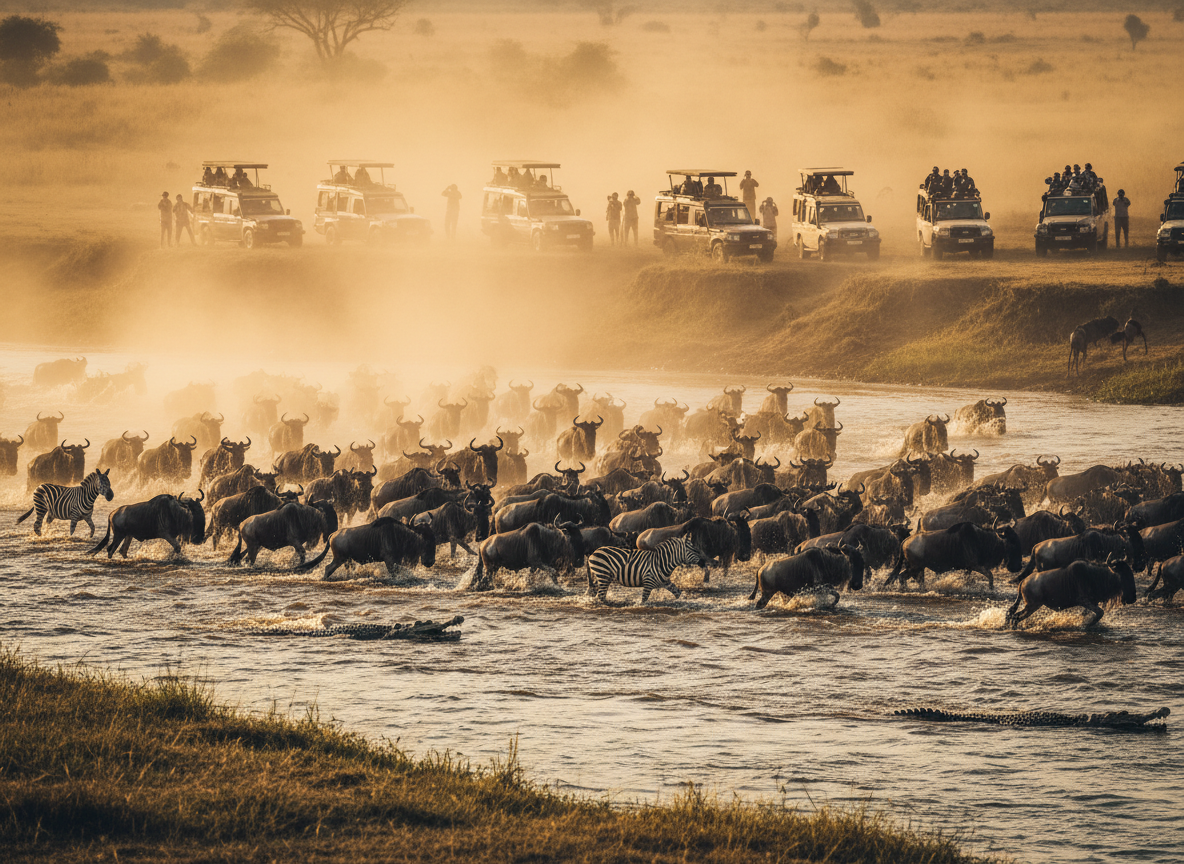
As water sources dry up in the dry season, all wildlife concentrates around permanent rivers and water holes. This is the fundamental driver of dry season game viewing. The Mara River and Talek River become focal points for elephant herds, hippo pods, buffalo, and all the predators that follow them.
Predator Hunting Patterns
Masai mara dry season wildlife is characterised by highly visible predator activity. With the grass short (often less than 30 centimetres after the dry season progresses), lion prides, cheetah coalitions, and leopards have significantly less cover. You can see them from further away and follow hunts more easily.
Lion prides are more active and more visible during the day in the dry season. They can be observed resting on open plains without disappearing into long grass. Kills are easier to find and more accessible for vehicles.
The Great Migration
The most significant dry season wildlife event is the arrival of the wildebeest migration (July to October). More than two million animals: wildebeest, zebra, Thomson’s gazelle: enter the Masai Mara from the Serengeti. The river crossings on the Mara River draw enormous concentrations of crocodile, hippo activity, and the full suite of predators. This is unique to the dry season.
Game Viewing Visibility
Short, dried grass dramatically improves visibility in the dry season. Animals that would be obscured in tall green grass are easily spotted at 200 to 300 metres. Spotting is faster, sightings more frequent, and photographic backgrounds are cleaner.
How Wet Season Changes Wildlife Behaviour
Dispersal and Movement
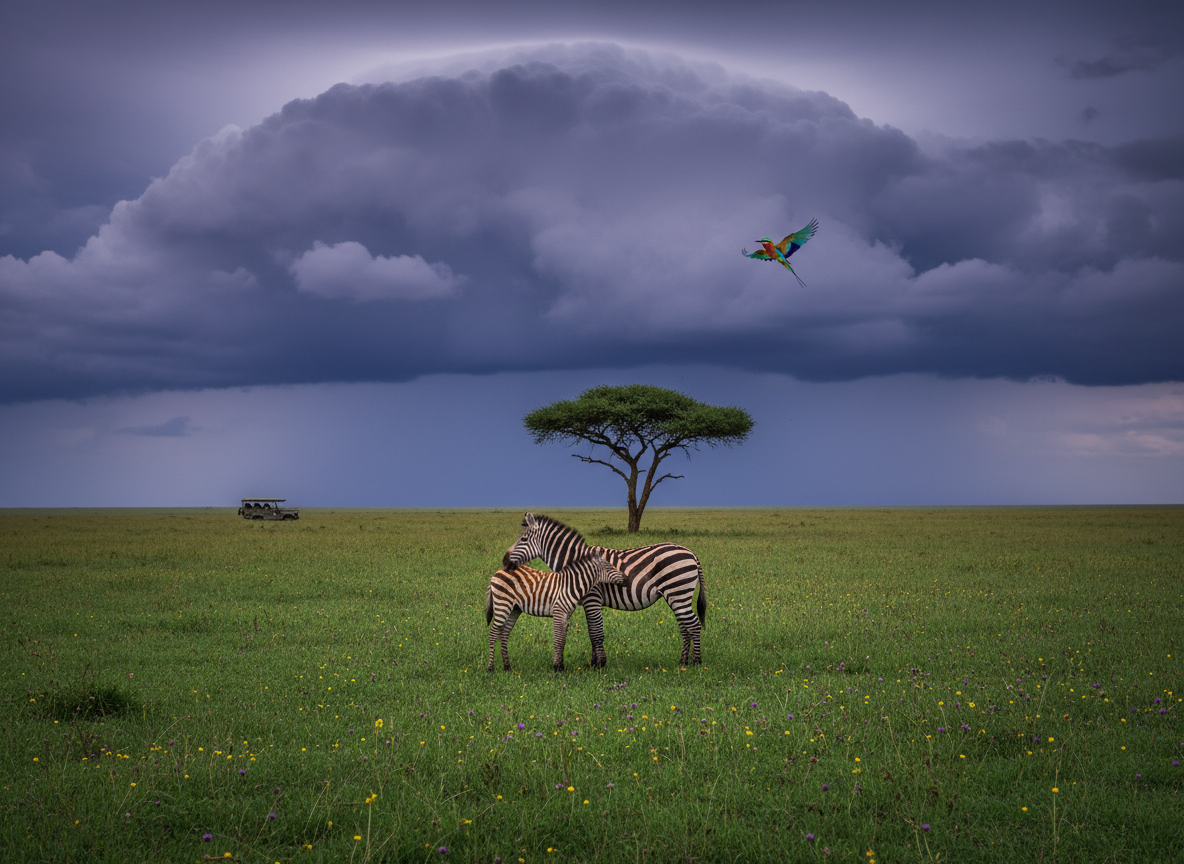
When the rains arrive, the Masai Mara transforms. New grass flushes green across the plains, creating fresh pasture everywhere. This is precisely why wet season wildlife masai mara behaves differently: animals no longer need to concentrate at water sources. Herds disperse across the full reserve and the wider ecosystem.
This dispersal means lower sighting frequency in any single area, but wildlife is present everywhere across a much wider range.
Birthing Season
January to March is the wildebeest and zebra calving season on the southern Mara plains. Thousands of calves are born on the grasslands, and predator activity intensifies around the young animals. This is one of the most dramatic wildlife behaviour windows of the year: intense predator activity, high calf numbers, and territorial behaviour among lion prides competing for calving grounds.
Predator Behaviour in Wet Season
Predators are harder to find when grass is tall, but masai mara wet season safari can still deliver extraordinary sightings. Leopards become more prominent: the lush vegetation and fewer tourist vehicles in low season mean leopards may be more relaxed and visible. Cheetahs move to elevated ground and open termite mounds to scan across taller grass. Lion prides stay active.
Bird Activity
The wet season brings extraordinary birdlife. Migratory species arrive from Europe and Asia: resident birds breed, display, and nest. The Masai Mara’s bird count peaks in the wet season with 500+ species active. For birdwatchers, the green season is genuinely the best season for wildlife masai mara of one particular kind.
Visual Drama
The green season landscape is dramatically beautiful. Lush grass, wildflowers, and a different quality of light (softer, more diffuse) create very different photography conditions from the dry season. Wide-angle landscapes are at their most photogenic in the wet season.
Game Viewing: A Practical Comparison
| Factor | Dry Season | Wet Season |
| Grass height | Short to bare | Tall and lush |
| Sighting frequency | High | Moderate |
| Wildlife concentration | At water sources | Dispersed across plains |
| Predator visibility | Very high | Moderate |
| Great Migration | Yes (July to October) | No |
| Calving season | No (calving is Jan to March) | Overlaps wet/dry transition |
| Birdwatching | Good | Excellent |
| Road conditions | Good to excellent | Challenging (muddy tracks) |
| Crowd levels | High | Low |
| Accommodation pricing | Peak (July to October) | Lower (especially April to May) |
| Photography: landscape | Classic golden savannah | Vivid green, dramatic skies |
| Photography: wildlife | Clean backgrounds, high contrast | Lush green backdrops |
Which Season Is Better
There is no universally better season. There is a season that is better for you, depending on your priorities
Dry season is better for:
- Maximum sighting frequency and wildlife density
- Great Migration and river crossings (July to October)
- Predator hunting visibility in open grassland
- First-time safari visitors who want the highest probability of multiple big cat sightings
- Wildlife photography with clean, unobstructed backgrounds
Wet season is better for:
- Birdwatching (500+ species, migrants, breeding displays)
- Calving season drama (January to March: predators and new-born prey)
- Lower crowd levels and quieter, more intimate game drives
- Lower accommodation rates: significantly better value at many camps
- Landscape photography and dramatic green scenery
- Repeat visitors who have done the dry season and want a different experience
At Trunktrails Safaris, our tours and safaris team books clients into both seasons and advises honestly on what each window delivers. There is no bad time to be in the Masai Mara: just different times with different highlights.
Ready to Plan Your Kenya Safari? Talk to Trunktrails Safaris
Trunktrails Safaris designs tailor-made tours and safaris for every traveller and every budget. From green-season adventures to private luxury camps, our tours and safaris are built by a Nairobi-based team that speaks to you directly, not through a call centre. Most WhatsApp enquiries about our Kenya tours and safaris get a reply from Trunktrails Safaris within the hour.
WhatsApp: +254 113 208888
Email: info@trunktrailssafaris.com
Website: https://trunktrailssafaris.com
KATO Member | TRA Licensed | Native Kenyan Owned | Conservation First | 24/7 Support